Ask any multifamily owner or operator about AI and you’ll get a strong reaction. Some are excited about what it could take off their teams’ plates. Others are skeptical, and it’s hard to blame them, since just about every tool in their tech stack now calls itself AI-powered. Either way, most of them come back to the same question: will this make a measurable difference to my operations and my NOI?
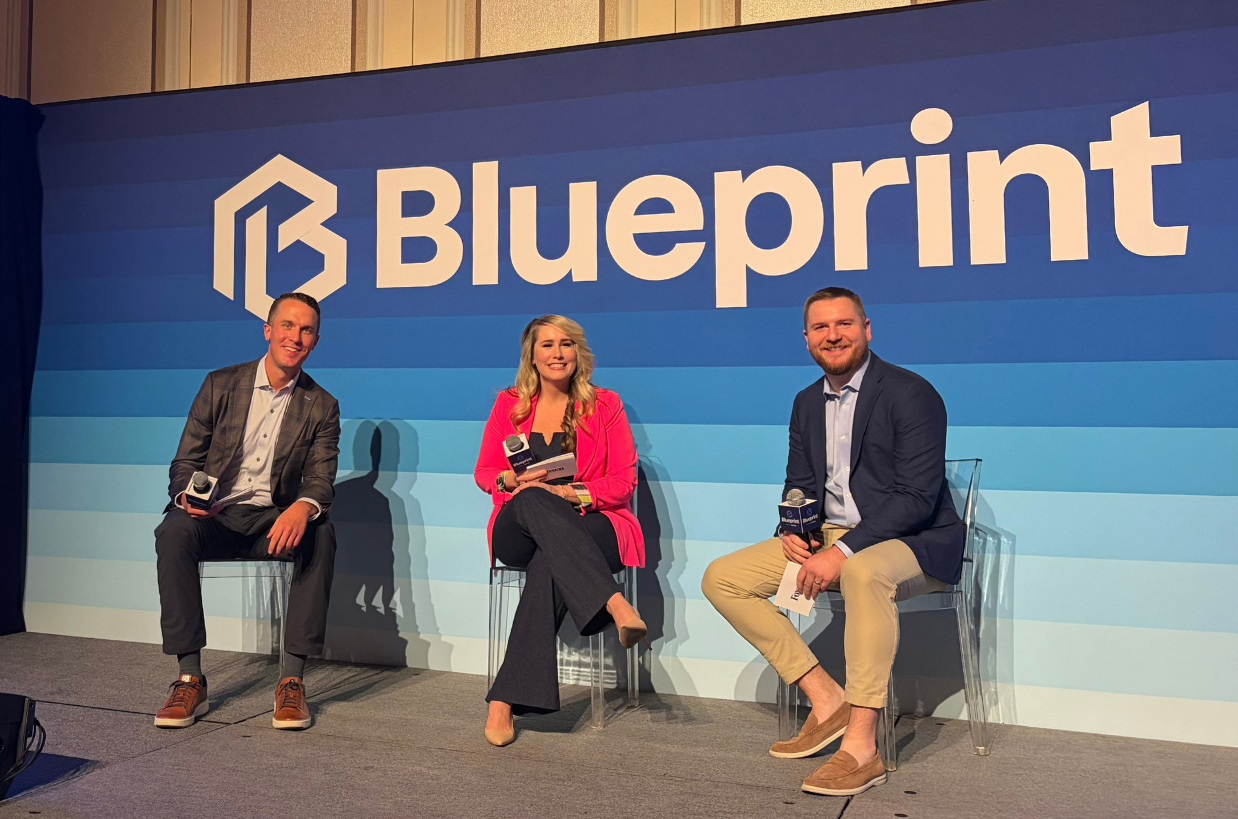
That's the question John Riley thinks about every day. John leads Applied AI at Foxen, where his team is not only putting AI to work across the entire renter risk platform, but also unlocking the full potential of operators’ renter risk data by pulling it into the AI tools they already use daily.
The Foxen Connector is the first renter risk management Model Context Protocol (MCP) built for the multifamily industry. It will let property teams ask renter risk questions in natural language inside MCP-compatible AI tools like Claude and ChatGPT, and get answers grounded in their own portfolio’s Foxen data.
In this interview, John shares where AI is already driving results, where renter risk management is headed, and why the outcome matters even more than the technology.
Tell us about your career path and what drew you to Foxen.
I started my career in management consulting, then became an internal consultant at McDonald's, where I was given the delivery business. I led that business through COVID, when delivery went from a fraction of a percent of sales to 30% of McDonald's sales almost overnight. After getting my MBA, I went to DoorDash and worked on the DoubleDash business, eventually leading it and managing a team of product managers, engineers, data scientists, and designers.
While the business grew, my team got smaller and I had to figure out how to use AI to my advantage. Basically, out of necessity, I hacked together a bunch of agents that were working as co-workers for us. It was pretty rough at the beginning, but as the models got better and our processes got better, it became really clear to me that this was going to change a lot.
I wanted to use that experience as a stepping stone for my next chapter. I was networking here in Columbus, looking for a business with an interesting problem to solve, where I saw a lot of opportunity not only in the product but also in the management team. That's what led me to Foxen.
Multifamily must be very different from food delivery. What surprised you most?
There are actually a lot of parallels. At DoorDash, I worked closely with restaurant and enterprise partners, and like multifamily, margins are tight. The operators work incredibly hard day in and day out, and everything needs to work smoothly.
The biggest differences are that multifamily is more fragmented and regulated, but the problems to solve have many parallels.
How would you explain your role as the head of Applied AI to someone who doesn't come from a tech background?
I boil it down to three things I try to achieve every day: leverage, service, and product. Leverage means giving our internal teams and customers the tools to do their best work. Service is about lowering our cost to serve customers while improving the experience for residents and property managers. If it's done well, those priorities reinforce each other. And product is how we apply AI and inject intelligence to create a best-in-class solution for operators.
Operators are excited about AI but skeptical of vague promises. How would you describe Foxen's approach in plain terms?
You apply AI to achieve the outcome faster, with higher craft, or for a lower price. It's not really the AI that our clients are paying for. They don't want to pay for AI. They want to pay for a task or a job to be taken off their plates.
So, we focus first on understanding the problems that our customers (or our internal teams) are trying to solve. We really dig in and get as detailed as possible, then we design and build a solution with AI. I've learned from experience that if we don’t get the rules and process right, at a very specific level of detail, then the end result won’t solve the challenges that our customers need it to.
So far, most of Foxen's AI has helped customers in the background, without asking them to change anything. Will that continue?
Yes, that will continue. But what comes next is going back to problems the industry has already solved and asking if there’s a better way to solve them today. Most multifamily software was built when you could only get so much done with the code you could write or the people you could hire. That limit is mostly gone, so we’re rethinking each solution from scratch to find where our data, our expertise, and our partners can give customers something better, and something worth paying for.
When residents upload insurance documents to Foxen, each one needs to be reviewed for compliance. How does AI document review work today, and what does it mean for customers?
A resident uploads an insurance policy document, and it's our job to review it as quickly as possible while accurately determining if it is compliant with the lease requirements. If it's an approval, we let them know in real time or close to it. If it's a rejection because of non-compliance, it's really important that we get the reason right. If I'm a resident and there's an issue with my COI, it's frustrating, but it's even more frustrating if you're not going to tell me what's wrong.
The more we can make it easy for the resident, the easier it is on the property manager and the owner-operator.
Where should people still be involved in the process?
Most of the work AI handles can be sorted into one of two buckets. The first is routine work, where the model has seen the same thing a thousand times and only the details change. Those cases can usually be handled by agents doing the first pass, as long as someone is sampling the results to make sure things are working as expected. The second is edge cases, the unusual or unfamiliar situations that don’t fit the pattern. The agent’s job there is to recognize the edge case and hand it to a person instead of guessing.
What makes this work over time is the feedback loop. When the team reviews the handoffs regularly, they start to see patterns that can be written into rules, so the agent can handle more over time. And when someone flags a decision that doesn’t look right, the right experts look at the rule together and make a call. One benefit we didn’t fully expect is how much this standardizes the way the business runs. Getting everyone on the same page is hard from a change management standpoint, and putting agents in the workflow forces those conversations to happen.
How do you think AI will change the way properties manage renter risk, like insurance compliance, pet policies, and damage protection?
AI is going to increase the value of proprietary risk data, and it will also raise the standard for what operators, property managers, and residents expect from a vendor. If we play that forward, our clients will want more of a platform for their renter risk needs.
For renters, my hunch is that in a year or two, most everyday consumers won't log into these platforms themselves. They'll use personal AI agents to do that work for them. So, the question for Foxen and for our peers and partners, is how do we build for a world where we need a user interface, but we also need a way for agents to talk to each other to get jobs done.
Operators tell us their data is spread across many different tools, which makes it hard to get useful insights. Is Foxen building in a way that helps?
The short answer is yes. Think about an ownership group with six property management systems who needs one view of their entire portfolio. If Foxen covers their entire set of properties, we'll be able to give them a unique view that they'd have trouble getting anywhere else.
That’s also why we are excited to give our customers direct access to their data via the Foxen Connector – by allowing their AI agents like Claude or ChatGPT to connect to their renter risk data, they can explore their program performance on a much deeper level, cross-analyze with any other data source their agent has access to, and find performance trends that would otherwise be difficult to identify. Being able to ask questions about their program performance in natural language, then get answers instantly that are grounded in Foxen data lets owners and operators make more informed, strategic decisions with confidence.
How is Foxen’s Applied AI team set up?
The team is very lean by design. In my experience, small, diverse flat teams yield the best outcomes. We have a tech lead who is a full-stack engineer, an AI product engineer, and an infrastructure/ops lead. I wear a number of hats as a player-coach. It's rare that I'm not working on my own projects as well as setting the vision and managing the team.
What do you look for when you're hiring?
There are three things I'm always looking for. Do you have agency? Are you willing to go the extra step and troubleshoot until you figure it out? Do you have ramp, which is my way of asking whether you’re curious and willing to fill in the parts of the map you don't understand? And I always look for empathy.
Empathy is often overlooked. But so much of what we're doing is change management and building tools that change jobs, hopefully for the better. You need someone who's empathetic enough to ask whether this is really what people want, and what the actual human impact is.
Foxen has been in multifamily for nearly a decade and was founded by operators. Does that history give Foxen an advantage in building AI for the industry?
I definitely think so. Having a trusted brand with roots in the industry and is very in tune with the needs of the market still matters a ton. People know who started Foxen, who we are, and what our values are. We have long-term clients who have grown with us. All of that matters and makes a difference in the projects and solutions we choose to pursue.
Introducing the Foxen Connector
At Foxen, everything we build starts with the outcomes operators and residents need, and applying AI where it makes those outcomes arrive faster, more accurate, and easier to achieve. Want to be among the first to gain deeper insights from your renter risk data by connecting it to your AI stack?
Check out the Foxen Connector and sign up to get updates about the launch.