Multifamily property owners and operators need every unit protected, with no gaps in renters insurance compliance. A property damage liability waiver program makes that possible: residents who don't carry their own renters insurance are enrolled in the waiver program, which is backed by a Tenant Legal Liability (TLL) policy, so operators can reach 100% compliance.
Some providers now offer waiver programs with promises that can sound too good to be true: a share of underwriting profits with little or no capital up front, a fast launch, and almost no administrative work. Those promises may be made possible by a structure called a Risk Retention Group (RRG). While these programs can offer benefits that sound tempting, it's important to understand what impact this approach to pooled risk can have for your business, before you sign.
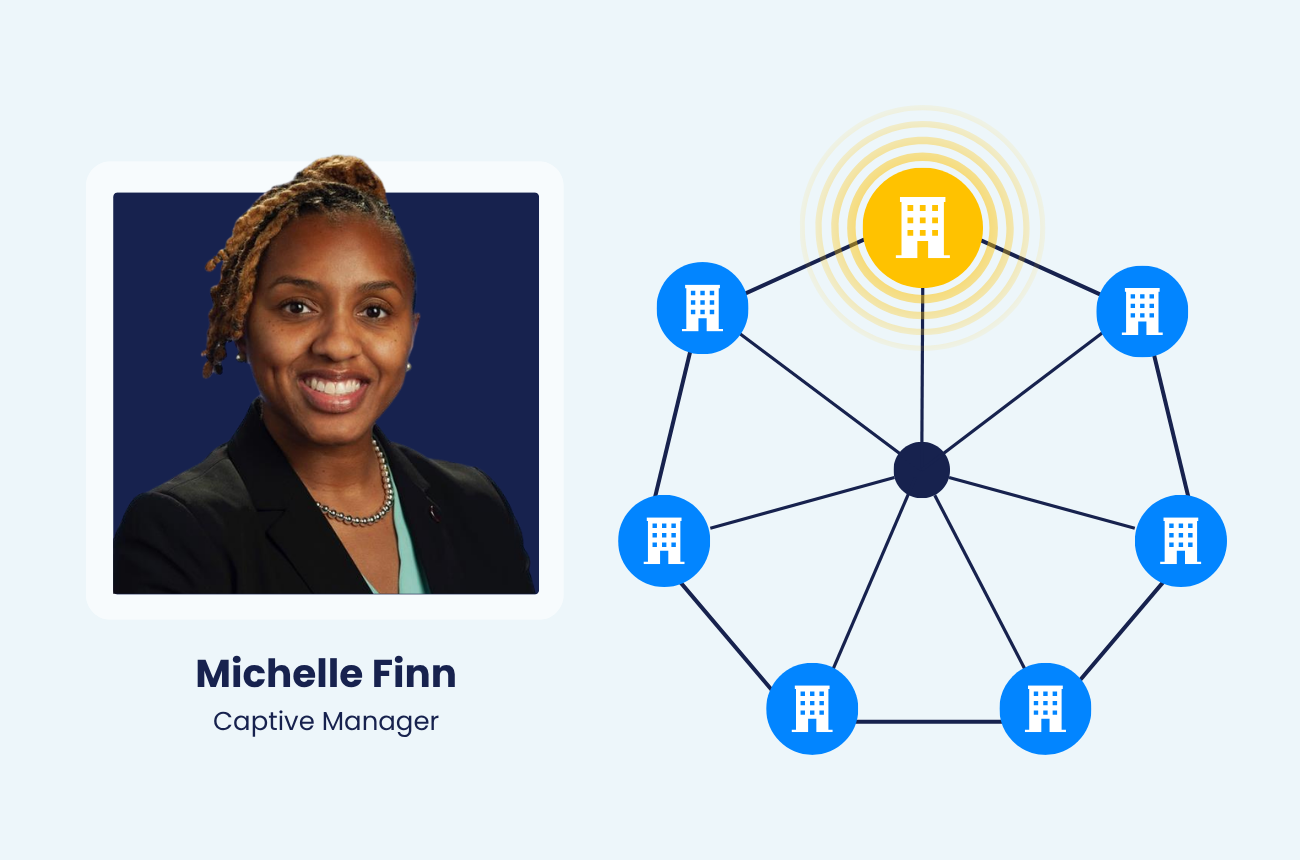
To break down how Risk Retention Groups work, we talked with Michelle Finn, Foxen's Captive Manager. Michelle began her career on the regulatory side as a Captive Insurance Specialist at the Tennessee Department of Insurance, helping license new captives. She later managed operations, reporting, and compliance for captives at Aon and WTW, including work on an RRG, before joining Foxen to help build WaiverCell. She's seen these structures from multiple angles, as both the regulator approving them and the manager running them.
Our discussion on Risk Retention Groups revealed trade-offs that are easy to miss. Operators considering RRGs must ask who else is in the risk pool, what they could be required to contribute if claims run high, and what obligations come with owning part of an insurance company. If left unasked, these questions can lead to consequences they never planned for. "You just have to know what you're getting into," Michelle said.
What is a Risk Retention Group?
"A Risk Retention Group (RRG) is an insurance company owned by its members," Michelle explained. "It allows businesses with similar insurance needs to pool their risks and form an insurance company to provide liability coverage to the group."
RRGs are created under the federal Liability Risk Retention Act of 1986 (LRRA), which works alongside state insurance laws and limits RRGs to liability coverage only.
"An RRG is licensed in one state, known as its domicile, but may provide liability coverage to its members nationwide by registering in the other states where it operates rather than obtaining a separate insurance license in each state," Michelle said.
Is a Risk Retention Group a Captive?
Yes. A captive is an insurance company owned by the business, or group of businesses, it insures. Companies form captives to access coverage that's hard to find or too expensive, to get more control over their insurance program, or as a risk-financing strategy.
"An RRG is generally considered a type of captive insurance company because it is owned by the businesses it insures and is formed to provide coverage for the shared risks of its members," Michelle said. But RRGs play by their own rules: "RRGs have a unique regulatory framework under the federal Liability Risk Retention Act and may be formed under a state's captive or traditional insurance laws."
Asked whether a Risk Retention Group is riskier than other captive insurance structures, she said: "Not automatically. The appropriate captive structure depends on the needs and risks of the insured." As Michelle likes to say, "If you've seen one captive, you've only seen one captive."
How Are Risk Retention Groups Different from Other Types of Captive Insurance?
The biggest differences come down to what the captive can cover, who owns it, and how risk is shared.
Risk Retention Group captives are built for groups of similar businesses, often operating in many states. "An RRG is limited to liability coverage and is owned by its insured members, which have similar or related liability exposures," Michelle explained. She noted that "one of the primary advantages of an RRG is its ability to provide liability coverage directly to members across multiple states without obtaining a full insurance license in each state."
Non-RRG captives fit organizations that need coverage beyond liability or prefer to have full control over their programs. "Depending on its structure, domicile and approved business plan, a non-RRG captive may insure property, liability and other types of risk," Michelle said.
Risk sharing is where the two differ most in practice. In an RRG, members pool their risk, so one member’s large liability claim can affect the group’s overall results. You can have a clean year and still be affected by losses elsewhere in the group.
Reinsurance can help limit the group’s exposure to large losses by transferring risk above specified retention levels to a reinsurer. By comparison, single-parent and protected cell captives, covered below, generally provide greater separation of an insured’s own loss experience, although the ultimate risk retained or shared depends on the structure of the program and any reinsurance arrangements in place.
To sum it up, here’s how RRGs differ from other types of captives on potential for dividends or losses:
Single-Parent vs. Protected Cell Captives: Two Non-RRG Options to Own Your Risk
If captive insurance appeals to you but potentially taking on the risk of other members doesn't, there are alternative options to a Risk Retention Group. Here are two approaches that provide the advantages of captive insurance while keeping your results tied to your own losses:
Single-Parent Captives
A single-parent captive is owned by one company to insure its own risks, and it generally offers significant flexibility. “A single-parent captive can be structured around the specific risks and insurance needs of the organization,” Michelle said. Depending on its domicile and approved business plan, a single-parent captive can underwrite a wide range of risks, including property, liability, and specialty lines. “I’ve even seen aircraft insurance in a captive before,” she added. The trade-off is that the owner is responsible for capitalization, a more involved formation and approval process, and the ongoing responsibilities of operating an insurance company. Forming a single-parent captive is a significant long-term commitment.
Protected Cell Captives
"A protected cell captive consists of a core and individual cells. Each cell's assets and liabilities are legally segregated from the other cells and the core," Michelle explained. "This structure can provide access to a captive program without forming and funding a stand-alone captive." Because the core is already approved, a cell typically needs less capital and launches faster. It’s an appealing solution for those interested in captive insurance, but without the scale or administrative commitments required to stand up a single-parent captive.
What Both Have in Common
In both structures, the owner is responsible for their own losses. But there's also an upside: when losses come in lower than expected, the owner may keep the underwriting profit that would otherwise go to an outside insurer, earn investment income on funds held within the captive and potentially receive dividends or distributions from the captive, subject to applicable regulatory requirements.
What to Understand Before Joining a Risk Retention Group
Multifamily operators may consider joining an RRG-backed program for liability insurance without realizing they're becoming part-owners of an insurance company. Membership is not without risk, and as an owner, you share in it. Before you sign, make sure you understand these trade-offs.
Pooled risk means shared exposure. Your results can be tied to other members' losses. What you could owe depends on the RRG's structure, state law, and governing documents.
Claims can take years to develop. "RRGs do have different risk characteristics, including being limited to liability coverage, which can involve long-tail exposures where claims take years to fully develop," Michelle said.
Financial strength depends on the fundamentals. "Like any captive, financial strength depends on adequate capitalization, sound underwriting, appropriate reserving and reinsurance."
There's no state backstop. RRGs "do not participate in state insurance insolvency funds, meaning there is no state-backed safety net to cover eligible claims if the RRG becomes insolvent," Michelle explained.
What Happens if a Risk Retention Group Runs Out of Funds to Pay Claims?
"If an RRG does not have sufficient funds to pay claims, additional funding may be required from its members, depending on the RRG's structure and governing documents," Michelle said.
In a pooled structure, a few large claims at other multifamily owners' or operators' properties can affect the RRG's overall financial position. Depending on the RRG’s structure and governing documents, members may be required to contribute additional funds to help cover a shortfall.
From there, the RRG may draw on reinsurance. If that isn't enough, the domicile regulator can place it into rehabilitation or liquidation, and without a guaranty fund, claims may not be paid in full. "This makes adequate capitalization, reserving, reinsurance and understanding any potential member assessment obligations particularly important," Michelle said.
Questions to Ask Before Joining any Captive Insurance Program
- Am I becoming an owner of a captive insurance company? If so, what could I be asked to contribute?
- Is my risk pooled with other members, or is it kept separate?
- Where is the program domiciled, and how is it capitalized and reinsured?
- Who handles regulatory filings, and what am I still responsible for?
- Can I see a pro forma before I commit?
For a fuller framework, see Key Questions Property Owners Should Ask Before Forming a Captive
Always review any captive arrangement with your own legal counsel before you commit.
Foxen's Flexible Risk Management Solutions
Foxen offers options for property damage liability waiver programs that support a range of risk management strategies. In each, the program is backed by TLL (Tenant Legal Liability) insurance for the owner/operator.
- WaiverCore is Foxen's flagship property damage liability waiver program. The TLL coverage is underwritten by a fronting carrier rated 'Excellent' by AM Best, so operators earn income without taking on any new risk or participating in a captive.
- WaiverCell provides TLL coverage through a protected cell within Foxen's captive. There is no third-party carrier. Instead, customers self-insure through a cell captive. "Foxen offers this structure through its WaiverCell program, where each participant operates within its own protected cell," Michelle said. "If you sign up with WaiverCell, your only coverage would be tenant legal liability. If you're looking for other lines of coverage, we normally suggest WaiverFlex."
- WaiverFlex is another option for self-insurance that provides TLL coverage through the operator's own captive, which may also include other lines like property if the Department of Insurance approves, giving operators full control over their risk management strategy.
Does Foxen Offer a Risk Retention Group?
Foxen doesn’t offer a Risk Retention Group. Instead, Foxen’s captive insurance options (WaiverCell and WaiverFlex) keep each operator’s results tied to their own losses rather than pooling risk with other members.
Protect Your Properties With AI-Powered Renters Insurance Compliance
No matter which approach you choose for your property damage liability waiver program, all of Foxen's solutions are built on the strong foundation of our AI-powered platform, giving you 100% renters insurance compliance through 24/7, 365 monitoring and waiver program auto-enrollment to prevent gaps in protection.
Captive insurance isn't the right fit for every operator. Foxen partners with multifamily owners and operators to understand their unique priorities and risk management strategies. Some businesses have the scale and desire to own their risk and the potential upside that comes with it, while others would rather earn income without taking on any risk at all. Whichever path you choose, Foxen has a solution to protect your properties while delivering 100% renters insurance compliance.
Foxen also handles the day-to-day work of captive administration: the application, quarterly financials, claims review, actuary coordination, and regulatory filings, with claims funds monitored monthly.
"That's an important feature to have, especially if you're getting into captives and you have no experience," Michelle said. "You need to have someone to answer your questions.”