Applied AI in Multifamily: From Hype to Real Results

Free yourself from health insurance.
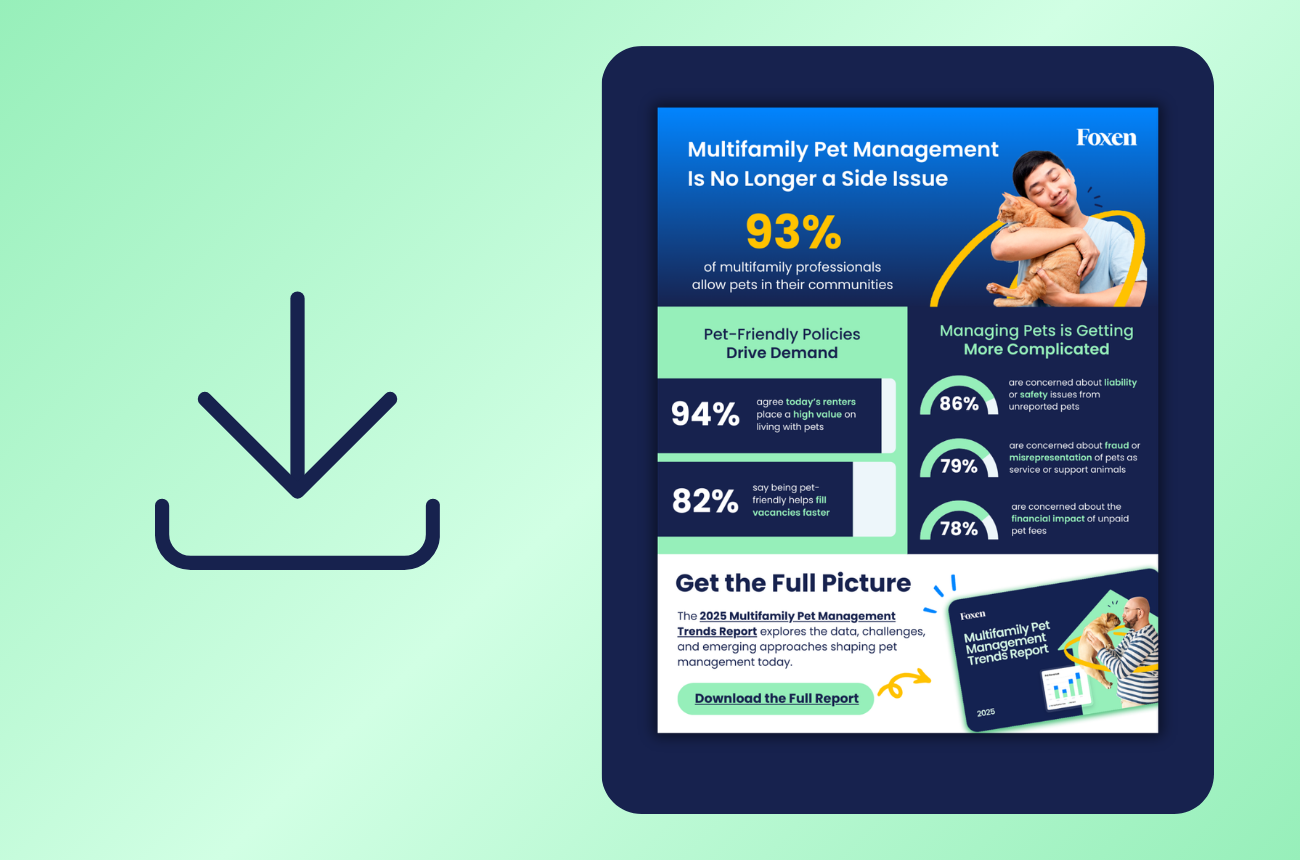
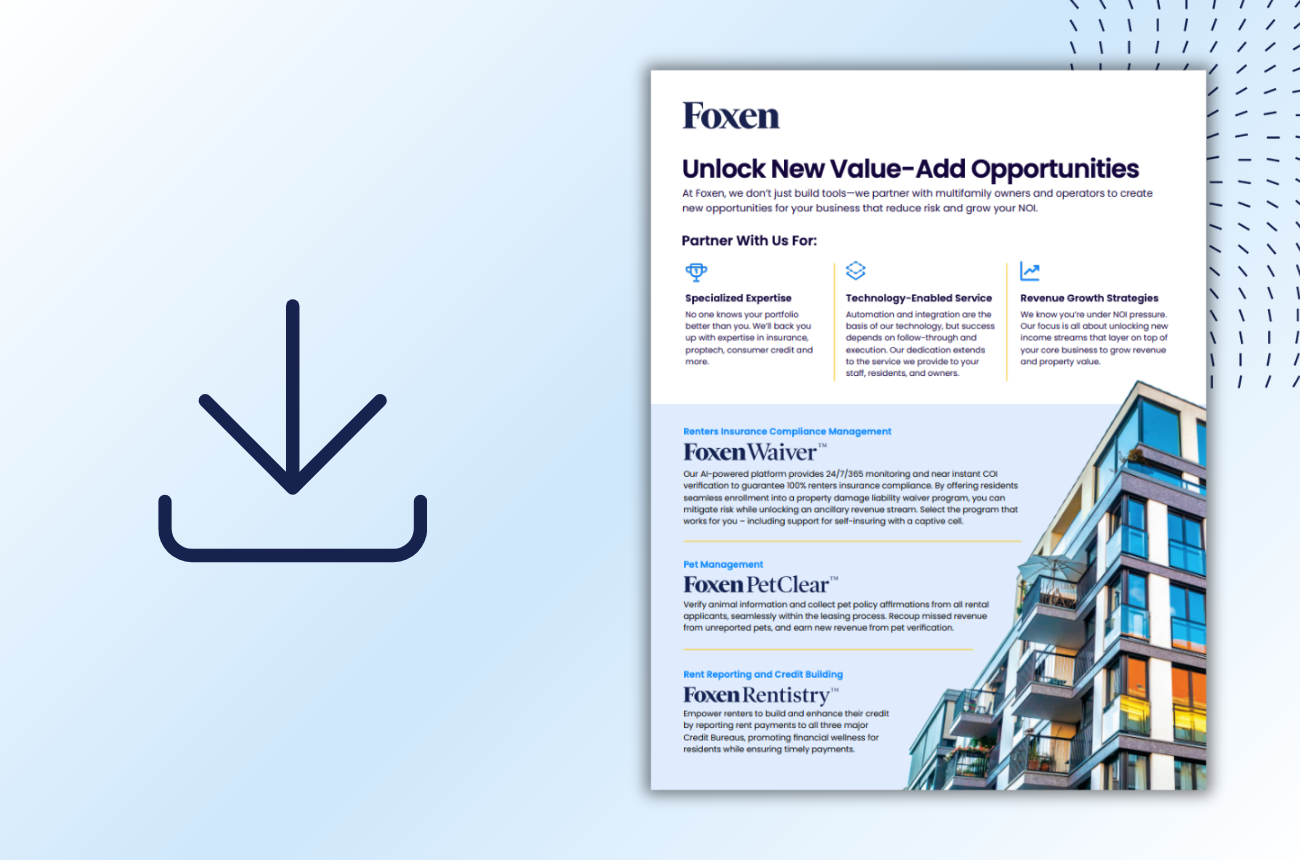
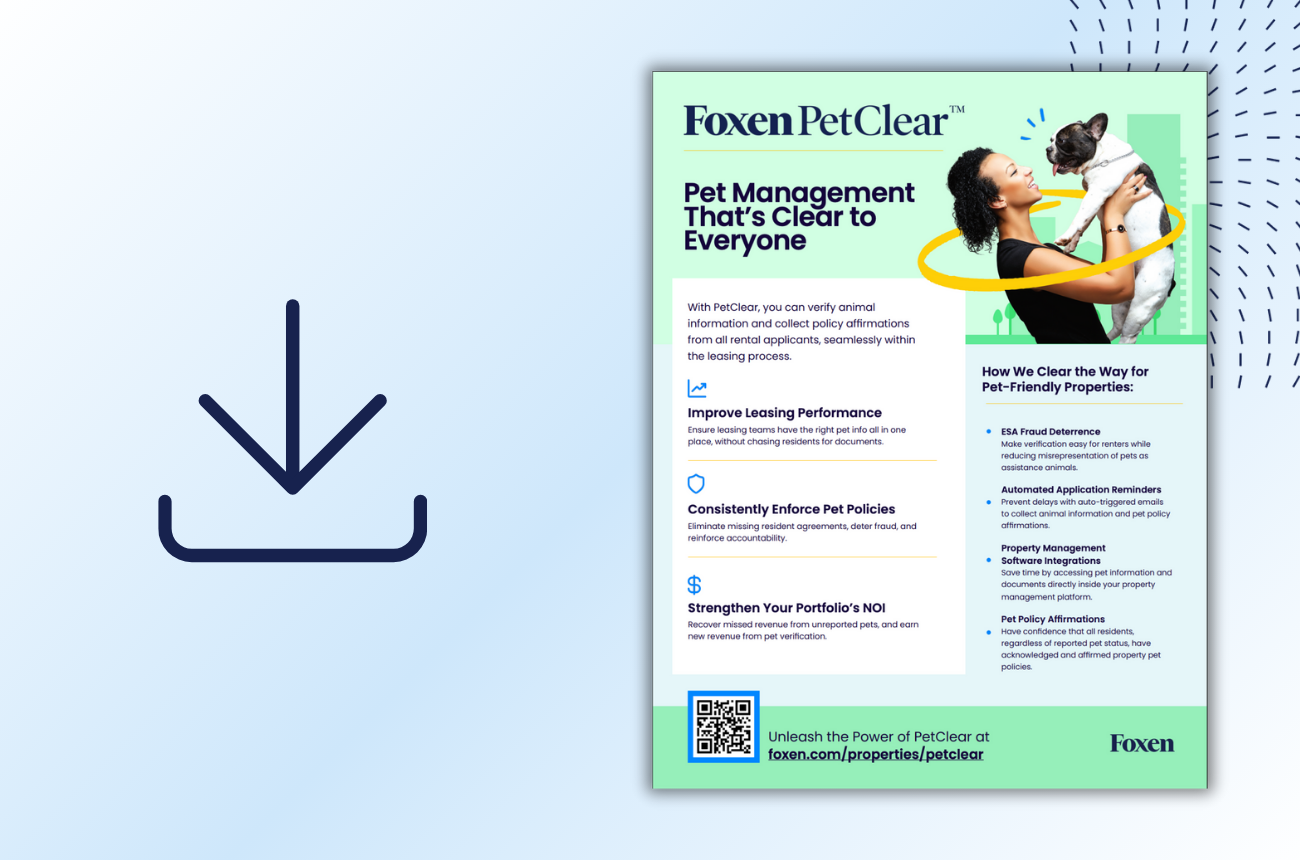
How are multifamily operators using AI to get measurable results? In this episode of the Multifamily Innovation podcast, John Riley, Head of Applied AI at Foxen, joins host Patrick Antrim to explain how property management companies can move from AI experiments to real operational gains. Foxen is a renter risk management platform for multifamily owners and operators. It covers renters insurance compliance, pet management through PetClear, and property damage liability waivers through WaiverCore.
Key takeaways
- Start with low-stakes pilots. Multifamily teams get the best results from AI with small pilots that have clear benchmarks. It also helps to find proof of value outside your own company before scaling.
- AI adoption is mostly an organizational change. Becoming AI-native depends less on the technology and more on giving on-site and corporate teams a voice when their workflows change.
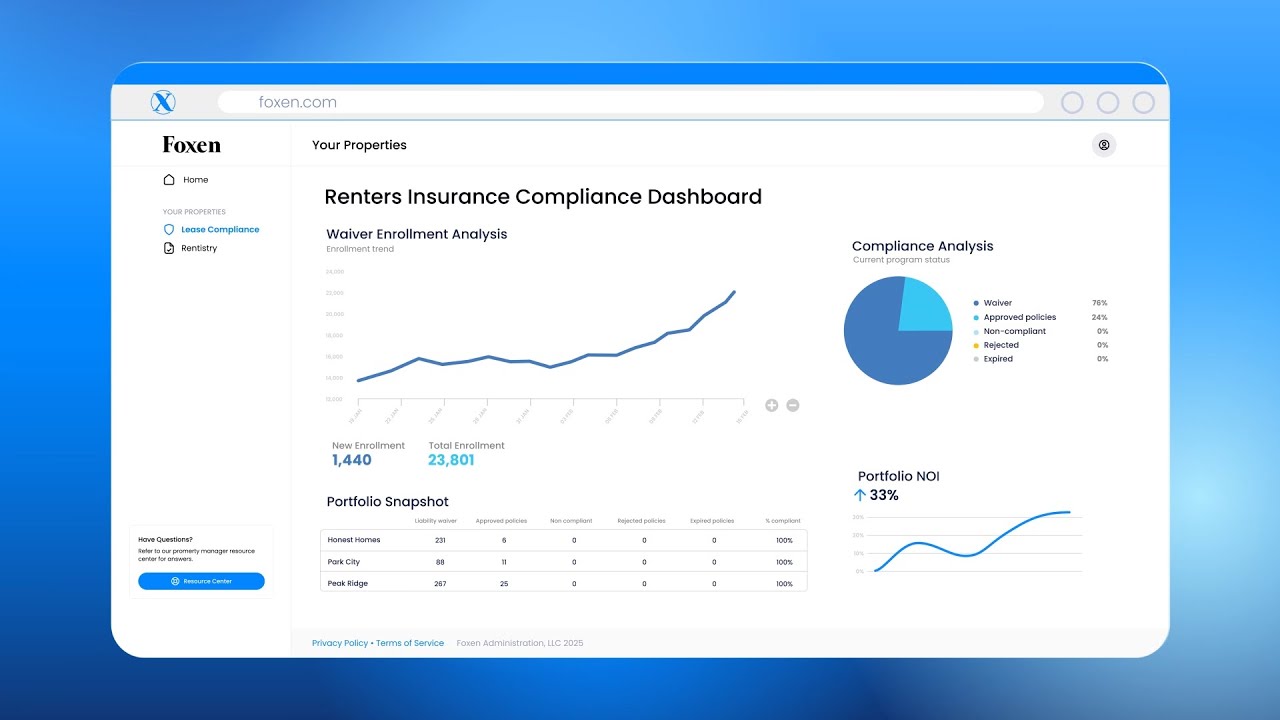
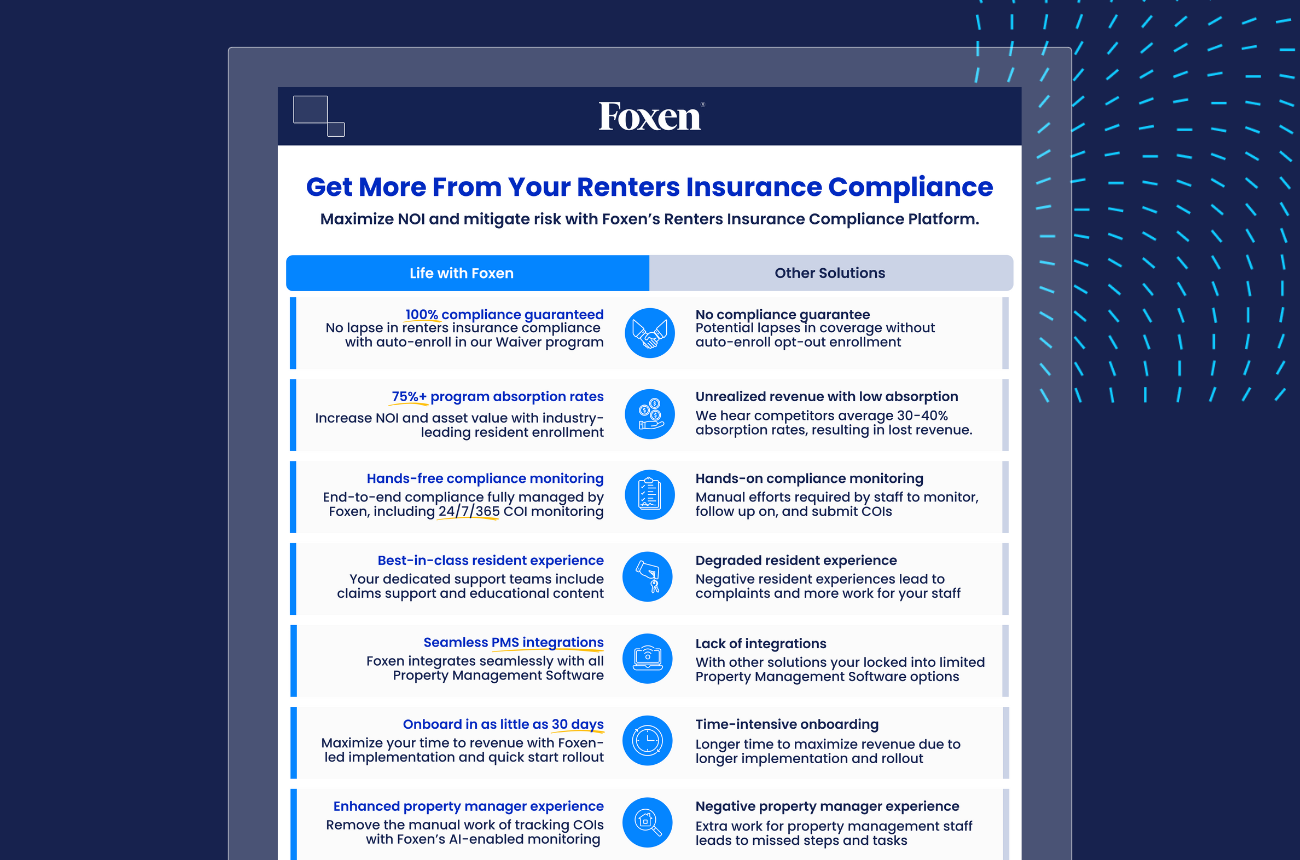
- AI can automate renters insurance compliance. Foxen uses AI to check renters insurance policies against about 50 compliance rules, give residents feedback in near real time, and monitor coverage 24/7/365. AI also supports review in PetClear.
- Guardrails make AI safe to scale. At Foxen, every AI agent has a business owner and a benchmark, every decision is logged, agents are contained, and a security lead sits in on most team meetings.
- Business leaders should own their AI agents. AI projects deliver when the people who run that part of the business own the agents, not just IT or innovation teams.
This conversation is for multifamily owners, operators, and asset managers who want to turn AI investment into lower on-site workload and stronger NOI.
Welcome back to another episode of the Multifamily Innovation Podcast. My name is Patrick Antrim. I'm the chairman of the Multifamily Innovation Council and the Technology and AI Center of Excellence. Now on the show, we get to sit down and spend time with leaders that are putting technology and AI into work across multifamily. Now today, what we're talking about is applied AI. What it looks like when AI moves back out of that hype cycle into what's really delivering value for multifamily companies, real results for owners, operators, and the residents that they serve. Now today, I'm gonna introduce our guest. It's John Riley. He's the head of applied AI at Foxen, where he leads the development of AI products and agents that help multifamily owners and operators reduce risk, simplify their operations, and improve the resident experience. So he focuses on using AI to transform the outcomes that Foxen delivers for their clients. So, John, welcome in. Happy to have you. Well, thanks, Patrick. Excited to be here and looking forward to the discussion. Yeah. So a lot of our listeners have not probably shared time with you personally. Maybe you can give us an idea of, you know, a little bit more about yourself, what you focus on here at Foxen.
Yeah. So I lead Applied AI at Foxen, which is kind of a number of things, but it really boils down to three specific things. It's finding ways to give our teams leverage, our teams being our clients' teams and our internal teams. How do we, you know, use service, meaning how do we lower the cost to serve and improve the quality of that service? And then finally, how do we inject the incredible intelligence that's now available into our products?
So that's what I'm focused on. A little bit about me personally. So I've had a bit of a winding road career path, which I think is fairly common these days. I started in management consulting. I did that for a few years and kinda got my chops and kind of change management and all the exciting things that consultants do. I then actually spent some time at McDonald's corporate where I actually led their US delivery business pre COVID. And then through COVID, I went from about 30% of sales to 30% of sales overnight through that the pandemic, which is a incredible experience and learned a lot there. After my MBA, I went to DoorDash and actually led the DoubleDash business. And for those who aren't familiar, DoubleDash is that thing that, kind of bugs you after you order to order some more and, you know, get something else from the Dasher. So that was my business. You know, led it through many growth multiples and was the GM and kinda led a team of PMs, engineers, data scientists, etcetera. And, you know, through that experience, I really kinda got my AI chops. Fortunately, at DoorDash, I had access to a lot of really incredible tools that had been built externally and available externally. And, you know, our resources were kind of constrained given the large number of things DoorDash is always trying to do. And I had the opportunity to build a number of agents kind of early in the cycle. And it was rough and it was not always easy. And, yeah, there was certainly... It was a journey. But I think what it showed me was the incredible power of AI as a technology and how the world was going to change moving forward. And that was just kind of a tipping point for me to find a new opportunity where I could kind of help lead that change for a strong growing organization like Foxen. No. I love that when I hear you say lead that change. I mean, ultimately, leading into the summit, this is where we believe the execution advantage is. It's one thing to have a technology and a tool. And if everybody's using the same tools, well, then what's unique about, you know, your management company or your real estate portfolio from the other, which is your ability to actually execute, understand human behavior, get things involved, you know, communicated, aligned in the business, and get things done so that it takes care of their business objective. Because a lot of the... And as you know, the multifamily owner and operators, as much as they're becoming more and more like technology companies today, I mean, main goal is take care of that real estate, take care of their resident, take care of that investor, protect that yield, grow that yield. And you mentioned leading change. I love that you came from that change management perspective. I gotta imagine that it's that's the most... That's what precludes the AI transformation, I would imagine. Right? Like, you're looking at tools. How do you bring them in? How do you decide what to do? When you mentioned DoorDash and McDonald's, that type of scale is something I think a lot of people can relate to. I mean, they... These are very well known brands. I'm curious, like, how you... What you took from those changes and how they thought about how fast they optimized, how fast they adopted, and what multifamily can learn from those experiences before we get into most of what we're gonna cover today. I'm really interested in that because I think those... The speed and the reps of which their business operates, I mean, it's... There... There's so much already going on in the business. How do you try and introduce something new to that environment?
Yeah. It's a great point. So I kinda look at it in two different chapters. Right? So McDonald's being chapter one. I think the... There's actually a lot of parallels with restaurants and the challenges that exist in restaurants and multifamily. Right? Margins are tight. Operators are working incredibly hard every day to earn the customer, to earn the resident, and everything has to run smoothly. And if it doesn't, it creates, you know, downstream challenges both for the business and more broadly. At McDonald's, you know, chain... As you said, change was hard mainly because that's a business that, you know, kind of like has it figured out more generally. And we were adding a new channel, which was delivery. And in early days, you know, that wasn't... That was met with some resistance, you know, because the margins are lower. And, you know, there's a big question of, like, why that really needed to exist. And it was really all about showing the incrementality and the dollars and cents of why, you know, that transformation had to occur. And, fortunately, we, you know, we had the deals in place by the time COVID hit. And, you know, I think, you know, that was a bit of a crucible moment for that channel, right, because of the necessity that was unfortunately... They... Unfortunately, came of the pandemic. So, you know, I think it's really... It was really about kind of creating the business case and bringing folks along and letting them ask questions because there were a lot of good questions that we had to kind of iron out together. And then at DoorDash, you know, I think it was like taking a step further and understanding, like, how do we apply rigorous experimentation in a safe way? I think that was... You know, there's a lot of really incredible and talented operators at DoorDash that I had the opportunity to learn from. And the two things I took away there were, you know, from a change management perspective, you have to show empathy to the audience. The audience there being the restaurants and then to some extent, the customers as well. And then you have to show a level of understanding of detail that would probably, you know, not be explored at other places. I think the bar was set so high in terms of getting to the lowest level of detail into the rules that manage the business. And I think that experience really, like, set me up well for multifamily because there are an... There's an incredible amount of context that I'm still absorbing, and I'm trying to be a sponge every day. And, you know, I was at OPTECH last week trying to chat with some of our clients and our partners to understand, you know, what are the problems that they're working through and really trying to find parallels from my past career.
But it's the level of detail that really earns the right to serve, if you will. Yeah. And that level of detail, it's interesting what you mentioned about the question which was like, you know, why does this new thing need to exist? Like, selling that idea. I mean, you have a vision of, like, maybe where the world's going or what the customer expectations are going. But paired with an organization like even a McDonald's that has had tremendous success worldwide. Right? Patterns of operations that we dream about probably having in operations at scale for multifamily companies. But in multifamily, we also have experience in the organization at the c suite level where they've succeeded over the years through tough markets. And when success is present, that could be probably the hardest part of trying something new because we have this, you know, evidence in a world of market where there may be some uncertainty around demand, cap... You know, interest rates, costs, where they're going. And then you have this paired, you know, mindset of like, hey. We've done this in the past. We've worked through tough markets, and this is the process that we took, which is a world that maybe may not exist five years from now, but it is an experience that executive or c suite has. And bridging the leadership to be able to say... And I love what you said about rigorous experimentation is like, how do you get the benefit of both where you can capitalize on this is how we've done it before and it worked, but also, you know, how do you sell the idea of where things are going, but then give them that safety of, like, fail safe environments. Right? I mean, it's... This is where that change... We talk about technology, but it's this leadership of change management. I love when you mentioned you were at OPTECH and you're thinking about, like, getting into the hearts and minds of the customers so you can appreciate their business, design it, and support them in such a way similar to what you were describing with, like, the details of, like, a DoorDash.
What advice do you have to somebody trying to navigate that? Because they have... They're an employee inside an organization. They're not like this, you know, founder with this huge, you know, worldwide vision. They're just trying to do a good job. You know, they have a single flow of income. And here their boss has this pattern of what... How it used to be, how it has been done, and great amount of wealth and success with that. How do you help somebody navigate truly the responsibility of protecting that owner for where the market's going?
Yeah. It's a great question. And is your question specifically around AI or just generally, like, change management? I think it's mostly about navigating that conversation around, like, you know, a lot of the real estate owners and operators understand transactional opportunity. They understand debt. They don't go to court without an attorney. They respect outside parties. But when it comes to tech, we're kind of watching what somebody else does, and they have their own experience of what has happened in the past. And that often can be the riskiest approach going forward. And so the question really would be looking at any kind of change within organization, if it's technology or just an initiative, how do you manage this transition where there's been success before? And you had mentioned even, like, why does this new thing have to exist? Like, how do you sell the new idea? Yeah. Yeah. It's a great question. I think the And not easy to answer. Yeah. I tend to anchor on two different things. So the first is find examples of what you're proposing working in the market, whether that's in multifamily or outside of multifamily. Right? There's always a good, you know, blog post or LinkedIn post or what have you about someone kind of talking about a concept that you're interested in. And like, oftentimes, that can be the spark, right, because you're pointing at kind of someone else who's doing it well and saying, like, that could be us. And then that kind of leads to the next point, which is kind of the experimentation side of it.
You know, pilots tend to have pretty low stakes. Right? They can be done at small scale. And they really rely around kind of the will to try something new and the ownership of the pilot to understand, you know, what are our benchmarks? What objectives are we trying to achieve? What does success look like? And how do we get signal? How do we make sure we have enough data points to be confident in our results?
And, you know, it's kind of a game of bets, if you will. And so you need to find a way to galvanize, you know, leadership, if you will, executives that bets are worth taking, and we have to take shots on goal to move forward. Yeah. Yeah. No. Absolutely. And that... Those shots on goal give us the confidence, the momentum, the reps to go like, that worked. Let's try something. And it was safe. We didn't break things. You know? I love the analogy of rigorous experimentation. Yeah. So let's get... I wanna drill back down into you and your role. You're head of applied AI here at Foxen. And what I'd like to do is... You mentioned a little bit about your background, which is great, but take us through what that really means to somebody that's maybe not in tech. What does that mean for your organization?
Yeah. So we do three things mainly, and we talk about these three things every time my team meets. It's where are we giving our team members, the folks who work inside Foxen, leverage, meaning additional time, additional capacity. How are we improving the rate at which or the ability for our organization to serve our clients and our residents? And how are we injecting intelligence into our product, into our tech stack? Right? And those are really the three things we spend the most time on. Because by my estimation, like they are the three things that we could have a large influence on, you know, in the day, in the week, in the year.
The simple version of this is I try and find jobs that eat the most with most of people's time or cause the most pain. Right? And then I try and build AI tools or agents that take pieces of those jobs off their plate. Right? So we're keeping the human in the loop, which is incredibly important. But we're finding ways for people to do domain specific human tasks that require high touch, that require a large amount of tacit knowledge or expertise. That should continue to be human driven. Yeah. But the, you know, the COI coming in and it's... It passes all the checks, like that does... Just doesn't need to be a human review if we've seen this, you know, a 100,000 times before. And it's finding the right juncture and the right vector with which to apply AI tools for agents and where we as Foxen can, you know, build a moat around having the best human analysts with the best understanding, the best knowledge, the best training to be the differentiator.
Yeah. I love how you mentioned leverage. I mean, we... Debt is leverage. Right? We know we can do so much more when we can get that right, and it can be problematic as much as it is leverage.
And when all departments are changing all at the same time, I mean, do you believe that, like, us as humans are the constraint in the way that we know, like... I would imagine with your experience, can go into a department if it's accounting or even operations and maybe a boring task, not something that would... Someone would think is a technology or an innovative initiative. But you could find opportunity, find leverage in the business by the way that you have seen the world or you've shared time with really smart people. You've been in these operations. You've tested these things. And maybe the employees that are running these departments have this knowledge, like you mentioned, the tacit knowledge where this is how we always do month in or, like, this is just the tools that I've always relied on. And they may not have the vision or the possibility to go, like, this can be, you know, automated or this can bring AI into this equation or maybe there's a new way to think about a process. I'm curious when you talk about one of those three things, which was leverage to your own internal teams is how do you support those conversations? Is it one on ones? Is it workshop? Are you... Are we do we need to train employees differently today and tomorrow? Like, how do you move through those conversations?
I think it's yes, right, to all of the above. Right? I think it's I like to think of like my team being somewhere between twelve and eighteen months ahead, but everyone will get there. And it's part of my job to make sure everyone gets there. But it's, you know, the folks to your point that are working in accounting or operations don't have the time frankly to keep up with the latest trends on AI to, you know, get the technical depth to understand how to deploy an agent in production. And I don't know if that will ever be the case.
So my job and my team's job frankly, and I'm supported by a fantastic team of kind of multidisciplinary, you know, I guess operators, if you will, is to show empathy, and to understand where is the pain and where is the value being driven from the workflow or the process.
And that can take a couple of meetings, and typically, it's one on one. And, you know, it's not always, like, we're kind of, you know, seeking, if you will, opportunities. Many times executives will, you know, kind of raise their hand and be like, this... There's an opportunity here. It's taking the team a lot of time. Yeah. And, you know, frankly, it's not always AI. I think so much of the AI, you know, transformation and becoming an AI native organization isn't really about AI at all. It's about understanding the outcome and rebuilding the workflow to kind of meet the current need. Right? We've done a number of, I'll call them, engagements, if you will, taken from my consulting days where we came in, we looked at a process, we refined some rules, and built and wrote some code. But there isn't there is no AI. It's... We just kind of helped the team rebuild the workflow and Yep. And deployed in a way that we thought made sense that was deterministic and, you know, logable and reviewable. So it's never or, it's always and. Right? It's always showing empathy and trying to solve for the problem. Yeah. No. I've heard you say empathy a few times here, which is great because, you know, a lot of times you're... You mentioned the three things. One is leverage to your business, which goes into the second point you made, which was, like, you know, enabling and making sure that your clients are getting the leverage and the tools so they can serve their customers. Ultimately, anything you do in that way you just described helps downstream move the clients into a more efficient process as well. And then what I'd love to do is talk a little bit more about the intelligence, as you mentioned, that's going into the product of Foxen.
You know, how that AI is being used, what types of outcomes that you're seeing, how it's driving that performance for that customer or that client. I'd love to talk about that a little bit. And before I do, with this keyword of empathy that I've heard you say a couple times, I love that because one of the things that we talk about... We have... As part of the innovation council, we have what we call certified change management leaders. So we've worked with leaders throughout the year on frameworks that can increase the success rate of initiatives that they work on, regardless if it's technology, AI, whatever it is. And the number one, the most important part of the beginning of that process is their ability to create psychological safety for their employees. And so when you're in there consulting and giving advice, maybe there's a painful problem that bubbles up and executive brings it to your table, and the conversation is like, hey. We wanna look at this process differently. So now how do the employees... And maybe this is a follow on question or a conversation, but is how do you move people through that process of where the workflow will change, where it doesn't bring more uncertainty to how their significance, their contribution, their role even existing, whatever that may be. How do you navigate those? Because those are more emotional conversations than they are just technical solutions.
Yeah. Absolutely.
I think the best way to do that is making sure that they are... They have a seat at the table, frankly, right? They are part of the solution. And that can take a number of different forms depending on, you know, what the project is and what the problem is that we're solving.
But just change management one on one if you're changing a process that people are living in day to day and they don't have a seat at the table and how that process is going to be changed and how the outcome is going to be served, it's probably not gonna be that successful.
So that's always, you know, something that my team, you know, takes to heart and it's not that complex. It's, you know, having a Slack channel with the folks who are, you know, contributing and making sure they're taking... They're seeing the progress and they're seeing, you know, the small iterations. My team is very big on, you know, kind of put a prototype out there, you know, have people throw rocks at it, you know, then start, you know, come back, do it again. Right? So this constant iteration is a big piece of the workflow that my team has built to solve, you know, these problems both internally and externally. And we found some great success in making sure folks have a seat at the table and are tracking to the changes that we're making and they have a voice frankly. And so, yeah, it's really a communication and, know, showing that they know more about this than we do. So all of their feedback is frankly a gift to create a better product. I love that. I love that mindset and perspective on it. I would like to drill down a little deeper into, like, the Foxen products, like, where... How AI is being used, what outcomes you're seeing, and what's driving that value for the customers. Maybe you can give our listeners a little bit more in-depth on that. Yeah. Absolutely.
So with Foxin's products, both historically and today, the AI really operates behind the scenes. You know, our agents are monitoring protection, catching coverage gaps, you know, verifying documents, matching documents, inside workflows that the teams are using both internally and externally. You know, to take a step back, like, me, the best services, the best products are the ones that work perfectly with little to no management or setup. Right? Where I just kinda know it's done and I don't have to think about it. And I think Foxen really fits that mold with a number of the products that we offer.
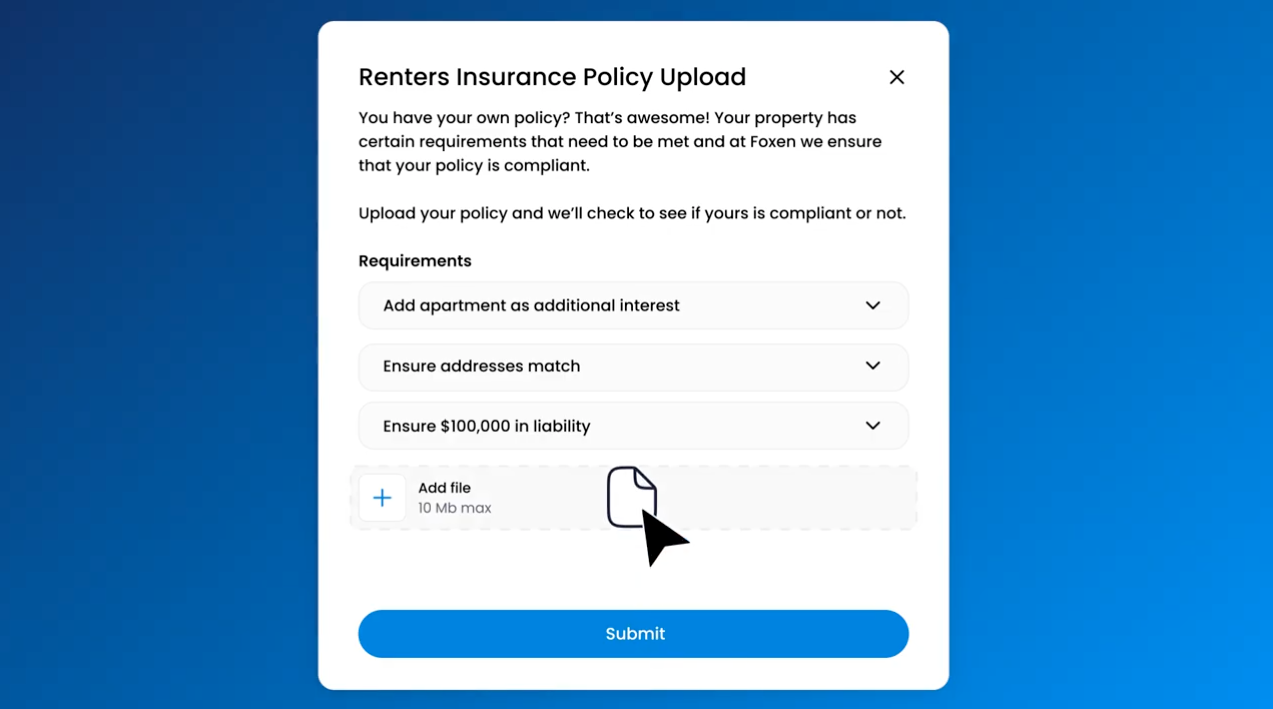
So to go a bit deeper into your question, right, and hit on a couple of key examples. So we do have insurance document review that's on our waiver product. Right? So a resident, you know, goes into our portal. They're uploading a policy. Our AI is then checking that across about 50 different rules that we have and kind of the lease requirements and what the property is delineating is important to them. And then the approval comes back in basically real time and is able to close the loop with the resident. On a rejection, we're being very diligent to make sure that the resident is getting basically the feedback, right, on what needs to change.
Coming into this role, I don't think I had the understanding or frankly, I never really thought that much about renters insurance other than, you know, having my own renters insurance policy. And I remember going through that process as a resident thinking about it. It was kind of complex and I, like, had a number of different documents that I wasn't really sure the difference between them. And I think that gave, you know, me and team like a good understanding of, you know, how important it is to be clear with the communication to the resident on if something isn't right and we aren't able to approve a document.
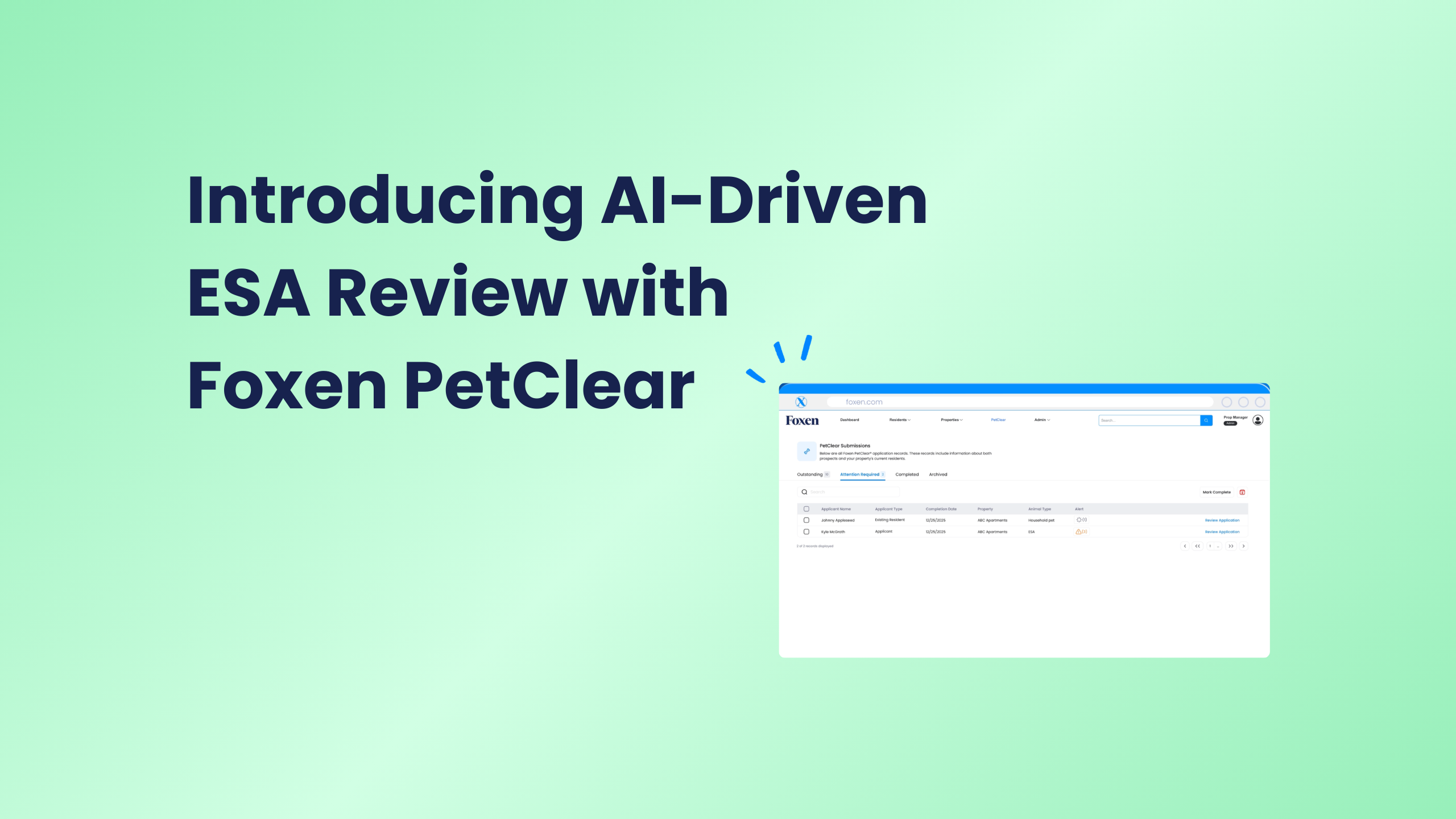
What's the feedback loop need to look like to make sure that they're getting the answers that they need? Yeah. A few other examples. So we have continuous monitoring for products like Waiver 24/7/365. And that's monitored and basically propagated by agents. And then on our PetClear product, which launched about a year ago, we have an AI workflow that reviews emotional support animal applications. And it's able to provide the property manager basically insights on what we see there and what our thoughts are in terms of the risk that the submission might represent.
Yeah. And you mentioned a lot of behind the scenes. I love that. Because we are...
We've been trained a lot of, like, how AI functions in the business from chat conversations and early adoption. And a lot of people make assumptions about where AI can exist in an organization. I love how you mentioned behind the scenes because these are human level reviews that normally would come from exception reporting and things like that that allow you to be in front of that customer more and drive the things that are gonna, you know, protect demand, create value in the organization. But as you move through these things, there's a growing need. And even more recently in the news around trust, like, are you thinking about guardrails within AI inside the things that you're deploying and even in the business units so that things are accurate and trustworthy for clients? How are you seeing this evolve? Yeah. It's definitely a timely question given the last couple of weeks. Right? And Yeah.
So we take a pretty deliberate approach. And that comes from both a process and a personnel. We have our security lead at Foxen sits in on almost all of our team meetings. So, like, we could not be walking more lockstep with those that know, you know, IT security best, which is an intentional step, right, to make sure that we're really configuring our agents and putting them in environments where things are safe and done properly. But in terms of the process, right, there's kind of a before launch, what's going on in production, and then, like, how do we kind of reinforce the continual learning. Right? So before launch, we're always establishing a business owner. We're thinking about, like, what is every step of the process end to end and, like, what are the... And you can think about one of those old Vizio, like, right, with, like, the yes, no. And, like, we're doing all that work at the front. So we understand, you know, where are the decisions being made, what data is coming in. And then what is the benchmark that the agent needs to meet? Right? I think that's a really important piece that's often overlooked. Like, we're always thinking about, like, what is the current state today and what KPIs are attached to that current state? And then how do we think about, you know, applying AI, whether it be a tool or an agent to improve, you know, the cost or the service quality? Most of the times, it's both. And then also reduce the risk. Right? In production, we're logging every decision and an action that agents are taking. The agents are in a container, meaning that they can't access the internet or anything like that.
And they are, you know, very specifically designed and focused on doing one thing. And that is like their sole purpose. Right?
And then on the feedback loop, you know, like I said, like feedback's a gift. Right? And I think, like, our team will live and die by how rich the feedback is from our organization and from our clients, frankly, moving forward.
And we take feedback very seriously. We do feedback review sessions weekly. And what we're doing is we're thinking about, for a particular agent, we have a number of let's say there's 30 cases that went to human review for a given week. Okay, great. So let's look at those cases and understand why were they escalated to human review? Why wasn't the agent able to accomplish those? And should they be escalated or should they not be? And what that does is it gives us an opportunity to go back to the rules, which is kind of like the principles with which the agent operates on a particular task and either remove a rule because it's causing confusion, edit an existing rule to make it a bit more on the nose or specific, or add a rule. And they're in that order because in my experience, adding rules tends to degrade performance. It's kind of addition by subtraction and that's how we tend to, you know, kind of hill climb, if you will, in terms of agent performance. Most of the time when we start, you know, the agents able to handle maybe 40, 50% of the workload and really not much more than that. And it really takes a full team effort and that feedback loop to kind of get to that, you know, 90 plus. And that's a very challenging process and, you know, the difficulty varies depending on the workflow. I love the removal part. I mean, you think about multifamily. It's like, take care of the real estate. Take care of the investor. Right? It's like, there's your rules. And then things creep in as we add policies. Well, we had a problem over here. And then, you know, you end up with this policy manual or something nobody follows because they don't read it all. And I love the way that you're thinking through that. You know, as AI changes even risk management, you mentioned, like, insurance, even the pets... Pet process of just really compliance around that and avoiding any kind of, like, pitfalls around damages, things like that. How do you see the difference between companies that are actually getting things done with AI and the ones that are just still, you know, they're circling it. They're talking about it, but they haven't really got to that rigorous testing, the piloting, and they're waiting to see, like, how... What do you see the differences of those two different organizations?
Yeah. Well, a couple of things at the top. I think just having access to AI is the first step. Right? Having a ChatGPT or a Claude license or what have you, right? Like that is the first step, but that's kind of table stakes, I think, at this point. That was kind of yeah, it's probably about a year old now.
You know, I think it's the companies that succeed are the ones that measure outcomes. And are... And look at AI like any other business practice. Right? If you were to spin up a new product and it was expensive, you look for ROI. You look for how clients are responding. You look for where... What happened to enterprise risk. Right? All of these things are very natural.
And I think we have to look at AI through a very similar lens and hold it accountable and look at it, you know, deterministically. So for me, like, I... It's really not all that different than, you know, product development, frankly. You're starting with a problem. You're understanding the rules and the detail behind the problem. You're then looking at, like, what is the current state in terms of measurement and, you know, where is that baseline and, like, where do we expect it to go? And if we were able to breach that, what does that mean for the business? Right? And the kind of, like, setting the vision and the aspiration and, you know, building followership behind an initiative.
It's driving accountability. One thing that we've, you know, continue to iterate with at Foxen is, you know, my team's obviously, like, working day to day building agents and trying to figure out where those fit within our organization and externally in our products. But with those internal workflows, it's often not always clear, like, who owns it after it's done. Right? And I think we've aligned that's really important to basically push down the ownership. Right? I may build an agent, but we need to build it such that the individual who owns x domain owns that agent moving forward. And my team will manage it and make sure it doesn't go down. But I'm not the expert in that space. And as that space evolves and changes, it should be that individual's...
They should be accountable for continuing to iterate the rules and how the agent behaves. So that ownership and keeping ownership top of mind, I think, really clear or really important.
And then around data, I think those companies that are thinking about their data and thinking about what is proprietary are probably... And how do we apply AI with respect to our data? Can we apply a layer of intelligence that produces insights that are hard to get elsewhere? Things like that will be incredibly important. And I think you're starting to see some of that come to light in the consumer realm. But I think, you know, B2B is maybe a little bit behind in some respects, but I think we'll start to see that here shortly.
And then the final piece is thinking about it in terms of platform. Right? So there's many fantastic AI platforms that are out there now for sale. We actually built one in house at Foxen. And the rationale there was specifically, you know, we wanted to build a... What... You know, it's basically like a control plane for agents where we could add capabilities and tools to this control plane and then basically like add agents over time and inherit all of those capabilities. And the thought there is not only like you have this platform, theoretically like you add another agent, like the cost comes down. That's true. But it also improves our velocity and our willingness to experiment. Because when the cost comes down and the time the market comes down, your willingness to go through what I would call like a two way door really starts to increase, right? Because there just isn't that much trade off costs. And we're just trying to get signal on like, you know, oftentimes we'll go in trying to solve one problem, not really knowing that there's a much larger problem, kind of just like sitting dormant, like two steps behind. And like those are usually the... Some of the larger unlocks. So it's having that flexibility and that platform level scale. And that can be hard for organizations to cold start. But there are numerous B2B platforms now that are, you know, basically AI agent platforms for enterprises that are secure that should be seriously looked at and I imagine will be over the next couple of months or years. Yeah. Yeah. I love your... I made some notes here on just thinking through things like as a building a product. You know, multifamily has been the product, the building. And I've said this for years which is, you know, multifamily has been really good at the development process but they looked at the physical plant, the physical real estate and...
You know, because they're already good at integrations. They're already good at understanding looking eighteen months out, like who's going to live here, what the market's going to go, all of those things to be able to assess risk. And bring in all the different disciplines and the order of those disciplines in order to make sure that the building stands strong. But they've also worked externally with an architect, with GCs, and fundamental disciplines, and they got them all working together to get the product so they can serve the customer. And I'm... I really love... I love seeing leaders like yourself come into multifamily and help think that way on the technology side because that is another development that they don't know that they're in. Right? Like, they're... As the world changes and rearranges their work. And I'm thinking about, like, now to the investor that says, how are we going to differentiate on yield? How are we gonna bring investors to the table that working with us is going to be different? Is our ability to bring in companies like Foxen to look at our business, find the value, bring that, you know, discipline to these elements of the business so that we can protect growth, make sure our teams know what's happening, and we can drive that customer experience.
And then the idea that around the platform. I really liked what you mentioned about that because I think the multifamily property could be a platform as well. And we saw this unfold in Las Vegas around the transformation from a city of gambling to back in the mob days to now bringing family activities and celebrity restaurants, sporting, gaming, like all these different transformations that are happening within a city that's bringing in customer expectations, recapitalization of markets. And, you know, there was that story of... I think it was MGM where they were... The hotel occupancy was strong. And if you looked at it from your experience and your benchmarks, the current state, as you mentioned, things are well. Occupancy is there. Hotel stays are there. But the customers were leaving, going onto the strip, spending money other places. You know? And so the aggregate purchasing power of the customer there's a lot more money being spent off property than on property. Right? So you start to think about inside our homes, people are buying insurance. They're paying for things online. They're getting home deliveries. The work you do with DoorDash, getting them to buy more. Like, I think that the customer purchasing power is there. And how do you capture that through technology by creating value inside this platform of property? But I wanna give the leaders and the followers of this program the confidence. Like, we've already been really good at this. We develop properties. We understand foundations. We understand building codes, things that you can't rush, right, to make sure that it stands strong because Home Depot and Lowe's has been there for years. Right? You can build your own property. But going out, finding land, and then saying, I wanna build something, rushing to Lowe's, buying some two by fours and... Like, it's not going to stand. So, you know, you gotta work with partners that understand the disciplines to make sure, like... You know, we're in an era, I think, right now where AI even doesn't even have... Like, in development, we... There was time when we didn't have certain fire codes. We didn't have certain GFIs or certain building codes or inspections or things that can sometimes slow the process down, but also make sure that the trust is there, that, you know, that's... It's gonna be stable investment. And so I love to see emergence of, you know, bright minds coming to multifamily and bringing value engineering to these investments. And I really appreciate you sharing a lot of your insight here. What I would love to do before this is maybe our final question. I'll leave it with that is, you know, what have you learned from multifamily so far? You know, I'm curious about that. And maybe we can talk about what's the final thing our viewers should be... Leave with. But I'm most interested from you, like, what have you learned by sharing time with multifamily, both inside operations, development, whatever that may be for you? Yeah. It's a great question.
You know, I think it's multi... Like I said earlier, like, multifamily is, you know, I look at it, and I see a lot of parallels with my experience with the restaurant industry, frankly. Be... Just around, like, you know, margins are tight. Everyone's working, you know, like long shifts. You know, the leverage piece is incredibly important to scale. Lots of rotations. Yeah. Rates have a big factor. Right? And I look at it and go, like, and it's complex in the sense that, you know, from where Foxen sits, it's B2B2C. Right? So there's a lot of stakeholders involved in it. I know many of our peer and our partners, you know, are in the same boat.
I think I've been really, really almost not surprised, but I've found a lot of, I guess, energy from, you know, when I was at OPTECH, that was the first time I've been around, you know, kind of industry peers, if you will. There's so much drive to improve the resident experience. I think that is fantastic. You know, having been a renter for most of my adult life, I can't say I necessarily felt that living... I lived in Chicago.
And, know, it was fine, but it wasn't like they were... There was necessarily like a focus on it. And it seems like that is... You know, what is the resident experience? Are we giving them a software or a...
An experience in onboarding or in... As they're being brought into the lease that is, you know, commiserate with, like, you know, getting a new iPhone. Right? And I think, like, that is the bar that residents see. It's, you know, it's easy. It's seamless. And it does seem like we are moving in that direction.
I also was, you know, really almost overtaken by how much it seems like the property manager's role has changed. You know, I think about that as kind of like the core job to be done across these properties. And it seems like there's just... It's just an incredible amount of contact switching. And I think about that and it was caring about it through a couple of the different sessions and some of my conversations. And I look at, you know, some of these tools that the PMSs are bringing online, that Foxen is bringing online, that other partners are bringing online. And I think it will take some time, but I think there is a forward looking view called eight to twelve months from now where, you know, that context switching is much easier because there are so many more tools and capabilities powered by AI at the disposal of the property manager that they're able to be much more efficient. The resident experience is improved.
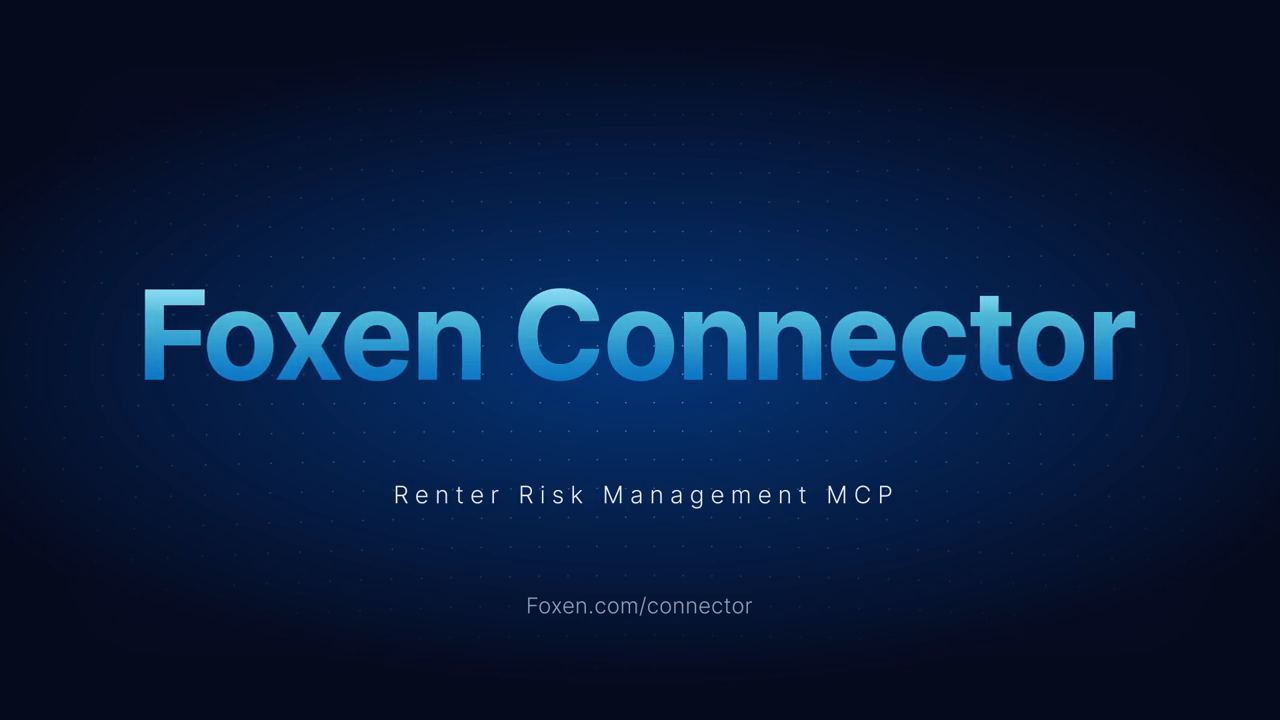
And, you know, they're not... They don't have to work overtime every week to, like, you know, clear the cache of tours that they haven't responded to or whatnot. So I'm very bullish that I think more technology in this space will yield to better outcomes, not only for the individuals working in the space, but for residents and for owners. No. I love that. And you're right about that. And, you know, the benefit of solving for that even as, like, eight to twelve months, as you mentioned, and beyond, is we end up solving one of the biggest problems, which is talent. Right? Like, how do you make it exciting to work in a modern organization where life... Work is fun, work is exciting, work is more efficient, easier, and you can be there with your customers and things like that versus like managing all these different things that sometimes becomes like, if it was a football analogy, it'd be more like the linebacker, you know, just taking the hits, you know. Make it more fun to work there allows us to provide great experiences for employees as well. Well, we are pretty much up on time here. I'd love to... This... We've talked about a lot of stuff. What I'd like to do is leave you with, you know, just the question is, like, was there something we didn't talk about that you want our listeners to know about? Or any kind of final thoughts? I'd like to wrap with that. Yeah. So I think the only thing that... Thing I think I would flag is we... So we're early, you know, kind of in our kind of external AI journey, if you will. As I said, we've been kind of having had AI behind the scenes for quite a long time at Foxen. And last week at OPTECH, we launched the Foxen Connector or kind of started talking about it. It will be available early in '27.
And, you know, this for us is a really big step mainly because I'm really excited to see what property managers and operators want to understand. Right? I think this is kind of a new paradigm for many in multifamily on the vendor side where we've had all this data for a long time. We've been providing these services. And now, you know, with agents, there's a bit of like an... You know, as an open chat window and, you know, it's not to say that all the data will be available at launch. But we're... I'm really excited to get that signal because I come from a domain where, like, consumer signal was, kind of what you build behind. You kind of, like, you see where consumers gravitate, and then you just kind of build there. Right? And you continue to add features, and it's never a linear path. It always has... You know, it's kind of like two steps forward, one step back. But to me, that's gonna be a big step for Foxen, and, you know, it's the first MCP in kind of like multifamily risk management. And I think we're just incredibly excited about what that will be for our clients and what it can represent in the future for multifamily owners and property managers in terms of managing risk. And I'm super bullish on kind of what that turns into over the next twelve months. Yeah. No. It's been exciting to watch the brand. We'll continue to follow your success. And really just wanna thank you for taking the time to share with our viewers and listeners some of the things that you're thinking about because I think it's, again, getting around the right people that can help us guide, make great business decisions that are gonna make our business better. And I know that you guys are committed to doing that. So I appreciate you coming on. For those of you that want more from this type of a conversation, follow us along. I mean, if you enjoyed, got some value out of this episode, go ahead and share it. Share that with the audience. Share that in Slack or in Teams or a text, whatever that may be. But if you have somebody else in your organization that's responsible for the growth and the development of people, they're involved in technology and the customer experience and the employee experience, this is an episode I would encourage you to share with them. So please do that, and that helps other people discover the show and learn about what, you know, John and the Foxen team are doing to make the business better. So join us upcoming at the Multifamily Innovation Technology and AI Summit. It's coming up in December. Get registered today. There's only a few days left to do that. We're looking forward to you being in that room, to getting that signal as John talked about on how to make multifamily business better for you, your investors, and your customers. We'll see you guys in the next episode. See you.