The Amenity Glow-Up: How Multifamily Operators Are Turning Services Into Revenue

Free yourself from health insurance.
Properties competing on physical amenities alone are facing diminishing returns: higher costs and amenities that often go unused by residents. Presented at Livewire, Multifamily Media Network's virtual education summit, this session with Foxen's Megan Eales Monroe and Sundance Property Management's Jennifer Holp covers how operators are shifting toward service-based amenities that generate revenue, impress residents, and free up property staff.
And we are back. The second session of the second day of LiveWire.
Very excited about this this next this next duo. We're gonna have Megan and Jennifer here in a minute. Jennifer, Megan, thank you both for being here and I'll pass it to you.
Thanks so much, Justin. We are really excited to be here, and thank you again to, the Multifamily Media Network for hosting this. So let's get started with some quick introductions. So I'm Megan Eels Monroe. I'm the senior product marketing, manager at Foxen, and we are a prop tech company. We work with multifamily operators really all across the country, helping them think differently about how they are driving revenue and protecting their communities.
And I'm here today with Jennifer Hope, VP of operations at Sundance Property Management. If you'd like to introduce yourself and say hello.
Yes. Thank you for having me. I've been in this industry for twenty three years, and my how things have changed, but also kinda stayed the same. I'm happy to be here today discussing, the amenity glow up.
And we are really happy to have you.
So today, we're gonna do our best to challenge a big assumption that this industry has been running on for years, that's that amenities are physical things that you build, and they are so much more than that. So by the end of today, we really want you to be walking away with a new framework and a new way of thinking about this.
So before we do that, I wanna hear from you all. You can scan that QR code if you haven't already, so that you can respond to our poll. We wanna know how do you actually decide what amenities to offer residents? I don't know if this is a question you've answered before. I'm really honestly, interested to hear what the the responses are. You know, maybe it's a little bit of whatever the property next door has, just keeping your eyes open, looking at the competition or maybe benchmarking that a little bit more formally. Good for you.
Or, you know, no shame if this is your honest answer. Maybe it's a little bit of a gut thing. Maybe it's vibes based. Maybe it's, well, we felt like we should have this. If that's your answer, that is totally okay. No shame at all. We are just trying to understand a little bit better how these decisions get made.
Okay. Let's see.
Oh, you actually ask your residents. Very fancy.
Looks like we've got a bit of owner developer said so. Okay. That adds up. And then yes, some of you are benchmarking the competition. That's great. Yeah. Is this what you thought the results would be, Jennifer?
Yeah, I think so.
I thought it would be mixed around a little bit of both. I love all the answers. It's... I I thought we might get a little bit of vibes, pure gut instinct, but I think, obviously, we ask a lot of residents. The developer and owners really, I'm not surprised that that's the highest one.
Yeah. And, you know, on second thought, those of you who are here at this event, making time to learn, I guess it adds up that y'all are not the ones going based on vibes alone. So congratulations.
Well, anyways, let's, let's get into things a little bit more. So I'd love to start things off by hearing from you, Jennifer. You know, from your perspective at Sundance, how do you think about planning your amenity offering, and how has that evolved over time?
Yeah. You know, twenty years ago, apartment amenities centered on the basics clubhouses with pools, fitness centers, garages, playgrounds, maybe a few tennis courts, outdoor grilling areas for seating. By the late 2000s and early twenty ten, priorities shifted.
Millennials drove demand, urban, walkable living, close to work, shopping, entertainment, along with the conveniences like in unit laundry, storage spaces, dog parks, bike storage, package rooms, such. From there, amenities became more experience driven. Communities introduced theater rooms, infinity pools, golf simulators, putting greens, outdoor pits, and social gathering designed to create that lifestyle, not just a place to live.
And I think now we're beginning to see another evolution, a shift towards what renters really value most.
Yeah, absolutely.
So I would just really wanna emphasize that I think that the definition of an amenity has shifted dramatically and, and really that bar just keeps moving. What felt premium back in 2015 is just now table stakes. People expect that as the basic, like high speed internet. Great example, you know, once that was an awesome selling point. Now it's like, if you don't have that, that's a problem.
And I think we're kind of seeing the same thing maybe happening a little bit with fitness centers, dog parks. I don't wanna, you know, have it too spicy of a take. People, you know, obviously care about their pets, but some of these things, they're just becoming, you know, a baseline expectation.
And obviously, you know, local market and resident demographics are really driving everything. It's gonna change so much depending on, you know, who's living in your property.
A workforce housing community versus like a brand new class a luxury tower. They're gonna have completely different amenity playbooks and they should. And then, you know, something, that maybe I haven't thought of before is that if you're a third party operator working with a diverse group of owners, you might have a bit of an edge here. You know, you're seeing across portfolios and you can bring data that individual owners may not have. So that can really be, insightful, leverage.
Yeah. So we know without a doubt, amenities are really important. They help attract and retain your renters in a competitive leasing market like the one we're in this year.
But here's where things get a little bit uncomfortable.
Is it possible at all that with amenities, we might be losing the plot a little bit? These are all examples of real amenities. Maybe they are amenities that some of you have at your properties. Some of these pool, gym.
Yeah. That's, that's pretty standard. Some of these are a little bit more out there. Golf simulators, anyone?
I've seen these at a couple properties that I've toured. Have I ever used one? No.
Cold plunge pools. I think, you know, if you've got some really wellness conscious renters, maybe you've got one or two of them who are jumping in that ice cold water every day. I don't know about the rest of everyone. Podcast rooms.
I think, you know, this is something that got really buzzy, especially during COVID, you know, people, are launching their podcasts. The creator economy is really fueling this, but that's quite a unique amenity, for property. Dog baths, you know, no shade there. I have a dog.
I very much appreciate having a dog bath, but I don't know about you, Jennifer. Some of these dog baths that I've seen, they're nicer than human spas.
They are.
So yes, I, I just, I'm poking a little bit fun here to say, you know, are all of these things amenities that your residents actually value and actually use on a daily basis? And I think that, you know, in class A, we're, we're seeing a lot of this where everyone is trying to outdo the property next door. And at some point we just have to ask, are people really using this stuff?
So, yeah, we wanna, we wanna take a step back today and, and think about this slightly differently. So we wanna propose that we stop treating amenities as high capital, physical investments in the property only and start treating them as scalable services. Because like we just talked about, everyone's trying to outdo the competition. So doubling down on those high capital amenity investments might not be the best strategy to win.
Instead focus on what matters to your residents. What's unique about your property's demographic, about your renter profile. Why do residents choose your property over the competition? And then, we wanna think about how we can emphasize services over spaces.
A service can scale. It can adjust. It can be optimized over time. A golf simulator, not so much.
So let's let's talk a little bit about what it might be that residents actually value today. So we've got another poll. We wanna hear from you all. You are talking
to residents on a day to day basis, we hope.
What amenities matter most to your residents? So we've got fitness and wellness. We've got pet amenities, social spaces, financial perks. This is kind of a new category.
Convenience services.
Okay. We're getting a little bit of everything.
Those social spaces, pet amenities, of course. Yeah. I could talk about pets all day. Did you know that more renters have pets than have children? That's from a report that, Zillow did, but yes, pets are, are huge.
All right.
Well, it looks like pet amenities take the day. That does not surprise me at all.
What are, what do you think of these results, Jennifer?
That doesn't surprise me at all. And like you said, a lot of places have more pets than they do children and pets provide a physical and emotional, significant, they pose emotional benefits and physical benefits to, to their owners.
And let's be fair, trying to think about wrangling a pet into the tub to get them locked and dried and up because you know, most dogs want to jump out and run and shake off all the water. Those pet spas and pet stations are a really nice amenity where you can just go and have the space to do it in and be able to walk away from that.
Absolutely. Absolutely. As a dog owner who lived, in a pretty urban setting, I think that those are really valuable too, especially, you know, protected dog park areas where they can, you know, go outside without having to go out in the street. I think anything with pets is gonna be a winner.
Right? Okay. So let's, let's, so I noticed that, you know, nobody chose financial perks. I wanna bring in an example here that maybe some people have not thought of.
And I know that it's not common to think of financial perks as an amenity, or maybe it's not super clear, like what would we even mean by financial perks being an amenity. I wanna talk about an example with closing the credit wellness gap. So, I don't know if you all know this, but rent payments, they're not automatically reported to the credit bureaus like Experian, TransUnion, like a car payment or a home payment would be. Fannie Mae did a, a survey of renters and 80% of renters said that they want their on time rent payments to be reported to credit bureaus so that they could show up on their credit report.
But then only 14% of renters say that this is something their community does. And from, the Satisfacts research. So I see an untapped opportunity here for, you know, a credit building service as something that could be a property amenity. And this is something that operators are doing already with great success.
So at Foxen, we work with Harrison Street Real Estate. They have a student housing portfolio, and they were actually able to see some pretty interesting results by rolling out rent reporting to their portfolio. One of the biggest benefits was that they saw 99% on time rent payments. You know, when, when residents know that those payments aren't showing up on their credit report, that I think provides a bit of a carrot, you know, a reason to make sure that those payments get sent on time.
We saw a 70% participation rate, residents, you know, have the choice of whether they wanted to, stay and participate in the program or not.
And on average, there was a 33 credit score increase. And I mentioned that this was for a student housing portfolio. 35% of residents established their credit score for the first time, which is, you know, not always so easy to do when you're just starting out. Sometimes it kind of feels like you have to have credit already to be approved for any, you know, credit cards or loans where you could start building credit, but, having rent reported, especially because a lot of students are living, you know, in off campus student housing are getting a little bit of help from mom and dad, having that reflect on their credit report so that they can start out with a credit score, is, is really huge for them.
So this is a win win for the property and for the renter. And I think that this year is an example of how something that we might not traditionally think about as an amenity, a financial service actually can be an amenity that provides something really valuable that that renters need. And this is another good example of catering that to your resident demographic to meet, those needs.
So, this is just one example. Obviously, there's lots of different ways that you could do this, but love to hear again, hear, from, Jennifer, you know, what benefits have have you experienced by reimagining an amenity?
Yeah. We offer credit building to our residents and participation continues to grow every month. I think what's especially encouraging is that these are often the residents that are now paying on time consistently, which not only helps them strengthen their financial future, but also helps reduce delinquency and the amount of time our teams are spending managing those past due accounts. So it's a great example of many that creates the value for both residents and the community supporting financial wellness while also improving operational performance.
And then when you start to think about what other things you can be offering and putting out there that are not physical, are not gonna cost you on the expense side, but they can then continue to generate revenue and build value with the residents. I think that that becomes a game changer.
Yeah. And also a point to think about too, is that those kinds of services don't always have any kind of cost, like hard cost to the business. In some cases they can even be fully resident funded. We'll talk about that a little bit more in a moment, but that's a huge difference from some of those capital intensive projects that we were talking about a moment ago. One more poll for you all.
What is your current approach to resident paid services? Like I just mentioned, where rather than it being a high capital investment or an upfront cost to the owner or to the property that, some of these benefits can be funded by residents. Is this something that you all are doing? Maybe you all are experts in this and you have established programs.
Tell us all about it. Okay. Somebody is an expert here. Or maybe this is just somewhere you haven't really gone yet.
You haven't tried it out. Okay. Okay. We've got a good spread here of newbies and experts.
And I I think that this really is new territory for for a lot of teams. This is just not something that all of us have experience with, but, you know, one one reason why at least I keep hearing this coming up, with, with teams right now is because opportunity to drive margin, like additional revenue streams is so important in the current, you know, environment that we're in.
I've heard that teams are struggling a little bit this leasing season, that keeping that occupancy rate up, has, has been challenging because of the lingering effects of oversupply from the past few years. And so rent growth might not always be a way to drive that, that bottom line, but resident paid services that create a new ancillary income stream could be, you know, something to help fill in that, that gap in, revenue growth.
So, yeah, for those of you who haven't gone there yet, maybe now is the time to start thinking about it.
So let's talk about this. How do we take, you know, something that we have thought of as a cost center with amenities and turn it into a value engine?
Because really modern amenities, especially when you apply that service based framework, can both strengthen the resident experience and strengthen your NOI.
And in order for this to work, I think the way that it's framed and the way that it's presented to renters really matters enormously. I think, you know, if you present a program, you know, as like a compliance requirement, like this is non optional, everyone has to do this and there's not a lot of agency or participation or, you know, good information available for residents about why, I think you'll probably see some pushback.
But on the other hand, if, if you're able to present, a service like this as something that protects or benefits the renter and they do have agency and empowerment about how they participate in, in the program, that adoption is gonna go, right up. So let's talk about a concrete example here.
So are people here familiar with the concepts of a property damage liability waiver program?
I think, you know, most people have heard this term, but maybe not delved into it. So what this is, is it's a program that ensures that residents are staying compliant with the requirements in their lease for liability through a waiver program the property offers. And when you hear that, might be like, okay, so this is a program that residents get pushed into. Would this be something that they would push back against? Would there be a lot of friction there? But I think this is a good example of how doing those things that I just talked about, leading with the value, leading with convenience, making it, you know, a super great service for renters, that, that meets the need that they have is where you can, overcome that.
So yes, residents can, will be conveniently auto enrolled. It happens at the time that they sign their lease. And that way, you know, if on day one, there's a property damage, incident, they were already enrolled. You don't, you're not in this awkward spot of saying, oh my gosh, did they purchase their renter's insurance policy?
Did we have it on file? Was their renter's insurance policy set up correctly? It's automatic. And so really, you know, that's protecting the property, but it's also protecting the renter.
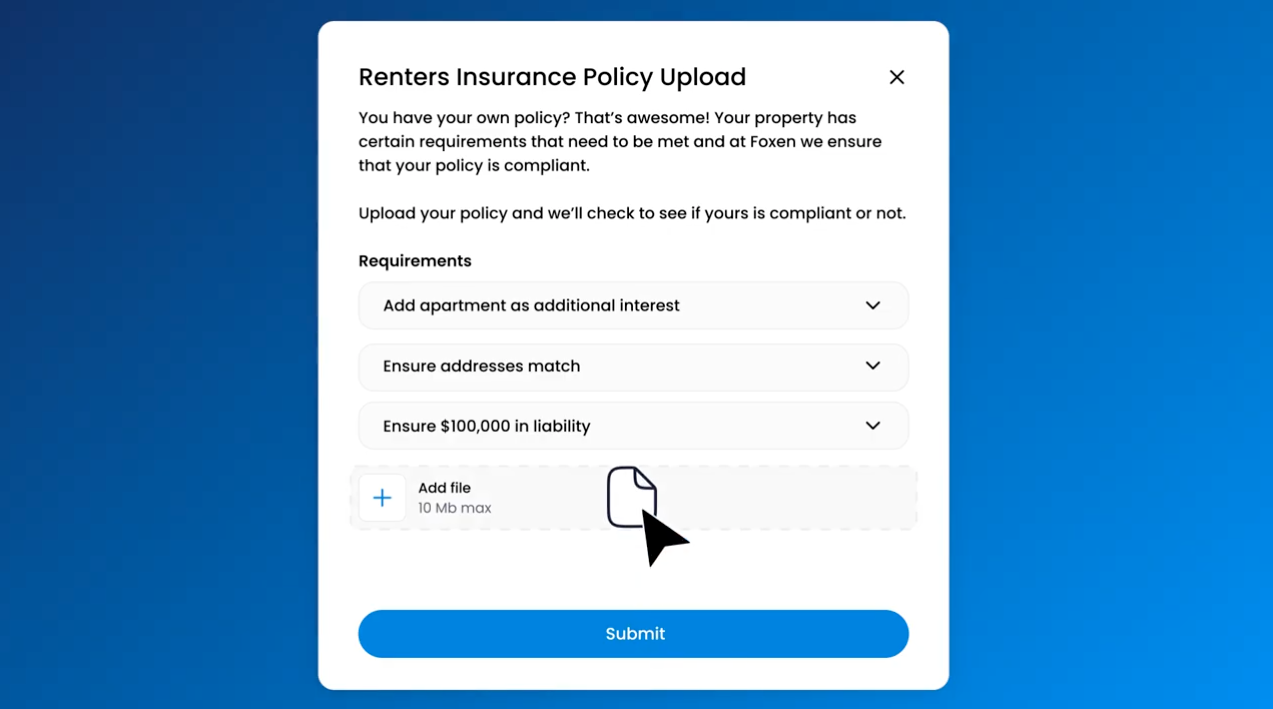
They can opt out by providing proof of a compliant renter's insurance policy. AI, you know, is definitely having its its moment right now. And one of the great things that AI can be used for is document parsing. So when someone uploads a document with a certificate of insurance, can scan that and make sure that it meets requirements.
And then here's where it gets to what we were talking about with revenue generation.
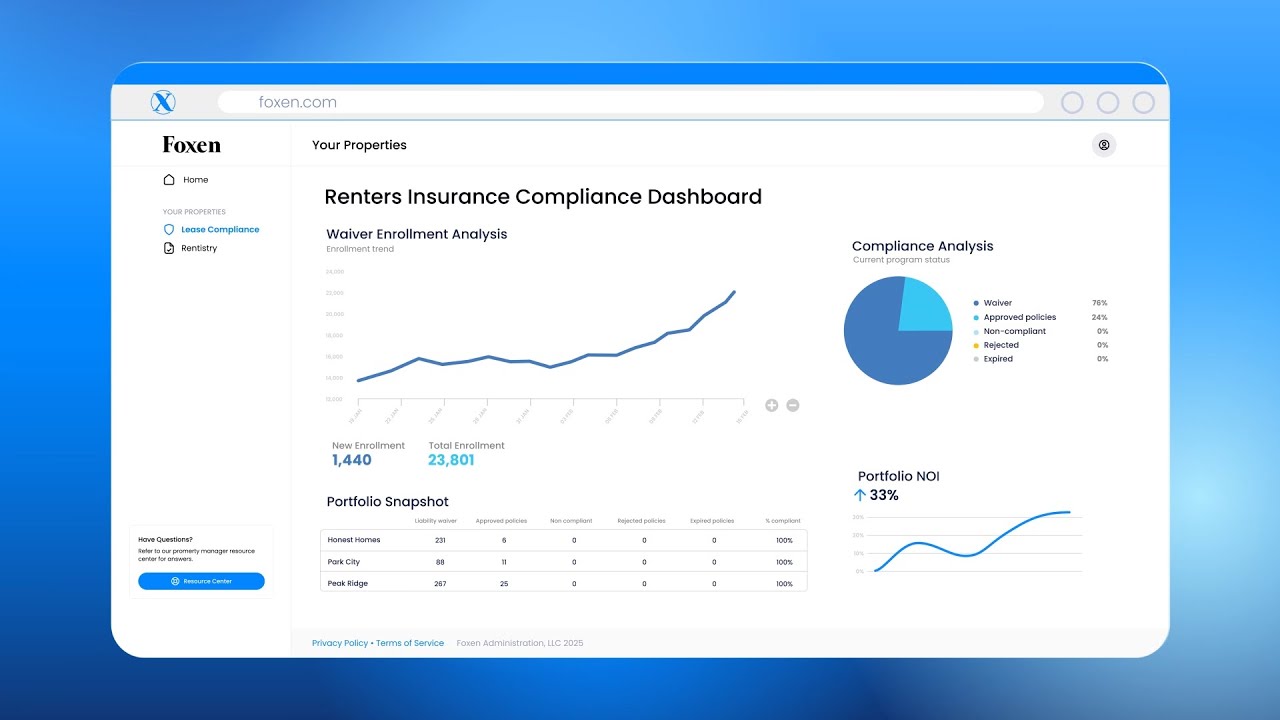
So enrolling residents into that Weaver Program is actually a source of revenue for the property. And the cost of that enrollment goes towards the, tenant legal liability policy that's protecting the property, but also generates a new source of ancillary income.
So I really think this is the model in action. It's something that residents genuinely need that protection, and then the revenue follows. So Jennifer, I would love to hear from you. You know, this is a program that you have implemented at Sundance. How has this worked for you?
Yeah, absolutely. It's been great. As Megan mentioned, residents are automatically enrolled, for convenience with the option to opt out at any time, and Foxen monitors that. We don't have to worry about our teams making sure that's monitored and keeping that in compliance.
They do that all for us. And then if a resident has a regular traditional renter's policy in place and it lapses or becomes, non compliant at any point, Foxen picks that up. They put the waiver fee and...
Well, enroll them into the waiver program, add the waiver fee to their ledger, all in the background. We're not doing any of that, so that's really great for us. And then also to note, many residents ultimately choose the waiver program because of the simplicity and the convenience that it provides. So going back to that convenience amenity that we put out there earlier.
I think along with that, it's not just really like the waiver program either, but the shifting to more of that service amenity to try to drive more value, not just for the resident, but also for these, our communities.
We've also implemented bulk internet programs that have brought fiber connectivity into our communities, valet trash services, flexible payment options, and the waiver fee programs. And we've found it's these services consistently creating value for residents, while we're also generating meaningful revenue opportunities for our communities and our ownership.
And they're convenience driven lifestyle focused solutions. And that aligns with what today's renters are really prioritizing and willing to pay for.
So now it's time for the million dollar question.
How do you actually measure the NOI impact of resident paid services?
You know, what I can say from the portfolios that we've worked with is that the measurement starts before you launch. You need a baseline. You need to know what it is on day one before implementing a new program. So that way you can compare the before and after.
So some metrics, you know, depending on what kind of, amenity or resident paid service that you're implementing that you could think about, using to measure would be opt out rate. So, you know, if it's a program like, you know, the auto enrollment into a waiver program, for example, like what percentage of residents stay enrolled versus taking an action to opt out. And then on the flip side of that, if it's an opt in based service, what's the opt in rate? So that's a really, really important one to keep your finger on the pulse over time.
Revenue per unit, you know, adding up, what is the, you know, fee that residents are paying on a monthly or yearly basis, multiplied by that enrollment rate can give you a good, you know, overview number of what the annual impact on revenue is gonna be across the portfolio. That's an easy way to measure it. If if you're looking at a service, like, you know, compliance related, like we were talking about, looking at the compliance rate, which with that opt out model that requires proof. It actually always stays at a 100%, which is cool.
But depending on what kind of service you're trying to measure that impact of, there's different ways to slice that. And then another one to think about is resident satisfaction scores. So I hope that you all have a good process in place of surveying residents, regularly throughout the life cycle of their journey with your property, asking them directly how they feel about your amenity and service offerings and looking for opportunities to improve. So yeah, how about you, Jennifer?
How are you measuring the NOI impact of some of these services?
Yeah. Obviously you're looking at the additional revenue you're generating without any significant capital expense for non physical amenity additions.
So that's an easy one to look at and see the value of that. I think the another key metric, and you talked about resident satisfaction, but it's extremely important, is resident retention and satisfaction goes along with that. But the more value we provide residents through convenience services, lifestyle focused offerings, the more likely they are to renew their leases year over year. Industry data is consistently shows us that a resident often doesn't become truly profitable until after about eighteen months of occupancy, which makes retention one of the most important drivers of long term property performance. I think that's why it's critical to continue identifying opportunities to enhance resident experience and increase the perceived value of the community.
At Sundance, we regularly evaluate property KPIs and recognize teams annually for achieving year over year NOI growth.
As rental rates growth, rental growth becomes increasingly difficult and has slowed down a lot in today's market, finding these alternative and innovative ways to drive income and improve retention has, in my opinion, become more important than ever.
I love that you are involving your team in this, like your site staff and really, you know, having them have full transparency into the performance of the properties, they are directly responsible for driving, that is really special.
And I hope that that's, you know, something that we see more and more continue to do. I've, I've heard that that's not always, you know, something that happens, maybe taken for granted a little bit, that teams don't feel super connected to those NOI metrics. So makes me really happy to hear that that's something you prioritize.
So, wanna kind of frame up some of the takeaways for you all from this session before we shift gears and and take some q and a. So I think that there's really three things we want you all to remember walking out of the session. So the first one is to reframe.
So we're shifting away from thinking about amenities as cost centers and starting to think about amenities as scalable services, whether it's something that's resident paid or not, something that you can adjust and optimize over time that can evolve to, meet the needs of your renters. And then the second one is to be very specific about identifying the needs of your renters and be creative here. Be curious. Ask them what matters to them. And then focus on ways that you can meet your renters' real needs to drive satisfaction and retention, whether it's through those resident paid services or just through other ways that you are catering to their needs at your property. That is, you know, the better strategy rather than packing in all of the amenities. Meeting real needs that renters have is far better.
And then the last one, is to think about how you can use your amenity package to drive value. Yes, for the resident, but also for your business. So this can be your opportunity. If you have not yet, think about how you can introduce resident paid services.
With resident paid services, the bar is high. You have to prove the value to the renter. You have to position that value to them in a way that is going to click, that they're gonna understand why it matters to them and why it's something that they would choose to pay for. But if you can bridge that gap successfully, you can increase your NOI for the property without adding new costs.
So yeah. Jennifer, any thoughts to add here?
Yeah. Yeah. Yeah. I just wanna add a few things. I think it's definitely a balance too, so don't get us wrong. Like there's definitely gonna be a need for those physical amenities out there, especially at those A class properties.
At Sundance, we're a third party management company, and many of our communities don't have traditional clubhouses. So we have learned to think differently and get creative about these amenities.
You know, as technology continues to evolve, reshape the way residents define what value is to them, I think it's important that we consider these changing needs of each generation. When we say amenity today, what does that mean to all of our renters?
And then really in a world where people are constantly trying to just keep up with an always changing landscape, I think we as housing providers have a opportunity to offer more than just a place to live. We can create spaces that provide relief from the daily grind, spaces where residents can disconnect, recharge, and just simply breathe.
That's where the future of apartment amenities, I think, is headed, and where we can really create value.
I think we've talked a lot about technology, but it's a great example.
What was once considered a luxury or nice to have has now become an expectation. I saw a comment that said, One gig here, please, which I totally agree.
It's much like air conditioning became standard decades ago. It's very similarly that. It's expected today, And reliable, high speed is no longer optional. Residents expect it. And the faster and more seamless, the better.
At the same time, technologies put wellness resources in the palm of our hands. And today, wellness extends beyond the physical health. Residents are increasingly focused on mental well-being, financial wellness, balance, overall quality of life.
These priorities are shaping what modern amenities look like and what residents truly value where... In the places that they're calling home.
I think that as third party operators, we have a unique opportunity to help owners strategically think about amenities, physical and nonphysical.
And with properties that have aging spaces that no longer provide meaningful value to residents, such as, you know, we went in and did retrofits and put washer and dryer hookups in all these units, and we have these laundry rooms that once we're generating a lot of income and today are not where they used to be. Is that, and we talk about pets a little bit again, is that an opportunity to create a pet area, a spa or pet station to wash the pets because the water's already there. So the physical side to start to think about what kind of retrofits you can do, we've got tennis courts that no one uses anymore.
So what are you retrofitting those? We had an owner that did a different type of play place for children, also did pickleball courts, different things to be able to really strategically think about what makes sense. And then on the non service side, think about that financial wellness, what residents need to make sure that you're transforming spaces that better align with today's renter priorities and ultimately create the value for the property.
Absolutely.
Today's renters are looking for more than just an apartment. They want that lifestyle experience. They value communities that offer convenience, connection, and a sense of full service in a world where self-service has increasingly become the norm. It used to be years back, we had full service gas stations and people came out and, you know, really took care of you, full service there. And now everything's full service, but we still want to be able to have that value and feel that.
I think the communities that stand out are the ones that can create an environment where residents feel supported, cared for, and connected to something beyond their four walls. And that experience is just beca... Is becoming just as important as the apartment itself.
Yes, absolutely. And I don't want you all to walk out of here saying, you know, we're, we're saying amenities don't matter, that physical amenities aren't important. No, that is not our takeaway here. What we're just trying to point out is that it's not about piling on more and more and more and more and more different kinds of amenities to win. It's about choosing the right ones, the ones that matter to your renters, the ones that create that sense of connectedness that Jennifer was talking about.
It's, it's not about having the most, about having just everything that you could potentially think of, because that's gonna get real expensive and that may not come back to your bottom line. But if you can target the ones that are gonna have that impact and then support it with those nonphysical amenities, the services that scale, that is a winning combo right there.
Yeah.
Well, I think we have some time for a little bit of a Q and A. Does anybody have any questions for us?
Yeah. We've...
I've been gathering a few. Thank you, Jennifer. Megan, this is great, kind of allowing us to to rethink. And Jennifer, appreciate you bringing up some of that conversion conversion of amenities kind of question.
That was definitely something that, that popped up. When you're going to, you know, convert amenities, you kind of touched on a little bit, but you can expand upon it. Like what is a strategy, right? Like to, to, to, to do something like an aging amenity, like, like you said, the water with the, the water that makes sense.
Like how do you identify which ones to work on first or, or to align those physical spaces with that modern renter when you're converting an amenity?
I think you've got to have a sense of what that your particular community needs and what that demographic of resident you have on-site to then know where do we need to go in that direction. We have a site here in Cincinnati who's really, the owner's been great about really having the conversation of what amenities do we need to look at? They have they have it all, the pool, the fitness room. And so then we talk about adding yoga. And is it not just the fitness room, but adding machines that really matter to the resident that create more of that experience?
And we've really just been tackling them kind of ticking them off on either what that amenity looks like. So one of the amenities, like I talked about that tennis court, it was aging to where we had to do something.
Was either redo the tennis courts, resurface and leave it as a tennis court, or think about what makes sense here. We have an opportunity to really create some value for these residents. We have a ton of children. So it was a lot of planning and strategic thoughts that went into it of how do we divide this up?
What does that look like? Or should we add this? And it was a lot of working with the owner and talking about, okay, if we did this, what's that expense really look like? And then when we finished that piece, it was, okay, let's look at the next one and continue from there.
Yeah. Nice. And and someone just dropped something else here. I got in terms of... We'll talk about services here in a second, but someone asked, do you know of properties that use full concierge service? They're considering implementing something like that. What's your experience or or or knowledge in that in that vein?
I don't have anything. I do think there's a need out there for certain types of properties. We don't have a lot of A properties, but I do think that that's something that's coming along. Like I said, the full service, it's...
We let this go. Like, the the renting and the the housing, everything's evolved so much. And, you know, we went through a time from 2010 where we recovered from, you know, 2007 and all that to where we were programmed every seven years, there would be a shift. And so we get to '16 and '17 and things are still going pretty good.
Where's the shoe gonna drop? And we keep going along and going along and things go well. But in the meantime, we're also like, okay, well let's slim up some expenses. And so you start to really kind of try to take some things away.
We learn that people do like a level of self-service where they can go in and do it themselves. But I think we took some of that value away of full concierge where, hey, we're gonna come in and really take care of you and cater to you. And in, like I said, in this world where there's constantly changing landscapes and we need that, like, breakaway, it's nice for somebody to just take care of us. So I think there's some value there.
Yeah. Yeah. For sure. And and when you're using like...
I I think this falls under, you know, this, but also with like financial services or anything like that. When do you really like decide on a third party for that versus doing something in house? Because you could write staff your own concierge or you could use a third party. You could work with a company like Foxen to do this other thing.
Like, how do you decide like, oh, we're gonna own this as the PMC piece or when I wanna lean into somebody else for that support?
I think it matters in the early planning of what that looks like and trying to build that out. And does your team have the bandwidth to do it and do it right? If you don't, and you're trying to shortchange yourself by keeping it in house, there are specialists out there that can do this for you and make it efficient and get it done quickly. I mean, the waiver program with Foxen, we are completely hands off, and it's great to not have... To just have that peace of mind that there is insurance on all of our properties no matter what, and Foxen is making sure that happens. That's important. So, I think it really goes in the early planning of what makes sense and if you can do it right. If you can't, you should probably use somebody who can do it.
Right. And then, and that's like checking two boxes, right? Cause you're getting some operational things done. You're getting this other thing, this benefit to the resident.
And that brings me to the last question here. And this is for both of you, Megan and Jennifer, just ideas around this. But when you're talking about, you know, all the kinds of amenities, right? These physical amenities, these service amenities, financial services, what are the approaches in terms of bundling them together as a marketing concept or as a benefit to a to a prospect when you're leasing or going through that process?
Like, how do you engage with that? When is...
When do you drop those pieces of information in? Or how do you kind of, share all the types of amenities you're using across all the all the different, silos there.
I think you share it from the start, from the tour. The more you're selling that value, the more they feel it, and you're gonna close the sale, and they're they're... They are going to want to live there. It's it's really in how you you provide value for that amenity.
Know, one of the... I will say one of the service ones that we do have is valet trash, and we have it on sites that I never imagined would be something that people would love, and we've gotten great feedback about it. We'll just set our trash out here, and that's it. So don't shut something down if you think that it might not work for your communities. I mean, we're doing it on regular B class properties, and they love it, and it's a revenue generator for us.
Yeah. I absolutely agree that it has to happen from the very first, you know, touch point during that tour. And I think that's something that can happen is, you know, with all of these different programs being rolled out, like top down, it doesn't always make its way to the team who is interfacing with residents. It doesn't always make it to the leasing team.
They might not be equipped to speak to it or to answer specific questions about it. So I think that there is kind of a training and enablement angle there when you're rolling out, one of these services for residents, you have to bring your team along for the journey. They have to understand what that value is so that they can pitch it so that they can use it as a tool to help them drive leasing and answer, questions accurately. So that's just a thought there.
And then, you know, to the question around bundling, I think that.
I would say anything that takes away agency or like the ability for the renters who feel like they can make a choice about which services matter to them, I'd approach with a little bit of caution. Bundling could definitely be the way to go for things that are kind of like an easy yes, right? Putting them all together and bundling that as something that's a perk for them, like an exclusive perk as a resident of the property. If it's things where they might not have chosen to pay for it, they were given the option, then I think you gotta be a little bit cautious. That's where your resident surveying comes in. You gotta ask them and get confirmation that they are seeing the value in that rather than being bundled extra services that, you know, they perceive as a, as a cost that they cannot opt out of.
Yeah. That's a great, that's a great call out. But you made me think of personally one other thing is, you know, when you're marti- you know, that very first touch point really isn't Tor, right? It's engaging online. And so how do you get that information out there if you're fighting with your, let's say your marketing team that says, no, no, no, we have to have clubhouse sitting here. The clubhouse isn't as valuable as maybe the service that you're offering. Like, how do you negotiate those words or do you have any advice or strategies for approaching those conversations internally?
Yeah. I think you have to align on a vision and company and go with that together and be on the same page. I think that's the most important thing. Making sure that if if you're not aligned and you don't have the same vision, then why not? Make sure we're we're explaining the why, make sure that we're asking the right questions to all of our teams and getting appropriate feedback so that we can move forward together.
Yeah. And coming, coming at this from a marketing background, you know, if your marketing team is saying we have to have this word in there, Get curious about why. Is it because, you know, they're seeing a bunch of search traffic from really qualified renters who are using that search term? That might be good information you'd want. But if, if there's not really reason there that aligns with your amenity strategy and, your ideal resident profile, then I think that that's time to have like a real honest conversation about how those teams can work together better. I think that making sure that the feedback that renters are actually giving at the end of the tour or, you know, at move out, that that makes its way back to the team who's responsible for positioning your property and describing its benefits. Bringing that full circle is really important.
Right. Awesome. Well, if you advance the next slide, I think you'll be able to find exactly, how you can reach out or connect with Megan and Jennifer, I believe, on that QR code. I don't have control of it, somebody There will do it is.
So scan that, connect with those folks. Meg and Jennifer, thank you for this. I think a lot of folks learned a lot of a whole new way of like thinking about things. So super valuable. Megan, Jennifer, thanks again. See you soon.
Thank you so much.
Thank you.
Your Webinar Thought Leaders

Megan Eales Monroe

Jennifer Holp
Related Resources













Get Industry News and Updates
