Closing the Multifamily Insurance Compliance Gap: Resident and Vendor Risk

Free yourself from health insurance.
At some point during a 365-day lease, roughly 43% of renters do not carry the coverage their lease requires. Vendor credentialing has the same blind spot from the other direction. Foxen CEO Kevin Jacobson and NetVendor CEO Dave Cooper join Justin Dilley of Multifamily Weekend Update to discuss:
- Why resident risk and vendor risk are two halves of the same compliance problem, and what it costs when only one side is covered
- How the Foxen and NetVendor partnership addresses the full risk profile, including how both organizations share information when a claim involves a resident and a vendor
- Why AI-generated certificates of insurance are creating a new verification challenge, and what AI-assisted, human-verified compliance looks like in practice
- How Foxen's digital claims process moves property teams from tracking claims to resolving them faster
- What to ask when evaluating a compliance partner, from reference clients to day-one workflow changes
- The launch of the Multifamily Risk Collective, a new community for owners and operators focused on risk
For multifamily owners, operators, asset managers, and property management companies managing both resident compliance and vendor credentialing.
Hello, everybody, we are live. It is Tuesday, August 4. And we have a live webinar just what you needed another live webinar in your feeds. But this is different.
It's actually more of a live conversation, a webization, I guess. What's all closing the multifamily insurance compliance gap sponsored by Foxen and NetVendor and not just sponsored, but it's about what they're doing and how they're closing the gap. So we're going to introduce everybody here in a second, but before we get going, let's just walk through what this webinar is going to be about. So we'll all go around, we'll introduce ourselves, sort of what we bring to our, the industry, to our companies.
We're gonna spend most of the time on kind of this discussion and partnership overview. We'll have a partnership overview on how NetVendor and Foxen are teaming up. And then we'll dig in deeper to that partnership, how they're working together and have a discussion. This is, between, Kevin and Dave, but also all of you.
If you have thoughts, you can drop them in the chat. I'll be monitoring the chat so you can drop them in. And then that leads us to this question and answer period. So if you're engaging in this webinar, if you're responding, telling people where you're from, why don't we go in if you're in the chat right now start dropping in where you're coming in from.
If you're engaging, we have some gift cards to give away, from NetVendor, two from Foxen, and we'll be giving them out at the end after all the questions.
And not just that, but there's an exciting announcement. So you'll wanna stay the way... All the way to the very end. So without further ado, let's let's introduce who's conversing today. My name is Justin Dilly. I'm going to be doing the least talking and a lot of listening, but I am co host and co founder of the Multifamily Weekend Update. That's one of my titles you'll see on LinkedIn. I'm happy to be moderating this conversation.
Awesome. Thanks, Justin. Love what you do at Multifamily Weekend Update. So excited that you were able to join us here. Everyone, I'm Kevin. I'm the CEO of Foxen and excited to talk to you more about what we're doing in Resident Compliance, in partnership with, NetVendor. So over to you, Dave.
Dave Cooper, CEO of NetVendor. Very excited to have this conversation. You know, Kevin and I started talking about this last year, and we're really interested and excited to share the vision of how these two great solutions really deliver tremendous value.
I wanna welcome all of our great customers that are here and great prospects, and we're looking forward to talking about how we can drive more value benefit, more leverage out of what Fox and NetVendor are doing together.
Awesome. So last month or a couple months ago in June, we caught this news somewhere along the way. And we talked about what this kind of means to our industry. We were very excited about it, that there was a partnership.
We didn't know much about it, but what we did see is that they were working together to solve a problem. And from our standpoint, that's really unique and kind of big value to a lot of folks in the industry, it was a a different kind of partnership than often you often you see. So to dig into some of this, Dave, can you tell us a little bit about net...
How NetVendor started out and what problems in the market did your company initially focus on? And how has it expanded now that you're in business today?
For sure. So if you go back far enough in the property management, prop tech landscape, a lot of times vendor credentialing and vendor compliant was sort of an afterthought. It was left to the properties.
If there was something that happened, you'd go to the property, there might be a binder full of papers and COIs, you'd pray and look in the binder to see if we had the proper information and coverage in place, and there was a lot of risk associated with that. Also, the ecosystem of vendors, it was quite diverse. And some vendors phenomenal, delivered great value. It really benefited the property, but in some cases, just the opposite was happening and it was actually a detractor and impacted tenant satisfaction and other things.
And so NetVendor stepped in and said, first and foremost, this is an issue that we need to make super easy, super simple for property management companies and really, really get high compliance. That becomes the foundation then for an ecosystem of a vendor network and a supplier network that allows you to go beyond just that credentialing and compliance and really start to leverage that ecosystem much, much further to improve tenant satisfaction, to improve NOI, and much more beyond just that foundation. So from a net vendor perspective, we see this as the foundation to build off of not compliance as an afterthought.
As we looked across the landscape, we're covering one side of the coin, but there are other aspects of risk management still that leave property management companies and owners a little bit exposed. That's when and why we were super excited to start talking about with Fox and how can we fill those gaps and address that in a combined value, between the two organizations.
Awesome. Awesome. Thanks. And and, yeah, that brings us to Fox and Kevin. Some of the same questions. I mean, how did Foxen start out and what problems did you initially start solving? Have you grown and how did that lead you to this, partnership today?
Yeah, absolutely. So Foxen's, we've been around almost ten years and it's funny, the story that Dave told feels very similar. So, it was about ten years ago and similar experience from a renter's insurance compliance standpoint. Our core solution, we talk about renter's insurance compliance.
That was not even a word that people were using back then. But you know, everyone's familiar with the you sign a lease. It says you have to have renter's insurance. You hand me your COI that says you have it.
I hand you the keys. And that was the experience. So you go into the office and it's like piles of COIs and you don't know. You knew that at that time it was good and maybe you checked it, maybe you didn't, but you felt a little safe.
Well, what Foxen came to find out was that at any point during a lease, it's three sixty five days, something like 43% of renters don't have the insurance coverage that they're supposed to have according to the lease at some point during that term. And that, to today's point, just from a risk management standpoint, is very significant. If you find yourself in a situation with a significant event, whether it's a fire or a water event, and you're looking around trying to find where's the coverage and you're talking about the coverage being at your property insurance, that's going be a very expensive mistake.
And so, was kind of the founding inside of Foxen. That was, like I said, almost ten years ago.
Fast forward, we've really tried to grow and expand what we do to deliver more value for our clients. So, we've built out more complicated kind of self insurance opportunities via captive insurance companies.
That's all in the renter's insurance compliance category, and that's what we're going to focus on today. We also have other solutions. We offer rent reporting. And most recently, we launched a solution for all things pet management and compliance as well. So, we've been working, like I said, over ten years. About 3,000,000 residents have touched our products. So, we've been doing this a long time.
And we'll get into why we ended up partnering with NetVendor. But I would say, it was pulling on this thread of how can we offer more value to our clients. Our clients are looking for more strategic vendor relationships where best in class vendors work together and we have less kind of one off random solutions. And so, that's what we're excited about delivering together.
Awesome, awesome. So, yeah, exciting that you both growing kind of separately over time, focused on these goals. And as you're growing, growing, it led you to this partnership, which is what we're gonna dig into next is sort of what does this partnership look like? Where is there overlap? What do you do things that are, you know, different?
And, how is this partnership going to unlock more value for multifamily operators? What can customers that you share currently and maybe in the future, what can they expect?
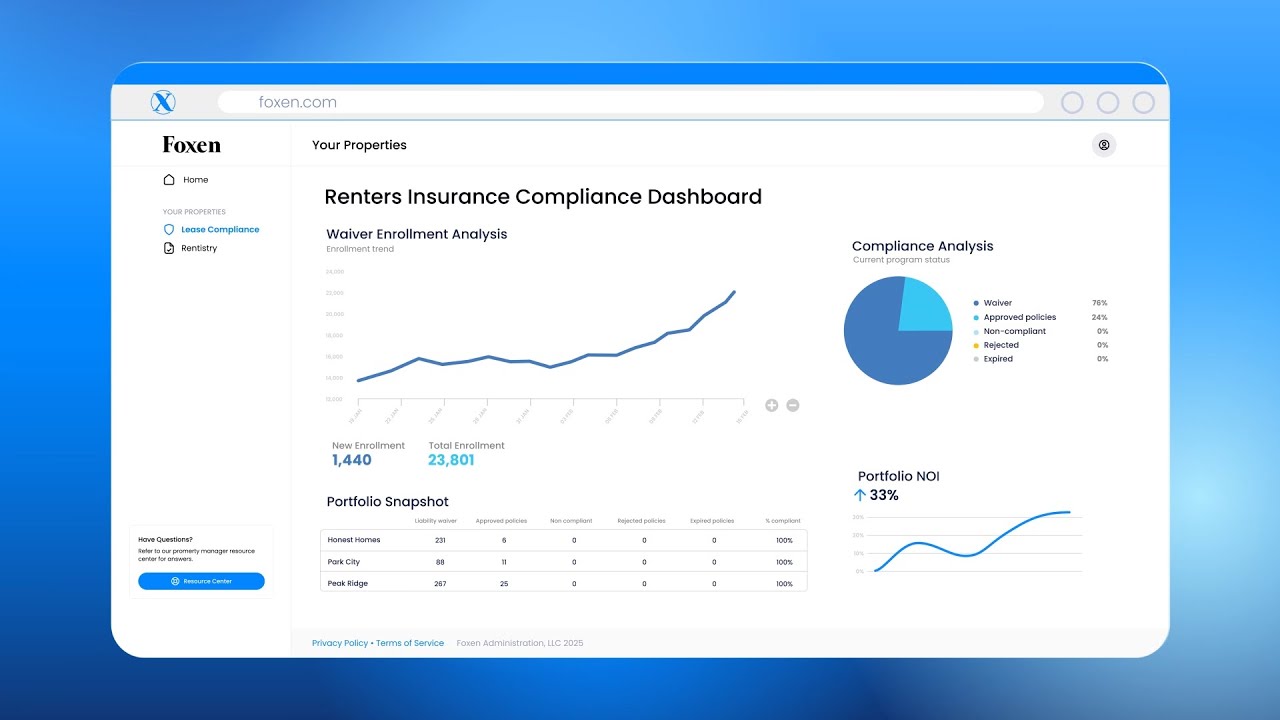
Yeah. So, I'd say, picking up where I left off there, one of the things that we experienced as we were going on our journey of growing as a company was, know, that 43% stat I mentioned, we take that to zero via our renter's insurance compliance solution that we call Waiver.
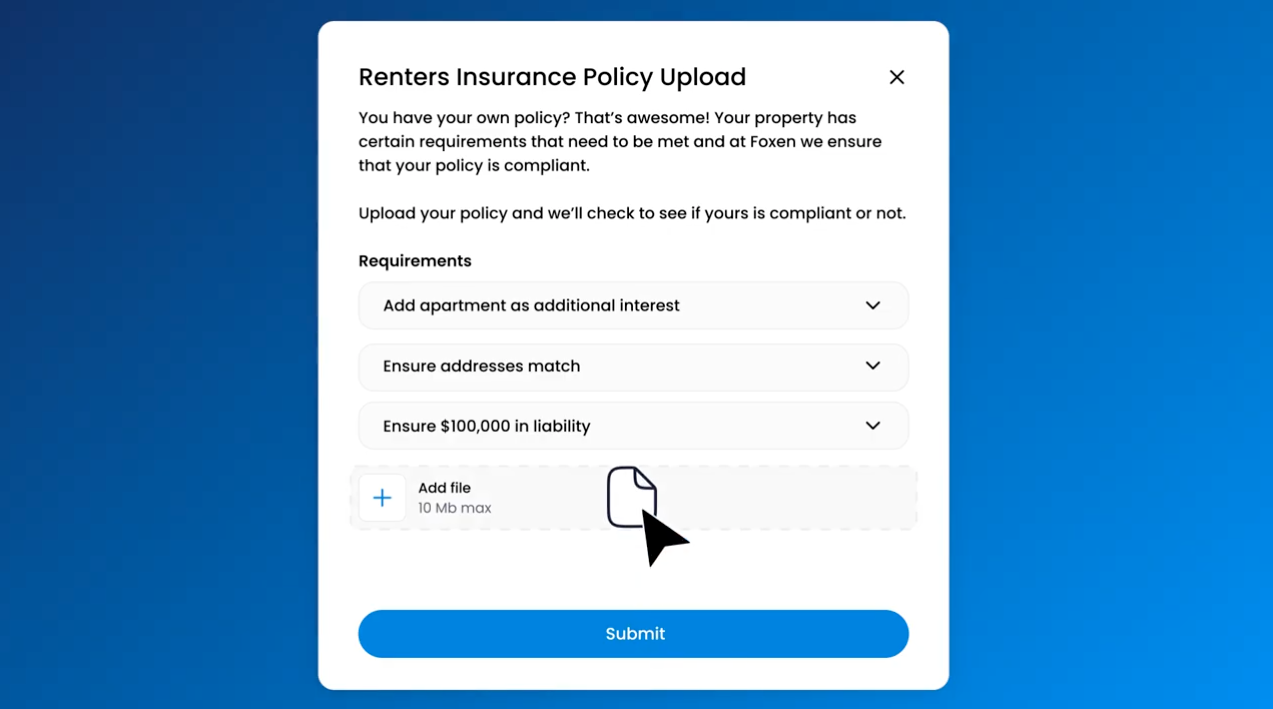
So, that's a critical risk mitigant. And what we're doing there is we're monitoring all renter's insurance policies. We're offering a liability waiver solution to residents who don't want to go get their own policy so that everyone has something. And so, we're monitoring COIs and we're dealing with these things as part of the resident journey. And so, what we had was clients asking us, Oh, well, you guys deal with insurance and COIs and you track and monitor. It turns out they were describing the problem that Dave said earlier, where it's like, We have a whole set of issues associated with vendors and credentialing.
But what we realized is now you're getting into work orders, maintenance requests, workflows, payments, and that sort of stuff. And so, our perspective, we just looked at, Is this an area we should be leaning in as a company? We were getting asked about it from our clients. Our clients saw the cohesive nature of We're thinking about risk management programs.
We want to make sure we're properly insured at key points of vulnerability or risk. And we just looked looked around and we said...
This is when David and I got talking and I'm like, Well, we could go try to do what NetVendor's doing, but they're just doing it right there really well. So I think what would benefit our clients and our industry the most is if we just figure out a way to work together and deliver holistic value to our clients, mutual clients and respective clients. So we got to talking and that's how this vision was born for us working together.
And I'll just add that Foxen is by far and away the clear leader here in the market for resident compliance. NetVendor is also the leader. So this is two market leaders coming together, and our objective is really to focus on addressing holistically the risk profile there, but delivering value in a way that others who decide, oh, well, I do a piece of compliance, so I'll jump into some other aspect of compliance that seems to be a close in adjacency, but really there's a lot more complexity there than you realize and you understand. This brings two best of breed, best in class solutions together to just really address that critical need and become a foundation to build more tenant satisfaction, more tenant value, more vendor management and sourcing and tools to leverage across the properties, across the portfolio.
And on the surface, I think it looks like it can be easy and straightforward while you're just verifying COIs. But when you get right into it, there's a lot of complexities on both the resident side and the vendor side. And these two organizations know that. They've been doing it for a long time now, and it's just two great solutions that make it easy and take this off your plate completely. And that's why I'm excited for us to be working together.
Yeah. That's that's awesome. And I, you know, I think what's so nice about this is, you know, our industry talks a lot about centralization and oftentimes it's centralizing roles or duties or workflows. And really what you're doing is kinda doing that, but you're really focusing on centralizing value and starting there and then kinda working backwards.
And it's a great a great reminder for all of us on how to solve problems is to start...
You know, if we do wanna centralize things, sometimes we need to start with centralizing that value. So, awesome. Well, I think we have a poll coming up and I know there's some questions coming in, so we're gonna make sure to get to those. I'm not sure if the poll should be answered in the chat or if it's in the Q and A.
Oh, wait. It's right here. I think you can click. We can't vote, but you can see here, how confident are you in your portfolio's insurance compliance?
So A, very confident, B, somewhat confident, not confident at all, or send help fast? Let's give it a few minutes. Let's get some answers in.
Let me see. We did have one brave person that said they are very confident, no gaps, so I was wrong about that.
Dave, Kevin, quickly, are you surprised by these results? Are you... Is this kind of online with what you see that, you know, this is where most folks are on the industry?
I... I'm not surprised. I think somewhat confident and not confident is where I would expect a lot of the folks to come in. But we have customers from NetVendor that are here. We have customers that are here from Foxen and maybe have at least part of the solution addressed with one side of the coin.
I think it makes perfect sense that there's some confidence but few gaps, and the purpose of this webinar and the purpose of this partnership is to close those gaps.
Agreed. Then, you know, sometimes, and this is where it gets into Dave's point on just the complexity of the solutions. Sometimes the gaps are... Sometimes you have gaps that are not quite visible until they are, right? Where you felt like you had a process nailed and then you realize, oh, wait, there was this exception path to this process and we didn't have it quite nailed. So we run into that a lot in our business where an incident occurs and there's a claim and that's when you get into it and you're like, Wait a second. Or we hear that from prospective clients a lot. They're like, I thought I had something, but then I didn't have something.
As Dave said, I'm not surprised. We have a lot of clients and prospective clients on the call. It's good. I'm happy to see that state.
It's good. All right. Well, let's dig into this discussion here. So one of the first topics, questions, why are vendor risk and resident risk both such important aspects of multi family compliance, and are they linked? And Kevin, we'll start with you.
Yeah. So I think if you just think about the economics of running these assets and delivering for rental housing, and you think about what's the cost of getting it wrong, these types of incidents and risks can't go straight to the top.
Typically, as a coverage line, referring to property insurance and corporate insurance is one of the top three line items on a P and L. And these types of things, from our perspective, renters insurance compliance, like back to the founding insight of that Fox and I had founding experience, it's like that uninsured incident that I described can just be a killer to the cash flow an asset, the IRR of an investment, really just an issue that's created with a resident, right? This is not a conversation you want to have. You don't want to have a situation where you have an uninsured resident, we have an uninsured claim, and now maybe you're having to hit a very expensive property deductible and things like that. So, the importance is really... Mean, the economics can really speak to the importance.
And also, when there's solutions out there that can really mitigate these risks very directly, becomes kind of a no brainer to take it on.
So, Dave, do you wanna just talk a little bit about the vendor risk side of the equation?
Yeah, I think risk can come from the resident, but it can also come from the vendor, the supplier.
And we don't want either of those events to ever happen. But if they do happen, if you're only covered in one aspect, it's going to be very detrimental and it's gonna be very costly.
And so to ensure that you're covered from both sides of the equation, whether it is something that impacts the property itself or whether it's impacting residents or humans at the property when and if any kind of incident happens, it's really, really important and of great comfort to know that both sides of the equation are covered as much as possible.
But it also leads into a lot of other factors, even if there's not an event, and we'll get into that more. But as you look at compliant vendors and your ecosystem of vendors, those can have a lot of impact on tenant satisfaction, unit fill rates, all kinds of other things as well. And so just having this as the foundation really allows for a building foundation, building blocks to really deliver value to the tenants, deliver value at the properties, and ultimately impact NOI.
And I think on the link, Justin, as Dave left it, from an NOI perspective, it's very relevant. And then just the resident experience. These are the experiences that touch residents in their journey.
Ideally, there's as few issues as possible. That would be a good starting point. But when the issues come up and there's incidents that happen, you want to have solutions in place that can really deliver a great experience for residents.
And I know that's top of mind for all of our clients, particularly these days.
Yeah, absolutely. So Lee, thank you.
Alright. Let's move on to the next question.
Do Foxen and NetVendor share a similar approach to building a platform and serving and supporting their customers? And Dave, why don't we start with you?
The short answer is absolutely unequivocally yes. That's why Foxen and NetVendor are coming together in a partnership to deliver value first.
We're not focused on just can we integrate and pass some data back and forth. Integration is by far and away an afterthought of this partnership. The foremost aspect of it is delivering further and increased value benefit to the property management and the real estate community.
If you look at NetVendor, what NetVendor customers say they love about NetVendor, and you'll hear this over and over again about Foxen too, is it is the value is driven by the clients first and foremost. So the way we build the platform, the way we serve and support our customers, it starts with ensuring a solution that's really simple, easy to use, and just takes the problem off the plate.
So high compliance ratios without a lot of work from employees within the property management company, as well as make it really, really simple for vendors in our case to enroll. The vendors wanna be out in the field delivering value, whether it's on a roof or in the landscaping or working on the HVAC systems. They don't want to be focused on tracking down this information. And so if we can just simplify that and make this the easy button, that is hugely valuable.
But if you ask our customers, what do they love about NetVendor? First and foremost, it is that phenomenal service. We hear that over and over again from Fox and customers as well. So it's that foundation of service.
But also added on to that, innovation in the platform, innovation in the technology, being an innovative solution where we continue to build upon that foundation and deliver more value to our customers in the vendor management ecosystem that builds on top of that, and Foxen also builds on their foundation.
And then frankly, that deep domain expertise is the third area that clients consistently tell us, look, we've got that expertise. We know we're in good shape, and we're well covered if we're working with NetVendor because they have years of experience and a lot of deep domain knowledge. And so we see that in Netvendor, we also see it in Voxen, and it's a very, very similar approach and why this will be a great partnership that ultimately drives more value for those who work with both NetVinder and Voxen together.
Dave outlined it really nicely from an online perspective. I think we see a lot... What we aspire to be for ourselves and what we see a lot in NetVendor is, again, phenomenal service and not just being a core tenant, a really innovative and robust platform that they've been building for years, And then the deep domain expertise. So, a few points on that for us is, on the service part of it, we are a high growth company. We've been fortunate that there's been a lot of demand for our solution and we feel like we've built a great one. We've invested a lot over the years in building more depth and functionality and configurability and all sorts of things that our clients want.
But there's a lot of high growth companies, and specifically in PropTech, and I think many folks on this call could name some who have been left by the wayside because they forgot what got them there, which was your current clients, frankly, don't care about your next client. And they should only care a little bit, right? They should care insofar as it helps them. We're building a bigger platform of value for everybody.
But if you lose your core tenant on delivering great service to the resident that calls you on Wednesday and has an issue, and the client that you've been working with for years, you can really lose your way. So, we've just really tried to stay true to...
And when we think about how much we're investing in different areas of the company, there is a very large part that goes towards all things technology, customer experience, and just making sure we can deliver on that value going forward. So, just from a service standpoint, we felt like we saw a lot of ourselves in NetVendor and that's how we think about it.
Then from a domain expertise standpoint, I saw one of the Q and A come in that I think is really relevant, is it was asking, Can we clarify what property management systems we work with? This is part of the domain expertise. So, at Foxen consider ourselves experts at all things renters insurance compliance, monitoring, offering residents options, delivering fully integrated solutions that take work off site teams' plates with any property management system. So we work with all the leading property management systems today as does NetVendor.
And we see about 10% of our clients per year are actually changing property management systems. So it's a bigger number. Whenever I say that number, people are kind of surprised. So my point is this is all part of the domain expertise that you have to build that we've really been working to build.
So that's been a little bit on our approach, and I think it's very similar to what I've heard when I've learned about NetBender's journey as well, which was exciting.
Just to add real quickly there, if a property management company is shifting to a different property management system, having that foundation of all the renter's insurance taken care of in place and all of the vendor credentialing and compliance handled, it makes that move seamless. There's no impact to the renters and the tenants. There's no impact to the vendors as those systems change underneath. It's a great insulation for when those moves do happen.
Yeah. That's that's actually a great a great point to to have have a strong tech stack. A lot of times, a lot of companies out there I know are... Try to rely on just a PMS, and it's... It just... From my vantage point, it's really important to have a really strong tech stack in general. So a partnership with you guys is is definitely makes... I can see the value in that for so many folks.
Awesome. Let's move on to the next question here. I'm curious to know, as you touch on this too, what's similar, what's different as well to maybe call that out. Dave, why don't we start with you?
Yeah, obviously, if there is an event, if there is not the proper coverages in place, the proper compliance in place, that can be a costly event that just obliterates NOI. But we don't want to have to face that level of risk for it to impact NOI across the portfolio. And so ensuring that you have the right vendors in the ecosystem, that they're credentialed, that they're compliant, a lot of property managers and property management companies struggle to maintain and manage their vendor ecosystem. And sometimes they need to trade out one vendor for another, being able to go and search the ecosystem and find other vendors that are credentialed compliant and have high satisfaction from tenants and from other property managers, that's really, really important.
Aspect of this that may not be as visible on the surface is if your vendor ecosystem is impacting how work orders get done, how the property is maintained, other aspects, that can really, really impact tenant satisfaction.
And that doesn't stay a hidden issue or secret very long. If tenants are living in a property where they're not satisfied, that's gonna be all over social media quickly, which impacts that lease rates, it impacts overall tenant satisfaction. And so certainly keeping on top of this where you have this ecosystem of compliant vendors that, A, if something does arise, you're covered. But B, you've got this broad ecosystem. In NetVendor's case, the biggest ecosystem of compliant vendors that you can draw upon. And our customers love being able to go in to search and find and source other vendors in that ecosystem that aren't necessarily one of their current vendors and understand how they're going to impact tenant satisfaction, how they're gonna impact the overall service levels and aesthetic appeal of their properties. So it's really important.
Absolutely.
Yeah, I'll just pick up a couple of things on the renter's insurance compliance side.
And this really goes for all of our solutions as well. Justin, what we're trying to do is in the NOI equation, revenue minus expenses, what we're trying to do, there's an ancillary revenue opportunity with all of our products. So, want to give an opportunity to drive revenue up in the right direction. From an expense standpoint, what we want to do is decrease operating costs and or give the...
From a team standpoint, redirect the team's attention to higher value things like Dave was mentioning, like resident satisfaction and just other things focused more on how can I focus on heads and beds, not renters insurance compliance and not rent reporting and other things like that that we do? So, the way that...
It's important, I guess, maybe one point is it's important to design the solutions so that they're holistic, so that it's not just like, Hey, I do this part and you do that part. And that's one thing we've really done. So, when you add all that together and then certainly Dave's point about just, you know, a resident experience for attention plays as well as another ancillary benefit. But from a Foxen standpoint and a resident standpoint, we're really trying to drive revenue up, drive expenses down, which can move the needle on NOI.
And then, if you're a third party management company or even a fully integrated owner operator, that can do great things for the value of the assets and obviously great things for owners as well.
So that's just from an NOI perspective, that's how we look at it and what we're trying to accomplish.
Awesome.
Awesome. So as folks look at NOI, we can move to the next question. But when they're trying to figure out how to better that, what are some of the most important questions to ask to you guys? What are some things that they need to be asking when they're looking at partnerships?
I think it starts with, you know, of the simplest answer is often the correct answer, right? So, some of the basics of really clarity on what am I trying to accomplish.
Is the company or the person I'm talking to, are they coming across as someone I should have confidence in? How long has this business been operating?
What does the solution actually look like? And certainly in multifamily, there's many... You're only a couple of phone calls away from a reference client or you should be.
And so, I think starting there is important. And then, you can easily get down to some of the specifics of how a workflow works inside of an integration with a PMS. Okay, my team was filling out this compliance report before. What do they do now?
And in our case, would be they do nothing. There is no compliance report. It goes away. We handle it.
Things like that. So, I think starting at a high level, just really understanding the lay of the land of what vendors are out there and what are some of the attributes.
And this is what I mentioned earlier.
Everyone in multifamily has horror stories about different vendors they've worked with over the years. And if you reverse engineer what the challenges were, you probably could have had some foresight to that. So, I think it's important. And then getting into the depth and robustness of the workflows, how this would work for your team.
What does the day before look like? What does the day after? From a revenue perspective, what's the revenue opportunity? And getting into all those specifics.
So, we've seen our clients who feel like... We've seen many different clients do many different ways. I think there's the fully loaded, like we RFP procurement the heck out of this thing, and that's a very detailed process. There's a more lightweight version that's thoughtful. That's something along the lines of what I'm referencing here that I think I would encourage people to do. And you'll really be able to separate vendors if you do that, or the ones that show up should separate themselves.
What I miss, Dave?
You touched upon it earlier, but both of these solutions are Switzerland when it comes to integration with property management systems. So there's a lot of third party managers out there. There's even some owner operator groups that they have to work with multiple property management systems across their portfolio, or they may be migrating. So how they integrate from a vendor perspective, time to compliance is very important.
We see in other cases, sometimes it's very difficult to get vendors compliant, and that can impact whether vendors can get out on-site and get work done, whether they can get paid, etcetera. And so those are really important. Another aspect is how is that verification done? Are we just asking vendors to provide a COI that maybe in some cases they went to chat GPT and generated a certificate that looks good but might not be authentic and submit it.
Or even if they're not, there's no nefarious actions there. If the vendors are having to track down all of the paperwork, it just becomes a burden and compliance becomes low percentages. And so from a net vendor perspective, this has to be the easy button for property management companies and it has to be the easy button for vendors as well. And when it comes to Fox and the easy button for tenants.
And so NetVendor comes in and we work with the insurance providers to get all of that information and verify it and validate it and monitor it. Once the vendors enroll, we do everything from that point forward to ensure that those vendors are compliant. And I think that leads to a lot of satisfaction from vendors who this is a bit of a necessity or necessary evil for them that no one wants to be focused on coverages and compliant. They wanna get out and deliver the value provide that as a service as a vendor.
And so it's important for us to make that as easy as possible so those compliance numbers are as high as possible as quickly as possible. I think also important to understand the technological vision, particularly as AI becomes more prevalent, both organizations are leveraging AI, speaking for NetVendor, but I know this applies across the board, our objective here is AI assisted, human verified. And so our objective is to really make sure that we are managing the risk first and foremost, and making this really easy for our customers. And then taking that foundation that we've built with credentialing and compliance, how can we leverage that ecosystem of vendors to drive more NOI, to drive and deliver more value to customers.
So how can we get involved in the upfront bidding and contracting and make sure that there are a lot of options at the property level to get the best vendor in there, delivering the best satisfaction, the best service at the best price.
It's awesome. Yeah, I think it's great that you both touched on this in different ways, you know, you you kept saying how. The how... Those how questions are are really important on how things are done. And we actually have a how question, a couple sort of from from folks in the audience. And and one of them is how are incident claims filed? I think you started talking a little bit about that, but, you know, how does Foxen, an event or how do you do you handle incident reporting or claims filing? What is the process in that?
I can kick off for us and then maybe Dave, you could cover it for your side as well. So from a Foxen standpoint, we, and this is just thinking about renters insurance compliance and an incident that takes place within the unit. So, have a completely digital claims process that's easily handled through our property management portal. So, you can track the status of a claim in real time.
And the process guides property teams through each step, step by step. So a lot of the horror stories that people hear about filing a claim, we've really tried to eliminate all that. So designed to make it simple, collect all the necessary info upfront. You've got the claims tracker.
You can see the status of the claims. And then we've been, more importantly, this is just the tracking, but what we've really been focused on is the time to resolution. So how do we work that down over time to just get things sped up in the process? And so that can vary depending upon the severity of the incident.
But we've got everything from a reporting standpoint that you need, and then we've been really focused on how do we drive that down to days instead of months, or weeks instead of months, and then days instead of weeks. That's what we're focused on.
Yeah. And with the tenant solution, it's really important to manage that claims aspect and that claims process. When it comes to the vendor side of the equation, NetVendor does not manage that claims process, but what we do facilitate is access when when a claim happens or an event happens, we have all of that information at your fingertips readily available. Not only do we have all of the information about their coverages and their credentialing, but there's transaction logs of everything that have occurred along the way. We're monitoring consistently and constantly the status of those insurance coverages, any changes in their credentialing, any changes in any of their status. And so you've got a full audit log of that as well as a full audit log of every interaction and communication that's ever happened with those vendors. And so that becomes very useful and compelling data and necessary data in the event that there is an issue and a claim that has to be dealt with.
I wanted to pull up a question from the audience that kind of relates to this.
Just so so if a resident is filing an insurance claim and there is a loss caused by a vendor, the steps in that would be that they're... Like, it's around subrogation and recovery are that your vendor has all that information. They're receiving the claim through Foxen, and then they're using that information. Could you speak a little more about how that just to answer her question more specifically?
I think this hypothetical is for renters insurance claim that was caused by a vendor. I think from a...
Claims process that I described would be the claims process associated with that event from a renter. And it would be determined that it was caused by a vendor, in which case the process that Dave just outlined would take over. I believe, if I'm understanding the question correctly.
Yes, I think, yes, Jessica just chimed in. More than likely, see that as a fox in response on the claim. Yeah. But just to to understand how that that collaboration or that information is is shared is important because those devil... You know, the the the devil is in the details and the how and having you guys on together talking about that is very valuable. We'll have... I think we have time for one more question here, and that is you both have... There seems to be success around, you know, you know, getting residents engaged and involved in this. Like, what are some of the strategies around, you know, making sure the renter, you know, is engaged in this process and the risk process?
I'm gonna throw a wrench, Justin. Yeah. Our goal is to make sure they're not engaged in the sense that they don't... We don't want to be...
Raise your hand if you really like to talk about insurance with a lot of your time.
You threw the softball properly. Thank you. Our goal is to make sure they're not engaged. Wanna make this super easily.
We wanna give people options. If you wanna go get your USA or State Farm policy, you should do that. If you have the bump, the Aaron Rodgers bundle, or whoever the spokesperson is now, whatever you want, we want options, we want speed, we want good price to value. And then we want to have our solutions be working really well for the management companies, owners, and residents, and have everyone spending the minimum amount of time on it as needed.
Obviously, when there's a claim, that's when it's go time as well.
And obviously, you've to answer the phone when there's questions.
I went through just our claims processing and how we try to provide transparency and speed there. But thankfully, most of our residents that work with us, our solutions should just work.
Covered, you get your rent reported, and then we didn't talk too much about our pet compliance solution, same principles go for that. So that would be my answer to that.
Awesome.
I'm going to double down a little bit on that.
I said it earlier that it's the easy button, but I agree with Kevin that our objective with vendors is they enroll, it should take them less than ten minutes to enroll, and then they never have to think about this again. NetVendor is doing everything to keep them compliant. We're working with the insurer, we're working with their agents, we're working with the licensing agencies, etcetera, if we need credentialing information so that the vendor doesn't have to think about it. And if there is a claim that starts from one of the tenants, the great thing about working with Foxen and NetVendor together is now both organizations will communicate in the back end so that we've got all of the supporting information flowing back and forth between both of these organizations to make sure that that's handled as seamlessly and smoothly as possible.
So the tenants still don't have to think about it. The vendors are as minimally as engaged as possible. Obviously, they're going to be engaged if they were the one that caused the problem.
And it's easy for the property manager to and the property management company to get it resolved without a lot of complexity.
Right, that's great. Yeah, like speaking to that frictionless compliance solution that you guys are offering kind of independently and together, you know, it makes a makes a lot of sense. I feel more knowledgeable about your partnership, about, you know, sort of how easy it is to kind of, like, to work together, some of the hows on that. So thanks for sharing your insight, of the backstory, how you guys come together, and where you guys are headed.
I know there is a very exciting announcement coming up. The folks that are attending this webinar, you're the first to hear about it and the first to be, you know, to to know about this. So it's very exciting. Plus, I know there are some gifts to be given.
So without further ado, I'm gonna hand it over to Megan at Foxen who's gonna share with us.
So I wanna share with you all something really exciting that the team at NetVendor and the team at Foxen have been working together on for a couple of months now. We have created a unique opportunity to participate in a networking group that is going to shape the future of multi family risk compliance. So what is this? It's an exclusive community of multifamily owners and operators that we're creating to share ideas, resources, and advocacy efforts to help you protect your properties, protect your business, and your residents from risk through industry leading initiatives.
So what we're looking at here is, events, both live, in person, as well as virtual, that are going to be happening multiple times a year. A little birdie told me that there might be something fun happening at op Tech. So if you are planning to go to that, I think you will want to get in on this. So since you joined us for today's webinar, you have an opportunity to be one of the first few people that is participating on this group. Just scan that QR code.
It'll take you to a form at the multifamilyriskcollective.com site. You can share your info with us, and we would love to include you as a founding member of the new Multifamily Risk Collective. So stay tuned. We will be sharing a lot more information about this soon. Thanks everyone.
I'll hand it back to Justin here.
I just wanted to to like thank the the folks here for having me as a moderator. If you wanna connect with me, there's another QR code to stay connected. You could follow me on LinkedIn or follow the multifamily weekend updates.
It's great to see things like this risk collective, this partnership between Fox and NetVendor showing collaboration in the industry to really move the industry forward. That is something that I've always tried to advocate and will continue to do so. So happy to be a very small part of this informative session.
Awesome. Thanks for hosting, Justin. Really appreciate Yeah.
Thank you, guys.
Thank you very much.
Thank you, everyone. The recording will be shared with you all very shortly. Thanks for joining us today.
Thank you. Bye.
Your Webinar Thought Leaders

Kevin Jacobson

Dave Cooper

Justin Dilley
Related Resources

















Get Industry News and Updates
