From Sunk Costs to Strategic Savings: Risk & Insurance Plays to Strengthen Your Portfolio

Free yourself from health insurance.
Captive insurance solutions are shifting the narrative by giving owners and operators:
- Control over program design, premiums, and claims management
- Transparency into portfolio performance without relying on carrier reporting
- The potential to generate stability, savings, and revenue through underwriting profits.
For operators looking to unlock these benefits without the complexity of building their own captive, WaiverCell provides a streamlined path. As a protected cell within Foxen’s captive, it delivers the upside of self-insurance—premium stability, claims control, compliance, and revenue opportunities—while Foxen manages the heavy lifting.
In our webinar with Interface Conference Group, Foxen’s captive insurance experts, Kelli Stiles (Chief Legal & Insurance Officer), Pete Kidd (VP of Insurance Solutions), and Ty Specht (Senior Director of Relationship Management), explore why multifamily operators need to rethink risk management.
Everybody. My name is Rich Kelly. I'm with Multifamily and Affordable Housing Business Magazine at France Media. Welcome to our webinar, from sunk costs to strategic savings, risk and insurance plays to strengthen your multifamily portfolio.
We appreciate you tuning in, and I would like to thank our great friends at Foxen for being the sponsor of this webinar and making this all come to fruition. The multifamily space has experienced no shortage of challenges over the past few years as most people would attest, and insurance has certainly been one of the biggest. So it'll be interesting to hear some thoughts today on how to mitigate the downside and perhaps even also find some upside.
Facilitating our discussion will be Megan Eels Monroe of Fox. So I would like to turn things over to her now to get the webinar started. Megan, take it away.
Thanks so much, Rich. We're really excited to be here today. Today, we're gonna be sharing some practical strategies, to help you confront rising insurance costs and rethink your risk management strategy to uncover new opportunities for portfolio performance. So like Rich said, my name is Megan, and I'll be your host for today's session.
So I wanna start things off with a quick overview of the topics we'll cover today.
First, we'll get into the risks posed to your business by tenant caused property damage. So we'll talk about some of the common examples of what qualifies, the strategies that operators are using to manage this risk, and the impacts on your portfolio's performance when it's not so well managed. Then we'll go through the ins and outs of property damage liability waiver programs, including how TLL policies work. And so our panelists will share their insight into why this can be such an effective risk management strategy.
Finally, we'll get into captive insurance, whether or not you've heard the buzz recently about, the advantages that a self insurance strategy can bring. We'll break down the concepts for you so that you can understand what a captive insurance company is, when to consider this strategy for your business, also and, we'll learn about another option called a captive sell. Then we'll open up the dialogue between our panelists with a fireside chat and q and a session, and we will be addressing audience questions. So please drop your questions into the Zoom q and a panel so we can track those down and get you answers. So now without further ado, I'd love to introduce you to our panelists. So first up, we have Foxen's chief legal and insurance officer, Kelly Stiles. Kelly, could you, introduce yourself to our audience?
Yes. Thanks, Megan. Welcome. We appreciate you all joining us. As as Megan mentioned, I am, Foxen's chief legal and insurance officer.
So in addition to leading our lead...
Our legal and compliance team, I also lead along with Pete Kidd on my team who you'll hear from shortly, our insurance solutions department. That department manages Foxen's in house PNC insurance agency, and we do everything from tenant legal liability waiver insurance policy development and administration to facilitating our customers' TLL claims with our claims administrator partner. And we also provide captive management services for those of our customers who choose to form a cell facility in Foxen's protected cell, captive insurance company.
I'm located in Columbus, Ohio where Foxen is headquartered. And, in my most recent role prior to joining Foxen, I was an executive at Nationwide Insurance supporting that company's PNC insurance business.
And I'm a proud double Buckeye having received both my, undergrad and, legal degrees from Ohio State.
Amazing.
Thank you so much, Kelly. Next up, we have our VP of insurance operations, Pete Kidd. Pete, can you share a little bit about yourself?
Yes. Hey, everyone. Pete Kidd, VP of insurance operations here at Foxen.
I have over thirteen years of insurance experience, so I I like to classify myself as a a true insurance nerd.
Prior to Foxen, was at a handful of different carriers, State Farm, Farmers, HSB, dove into the the start of space, landing here at Foxen. I reside in Atlanta, Georgia. A former baseball player, played baseball my entire life, tore my rotator cuff, and and like most baseball players where you have a dream deferred, I landed in the insurance industry. So, I I reside in Atlanta with my wife and my three year old son, Jackson.
Amazing. And we're lucky to have you. Last, I'd like to introduce you to our senior director of relationship management, Ty Speck. Ty, can you share a little bit about yourself?
Yeah. Thank you. Ty Specht, senior director of relationship management.
I've... Fun fact about me is I've been with Foxen since we started this company. So have have been able to experience a lot of the changes that we're here to talk about today and the challenges that our customers face. Prior to joining Foxen, I spent five to six years on the real estate side of the business. So was really able to translate what I learned on the real estate side of the business, into Foxen's business directly and understanding what matters to our customers, what challenges they're facing. So when we're building strategies to to fix those needs for our customers, we're well positioned to to meet their needs. Like Kelly, I am also located in our headquarter here in Columbus, Ohio, and reside here with my wife and two children.
Amazing. And that's a perfect transition because next up, we're gonna hear a little bit about the, challenge of tenant caused property damage from Ty. So I'll hand it over to you to get things started.
Awesome. Thank you. Yeah. Like Rich said at the beginning, multifamily owners and operators, there's no shortage of challenges that they're facing on a day to day basis. Today, we are here to talk about tenant's... Tenant caused property damage. So owners and operators are providing housing to millions of residents each year, which carries great financial risks, especially if they fail to do one simple thing, which is require renters insurance to all of their tenants.
In order to really understand the scope of what these challenges are, I think it's important to take a step back and evaluate what are... What these owners and operators have been facing over the last, call it, ten to twenty years. So if we think back ten, twenty years ago, the idea of requiring renters insurance was really not something that was being implemented, across the board and most of these property management companies. That obviously created significant financial risk for residents who had these tenant negligent incidents such as a kitchen fire or bathtub overflow, the common ones that you would see on a day to day basis. So over the last ten to fifteen years, there has been a trend of more and more operators beginning to require insurance, and that ultimately opened up a new set of challenges.
When you're implementing a a new set of requirements for your properties, there is an operational burden that is required of those managers and the on-site teams to collect those policies, continuously audit those policies. And, ultimately, if the team is spent monitoring insurance policies, that means that they're not necessarily focused on putting heads in beds and and resident retention. On the flip side, if they're not really doing a good job of auditing those policies, that opens up the owner and operator to tremendous financial risk for residents who are either not turning in a policy or they let it cancel or expire. And then all of a sudden, those residents do not have the appropriate coverage that they need, and that ultimately puts the owner and operator in a a really dangerous position.
And I think when we look at that, one of the the pieces that I'm able to relate to directly from my days in the real estate side of the business was, again, it was just getting started. Requiring renters insurance was something new. And the group that I was working with, they actually did require insurance. And a tenant moved in, provided his insurance.
And about seven, eight months into their lease, they had a massive kitchen fire that that took out a wing of a building. And when the property manager went to file a claim with the insurance that was on file, it was then discovered that that policy had been lapsed and canceled and, unfortunately, resulted in a financial loss for for the property manager, in that scenario. So that is ultimately the root cause of why companies like Foxen have have gotten started. They're trying to solve financial, you know, risk, obligations to make sure that companies are not being put in those positions, but they're also trying to utilize technology to minimize that operational burden that we talked about and create a seamless process for both the owner, the on-site teams, and their residents, through compliance monitoring and tenant legal liability programs.
Thanks so much for, getting us familiar with these concepts, Ty. I think next up, we're gonna hear from Kelly to learn more about the strategies that you can use to better manage these risks.
Thanks, Megan. Yes. So we're here to talk in part about, tenant legal liability waiver program. So so what is this?
A tenant legal liability waiver, also known as a loss waiver, is a legally binding agreement between the landlord and the tenant in which the landlord is really saying two things. One, I'll waive that renter's insurance requirement that is otherwise in the lease and that you're obligated to have, and I will prospectively release your liability for certain types, specific types of property damage that you may negligently cause my property while you are a tenant here in exchange for a small monthly fee, typically 10 to $20 that is paid for along with the tenant's, rent. Importantly, unlike renter's insurance, loss waiver is not an insurance policy to the tenant, its primary purpose is to protect the owner from having to pay those out of pocket costs that Ty mentioned when a tenant does cause significant property damage and they're not insured.
But there certainly still is an important value to the tenant even though it's not insurance to them. By enrolling in the landlord's waiver program, they are protecting themselves in a very convenient way from the financial obligation that they would have and the legal liability that they would have if they did negligently cause those types...
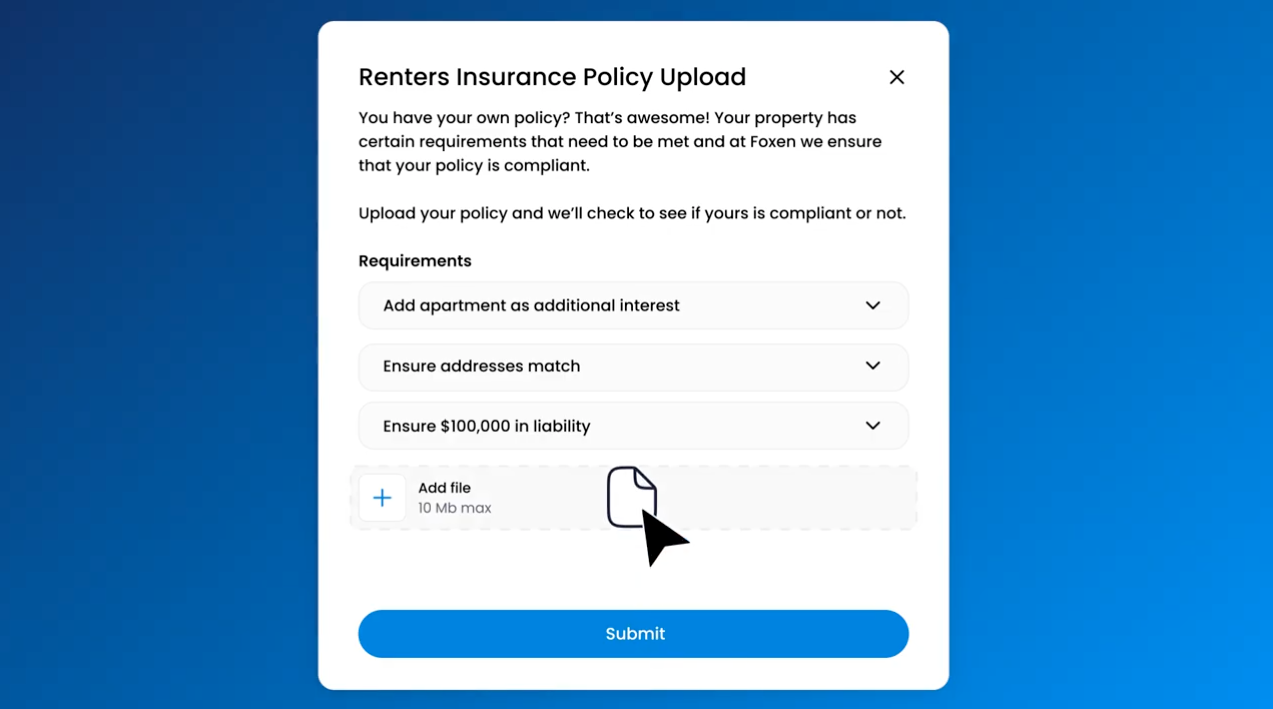
Common types of property damage while they are a tenant and, you know, that they would be in violation of the renter's insurance requirement in their lease if they don't go out and get that policy and maintain that policy through the life of their tenancy. So as a best practice, waiver programs are structured where the lease requires the tenants to carry renters insurance with liability coverage in a specific minimum amount. Typically, see around a $100,000. And it also requires those tenants to provide ongoing proof of coverage and saying, hey.
If you don't get this policy and prove that you have it or we learn that your policy lapses, then you agree as a matter of the contract term in the lease that you're going to be enrolled in the waiver program. And this would either happen at the time of lease signing if the tenant doesn't come with their own renter's insurance policy, or it could happen mid lease if they start by presenting a renter's insurance policy, but then the landlord, either directly or through a service provider like Fox, then identifies that that policy has lapsed. So if the landlords are releasing the tenant's liability and renter's insurance requirement as part of this enrollment, you may be asking, well, how is that protecting the landlord from this financial burden?
And this is where the tenant legal liability waiver insurance policy comes into play. Waiver programs are backed by these special commercial lines and insurance policies typically called TLL policies, that are issued to the landlords. And the policies are there to indemnify the landlords for the damage caused by those tenants enrolled in the waiver program and for whom the landlord has entered into these loss waivers.
So the waiver program and the TLL policy that backs that program should be structured to match precisely the types of damage that are being, that's being, the liabilities being waived in the lease should match precisely the coverages, in the TLL policy issued to the landlord. So with that, I'm gonna hand it off to Pete who's gonna get into a little bit more details on how how those TLL policies work.
Thanks, Kelly. So in moving forward with with the waiver program, as Kelly was mentioning, it... It's important, to know all the variables and and the components that that your waiver program. Within the waiver program, there are typically three major components.
As we mentioned, tenant legal liability policy, there's a technological aspect, and then there's also customer support. I'll be focusing on the tenant legal liability policy. And so that policy, in nature is is what's classified as a commercial casualty surplus lines policy if it's issued by a direct insurer. In the case of a captive insurance company, it could be a indemnification policy. The insurer traditionally is your property manager. Now contrary to h o four renter's policy, the resident is not a party to the policy.
The tenant legal liability policy in itself ensures against landlord property damage that's caused by resident negligence, resulting from certain perils. And and those perils, depending on the policy, could be something along the lines of fire, water overflow, explosion. These these perils are aligned with risk that a tenant would cause.
Events that are related to weather, or losses that are unrelated to resident negligence such as theft, those are typically not, included as risks that are covered in your tenant legal liability policies.
Any event of a loss, resulting from resident negligence, what typically happens in the claim process is that the property site staff would would be notified that there has been a loss that has occurred.
They would complete some sort of incident form, and then that incident form would then be transferred over to a claims, third party administrator, for them to begin investigating the claim. And that third party administrator is usually associated with the insurance carrier that is backing the policy.
The claims payment after the investigation is completed and coverage is confirmed to be afforded in that loss, the claims pay would typically be issued by the claims CPA on behalf of the insurance company that's backing the tenant legal liability policy, and that issued payment would go to the insured on the policy.
Fantastic. Thanks, Pete. And I think, last up, we'll hear from Ty, to talk a little bit about the components of a successful waiver program.
Yeah. So as Pete mentioned, the tenant legal liability policy in itself is is part of what makes these programs successful, but there are a lot of other components that ultimately need to fall into place to make sure that it's providing maximum benefits to the owners and operators. So, you know, the obvious benefit for the owner and operator is the minimizing of financial risk through the 100% compliance monitoring through these programs. So for the residents that do not submit policies, they're automatically enrolled into these programs.
And then for the residents that do have a policy, ensuring that there's ongoing monitoring being done in the back end. And and that's really where the technology piece comes into play here is making sure that we're being notified when a policy is coming up on its expiration cancellation date so that that communication can go out to the residents and ultimately always ensuring that that compliance is there. And through this process, we're ultimately unlocking operational efficiency for the on-site teams. So, you know, if we think back again to ten, fifteen years ago, gone are the days where a resident shows up to pick up their keys and move in, and they're supposed to submit their renter's insurance policy to their their on-site team, and and they forgot to do that.
And now all of a sudden, they're sitting in the parking lot calling the the insurance company, trying to get a policy quickly so they can move in that day. That isn't a...
The case anymore. Through these programs, residents are automatically covered effective day one, whether that's through a TLL policy such as Foxen or through their own third party policy.
In addition to minimizing the financial risk, there's also financial upside, for these owners and operators who are running these programs. So waiver programs ultimately enable those operators to earn meaningful revenue for their portfolios, as they're able to retain a portion of the fees that are getting charged to their residents. So, ultimately, as their resident participation is increasing, that's generating additional revenue streams for those operators, and and can be meaningful and come back to the property. And then lastly, again, Pete mentioned it there, all of this being done in a way that residents and properties feel supported. So making sure that the communication and language is clear to the residents in their lease, that way they understand their options when going through the process of, you know, prepping for their move in on which coverage they ultimately wanna go with.
Yeah. This has been great. Thanks so much to all three of you. But now that we've covered these concepts at a higher level, we wanna hear from our audience. So are you already using any of these strategies in your business?
You'll see a poll pop up now on Zoom. Just take a moment and let us know whether you're currently using any of these strategies.
If you, you know, aren't sure what the right answer is or you've got something else to add, please feel free to throw it in the chat. We might read out a couple of responses, but I'll give you all a few minutes just to think about this.
And while we wait for those responses to come in, I'd love to hear from our panel. You know, do you have a, you know, hunch on which one we're gonna see maybe most commonly?
I'd say we're gonna see a lot if we require renters renters insurance. I'm curious what we'll we'll see on on the other the other two there.
Yeah. I agree.
Alright. How are we looking on responses? Are we ready to share?
Oh, you were right. Absolutely, Kelly. 63% say that we require renters insurance. It doesn't look like anyone on our call today already has a TLL policy or a captive insurance company. So that's great. I think, the next few sections are gonna be really valuable to you all, and, hopefully, you'll learn something new.
So let's go ahead and get into captive insurance. So whether you're kind of fairly familiar with this concept of self insurance or maybe you're already savvy, either way, I think our panelists are gonna have some great insight for you into how this strategy could benefit your business. So to start things off, let's hear from Kelly first and just get an overview of Captive Insurance and what it is.
Great. Thanks, Megan. Yeah. So there's lots of ways to to define, Captive Insurance company, but I've included here that in its simplest form, it's an insurance company that's owned and controlled by the business that it insures. So instead of, if you're an owner operator going out and and only having, your commercial property policy with, you know, a CHUB or State Farm or whatever the case may be, you form your own specialized type of insurance company to self insure one or more lines of risk for for your own company. So many companies use a captive for a a single line of risk or maybe, you know, one or two lines of of risk, while others, typically very large companies, may have multiple lines of risk that they're insuring and they're captive. And it's also something that you can start with maybe one line of risk and build out depending on the type of, captive that you choose.
In terms of, TLL risks and self insuring against TLL risks, we most commonly see, either a single owner, also known as a single parent or pure captive selected, and we also frequently see, I think increasingly see, protected cell captives being being utilized for, for these types of of risks. And so towards the bottom of the slide here, we've listed some of the the benefits among others that you could expect from, forming your own captive insurance company. So with your your captive manager, you're actually the experts that you'll want to have, on staff to support you in this, you can choose the very precise risk that you are comfortable self insuring against and believe that you have the best opportunity to control through your risk management practices.
You can also should sync up your self insured coverages in an optimal way with your commercial policies, such as your commercial property policy and its deductible to make sure that you're maximizing your coverages while minimizing your premiums. And as noted here, you also have more control over the claims process because you are either deciding or having influence over what claims administrator is being utilized to adjudicate your claims, developing a relationship with that claims administrator. And you're paying them directly, so you obviously have more influence on the timeliness and and the overall service quality being provided by that claims administrator.
And just last important, benefit that, is a priority for for many companies looking at a at a captive.
As long as your captive is set up and structured ideally by, for example, collecting sufficient premium for the risk that you're planning to write, and as long as you have an average or below average rate and, size of claims from whatever losses you're insuring, you have the opportunity to generate, significant underwriting profits through your captive insurance company as well rather than sort of, you know, all of those funds going to that that Chubb or State Farm or or your your other commercial property, carrier.
Thanks for the overview. I think, this can be a great opportunity, but it's not the right fit for every company. So, let's hear a little bit from Ty on how to think through whether a captive may or may not be the right choice.
Yeah. There's a lot of things to be considering when going down the path of, you know, forming a captive or, you know, ultimately staying enrolled into somebody else's waiver program. And I'll go a little bit out of order on... Than what's on the slide here, but, ultimately, a lot of it starts with the size of your portfolio. So many of the operators and owners that we're talking to on a day to day basis aren't considering going down the path of a captive until they hit roughly 5,000 units in their portfolio. 5,000 units, you know, when when working with Pete and working with Kelly is typically when we start to see that there's a a meaningful financial upside that an operator would begin to consider making that transition to forming their own captive. Portfolio size isn't the only thing that needs to be in place, though.
For a lot of the companies that we do work with, they're on Foxen's waiver program, and we're able to evaluate, you know, years of loss history through this program where they're not having to take on that risk. So they really get a good feel for what kind of portfolio they're operating in. Do they have high losses? Do they have low losses? And, ultimately, when evaluating going down the path of a captive, that is a big factor for these groups to think about. Because if if they're having hundreds of thousands of dollars in claims a year, for them to take that on themselves begins to be a little more worrisome. And, ultimately, it's gonna boil down to their risk tolerance.
So there are groups that certainly have higher risk tolerance and and are more eager to, take this leap into a captive and others who will evaluate the financial upside and say, you know, that ancillary revenue that we talked about earlier, they're happy with that, and they're they're content with what that's generating for their properties and for their business, and and they're happy to to stay where they are. Ultimately, I think it's really up to to the individual owner and and... When evaluating these different factors here, when deciding if it's the right choice for them.
So there's one other topic that we wanna get into, and the... This is the different types of captives, single parent versus protected cell. So Pete's got a pretty cool analogy to help us understand the difference. Can you, dive in here, Pete?
Yeah. Thanks, Megan. Really, great great points and details from from both Kelly and Ty. So you you may have heard, you know, the concept, the the type of captive when when Kelly was speaking earlier, just the list of types of captives. It's it's pretty robust. We're only gonna focus on two of them, the most common ones that we see in the space.
But in particular, for single parent captive in relation to a protected cell captive. Right? What is it? So a single parent captive, it's a pure captive. It's an insurance company that's wholly owned to ensure risk, right, just at a high level.
The single parent captive is highly customizable. So if you think about that, it's like your single family home that's owned by one owner. You have the ability to customize that home as as much as you want to. And so with custom...
Customization, what we're referring to is the amount of risk, that is within that captive. In comparison to a protected cell captive, you wanna think more about it relating towards a condominium. Right? And so when you're thinking about a protected cell, the condominium in itself, it's owned, then each of the cells would tie to what would be your individual condo units that are owned by private owners within that condom, condominium unit, building owner.
So each room is separate and secure, and, essentially, what happens is all of the risk, that is tied to each of those cells is separate. So it allows for, the parent of that particular cell to gain control, of the coverage terms, the claim handling, all the things that Kelly had mentioned. Specifically, why is this important? Right?
So if we go to the next slide there, Megan.
So this this gives the ability, for the use of this captive where we have the core and we have the cell. Right?
The underwriting flexibility, the cost control, and the access to the reinsurance there, the... It's a low cost for, startup in comparison to the single parent. There's a faster implementation. There is a separation, between the assets and liabilities.
And more importantly, I think for the TLL risk, it's a great fit. Right? It allows for, those that are... Have a risk tolerance to step their toe into the captive space and have a specific line of business that they are self insuring within their captive.
This is great. Now that, everyone's a little bit more familiar with how captive insurance can play a role in risk management, we'd like to hear from you all on how this is landing. So if you can respond to the poll that's about to pop up on your screen, just let us know which of the following best describe your company's view or current stance with captive insurance.
If you've got other thoughts, like, if this is something that you've experimented with or that you have other specific questions about, please pop those into the the Zoom chat. We'd love to hear from you, or save your questions for our q and a, which is about to come up very soon.
Any, predictions for this poll from our panel?
I think we got a preview from the last one that we don't have, many captive insurance company owners, but, curious to see the level of of interest from our audience.
Yeah. This one, is really interesting. I think... You know, I'd I'd guess that maybe option two, interested in pursuing or even option three, concerned about complexity might be common answers, but we're about to find out.
Alright. Should we close the poll? Let's see how you all responded.
Oh, we've got a lot of folks who are feeling a little bit unsure. That was the top choice with 57%.
But we did get a couple who are, familiar with this strategy and considering it, a couple who are wondering about the complexity or, you know, whether it might not be a good fit. Thank you all so much for sharing this with us. We'll keep this in mind as we move into our fireside chat, which is about to start now. So I'll go ahead and stop sharing my screen here so that we can put the focus on our panelists, and let's dive into some of our questions. So first up, this question is for Pete.
So you just covered captive options. We talked about when someone might start considering one. So how does a company that is considering the switch prepare for a successful transition?
Yeah. Good good question. So I I think, firstly, you know, a company should certainly think long term, when it comes to considering, whether or not they wanna form a captive insurance company. Right? There there are many great benefits that come with forming a captive.
However, there are also many captive department of insurance regulations that that must be understood. So, you know, consulting with a subject matter expert, captive manager who can provide insight on the various requirements is a great first step. I think next... And and and Ty touched on a lot of this. Right? It's the risk tolerance and and looking into what their claim history is.
If you understand, you know, your appetite for risk, especially tenant legal liability risk, it it tends to have a a lower loss rate, which is good, but, you know, there is the potential for large losses to occur within habitational risk. Right? Large fires, large water losses, and so understanding that is is very important.
And then I think, you know, the the last thing I would say is understanding what the future goals of the portfolio are. You know, there's going to be acquisitions, dispositions, scalable growth. All of that is gonna tie to the unit counts. All of that's gonna tie to the enrolled residents, which ultimately ties to premium and whether or not, the sustained profitability will be able to be leveraged in the future, right, when it comes to, you know, dividends and things that come out of a captive. So, you know, it's it's a long term decision that has to be made, but I I think also you have to assemble, you know, assemble a team that's hugely important. And, you know, Kelly, I... You know, what do you think the the importance is of of assembling the the right team?
Yeah. I agree, Pete. I think it's one of the most, critical, considerations when you've made the decision or you think you're close to making the decision to pursue the formation of a captive. And having your captive manager is stop one.
I agree a 100%. And what your captive manager...
You you want to find a captive manager specifically that understands and has experience with the risk or multiple risks that you're, of course, looking to write in your captive. So if you're looking to write TLL risks, we would strongly encourage you to select a captive manager that has experience in that particular area. And a high quality captive manager will be upfront with you that there are other required service providers that you're going to have a need for from a regulatory perspective and or just a best practice perspective. You're going to need to have an actuary.
You're going to need to have a claims administrator. We strongly encourage our clients to have counsel that understands captive insurance law because it is a very specialized area. And, of course, again, if you're writing those TLL risks, you're going to want to make sure that you're selecting an experienced, renter's insurance compliance and waiver program, administrator as well.
So to follow-up, Kelly, this might sound basic, but I think it's important for our audience to understand.
Can you revisit, the pros and cons of forming a captive insurance company? And and with some of those cons or or potential concerns, does a captive sell help decrease some of the the cons?
Great question. Just to just recap, we talked about some of some of the pros being pricing stability, getting a little bit more, predictability and control over the insurance premiums that that you're paying to meet your insurance needs. Better claims controls, when we talked about earlier as well. And then we also touched on that revenue potential.
If losses are managed well, your captive is managed well, you have the opportunity to retain underwriting profits instead of giving them back...
Giving all of that revenue to a third party carrier. On the other hand, with respect to cons, some things that you'll want to carefully consider at least, and maybe you don't consider them a con, but they're just important things to have awareness of, is that there are costs, relatively significant depending on the the captive structure that you're, selecting for both initial setup and ongoing operation. So just just to get started with your captive, you're going to need to conduct what's called a feasibility study with your captive manager and actuary. That's going to be required by the Department of Insurance in the state that you're, setting up your captive.
You have to seek regulatory approval for that. So they do require a feasibility study. You're going to need to, and once that's completed and the necessary capital is identified, you're going to have to put up that capital to, to form simultaneous with forming your captive insurance company that can be on the single parent side, 500,000 million dollars that depends on the jurisdiction and the lines of risk that you are insuring. In the protected cell structure, which we'll talk about here in a little bit more detail, it can be significantly less, but it's still...
There's still that capital requirement upfront. You're also gonna have some costs associated with setting up that new legal entity that's going to to be your captive insurance company. And then you'll have the service provider costs on an ongoing ongoing basis, whether it be the claims administrator, the annual audit that's required for all captive insurance companies from a regulatory perspective, and then an an actuarial analysis and annual report or financial statements that have to be prepared, annually. So a fair amount of regulatory compliance and financial compliance requirements.
And then, of course, just the risk. I mean, we've we've talked about that, a couple times now, but I think it it bears repeating that just really understanding your risk tolerance, although the goal, of course, is always to have underwriting profit.
You know, you could have a bad year, one or two total losses, and, you know, you may have underwriting losses. And the the company that owns your your captive, your parent, you know, whatever serves as your parent company, will then have to inject more capital, into that into that captive to keep it, to keep it solvent. So I think those are all important considerations and just keeping in mind that this is a long term strategy like Pete mentioned. And before I go on, specifically to single parent captive versus captive cell, Ty, did I miss anything anything that you would add in terms of potential, you know, cons or additional considerations?
No. I I think you nailed it, and and we kinda highlighted it in the earlier part of the webinar here. But, you know, going back to the poll and not to ask too much of our our audience, but, for those who marked not a good fit for the business or unsure, I would love for you guys to drop in the chat what that reasoning was for for making one of those two two comments on that. You know, we've we've talked through, is it the right choice for your business?
And, for some people, it might just be size of the portfolio. Or as Kelly just talked about, there is a bit of a time commitment when setting up a captive and ultimately, you know, forming an insurance company. And, obviously, there's a financial commitment that is also required. So I'm I'm really eager to to see and hear what some of the reasoning from from the audience would be for for why they said it wouldn't be a good fit.
But, Kelly, to your point, obviously, you know, there is a lot that that goes into captives. There's different complexities. There's a lot of different parties involved through the process, and I think it's important that for an owner or an operator who's considering going down the path that they understand that full scope of of what it looks like from start to finish and making that long term commitment to setting up a captive. And, ultimately, you know, these these groups that are setting up a captive, it's for the financial upside at the end of the day.
There there is definitely financial upside there. It's just looking and and taking your time to to ask the right questions, trust in a captive manager that, you know, you're working with to to put you in a good position to have a successful captive in the future. And, ideally, it's it's a financial decision that that benefits you in the long run.
Absolutely. And and speaking of that, in the underwriting profits, the financial, you know, the financial goals, there often is a misperception, that I think it's important to dispel on the the access to those captive funds and any underwriting profit that might be held in the captive. Pete, do you wanna just touch on that briefly before I go before I go on?
Yeah. I mean, you know, as as Ty had mentioned, right, like, the the ultimate goal is the the profitability of a captive, but the access to those funds, it doesn't happen immediately.
You know, typically, there there is a dividend request process that needs to be facilitated in a timeline, for which those funds need to stay in the premium account before they can actually be released. You know, all captives, you know, must maintain their their statutory capital. And, you know, the the true goal of of the Department of Insurance, though, you know, it's it's a regulated entity, and they ensure that everything is operating, appropriately across all states.
The the the captive has to stay, solvent. Right? That's that's the goal at the end of the day. And so, you know, there are these regulations of how quickly you can access the funds so that you have the appropriate reserves for losses in the future.
Yep. That's an important thing for our folks to just be aware of as they're making that, that decision on and whether they'd like to move forward. So, Megan, I wanna make sure I hit on your question whether any of the cons that we talked about can be minimized through the use of, a cell facility in an existing protected cell captive. And I think, you know, this is something that you would wanna discuss in detail with your captive manager to make sure, you know, that these are all things that would be, you know, accurate for your specific programming, your needs. But as a general matter, the advantage of protected cells among others allows for lower startup costs, lower ongoing operational costs, and also faster setup. So going back to Pete's slide where he had sort of the visual, you have the captive core and a protected cell captive that's often owned by... Could be an insurance broker. It could be a...
Different different, companies in the insurance marketplace, but it's owned by a third party. A sponsor is what it's technically called. And and that sponsor takes on a significant amount of the, the initial capitalization, the the core capitalization, often conducts a master feasibility study for the types of risk that will be allowed to be written in the protected cell captive and gets regulatory approval for that, they're going out and selecting the service providers for the captive and putting in place sort of streamlined requirements, options so that it's more plug and play for, for a company that's looking to just have a cell facility within that protected cell captive.
So it could mean not having to do their own master feasibility study at all, significantly less capital for the individual protected cell, and the negotiated pricing and just simplicity of just knowing if I go with this protected cell captive structure, I know which, service providers I'm going to utilize. I know that the, that the rates have been negotiated, and I'm getting a good a good value in utilizing these service providers.
And also because it is, there are fewer options, there's a little less, customization going on, and it's already went through the regulatory approval process, it's typically faster to get that permanent insurance approval.
Yeah. So some great things to consider there. Cell captives can be a simpler option, but it's gonna depend on everyone's strategy. So we are about fifteen minutes out from the end of the hour.
So I wanna shift gears just slightly. We've gotten a lot of questions so so far from our audience that are more operational in nature. You know, curiosity about how to actually make sure that a program like this is successful even if, you know, a captive is not the option that's selected. Just implementing a property damage liability waiver program brings with us some different operational concerns.
So I'd love to hear from you, Ty. We know that just having a captive or even having a TLL policy in place doesn't automatically result in 100% resident compliance with their lease terms or even participation in a waiver program. That success really depends more on effective program administration, resident support, making sure that on-site teams are prepared to, understand the program and support residents. So can you speak, to how technology can help to achieve some of this?
Yeah. Absolutely. So you you mentioned that setting up the captive is is step one in this process or or having a a program in place is step one, but ensuring that the program in its entirety is set up to run successfully and ultimately, you know, drive participation, create that operational efficiency that we talked about earlier. So through the use of technology, a lot of this is done through the property management system.
So, again, companies like Foxen will will partner and integrate through the property management system to ensure that we're gathering that resident information on a daily basis as residents are signing leases. They're flowing into the system that would allow the teams to, you know, monitor that compliance on the back end on behalf of of these operators and owners. In addition, making sure that you're setting up the program to be successful from an enrollment standpoint is obviously important. If you're adding additional tasks or steps for a resident during the lease signing process or the move in process, it's ultimately going to disrupt that lease signing process and the move in process in itself.
So making sure that the enrollment is set up to be very streamlined. And then lastly, from a service perspective, making sure that, again, the residents and properties are are supported through customer support and resident support.
If there are questions through the process on, you know, where do they need to submit their third party insurance policy or what is needed if they wanna stay enrolled into the waiver program, that they're getting answered in a timely manner. And, you know, if they are ultimately submitting policy, that it's being reviewed and and that compliance monitoring is being done in real time versus, you know, manual tracking, which, you know, could result in those lapsing coverages that we talked about earlier.
Yeah. These are all great tips, Ty. And it's clear that you've, know, you worked directly with a lot of operators who have faced these questions. So I'd love to hear from you a little bit about some of the solutions that Foxen offers. Can you walk us through these, and how they relate to, you know, what we've discussed previously on our call?
Yeah.
So Foxen really takes the the standpoint that, you know, we wanna work with our our customers and our prospects wherever they are in this journey. So we heard from the audience earlier that a lot of them are requiring insurance. They do not yet have a captive or they don't have a TLL program in place. So we've got solutions that fit all customers in in the different situations.
So for those who, you know, indicated that they don't think a captive is a right fit for their business, that's where WaiverCore comes into play. Ultimately, that is where the customer is set up flowing through Foxen's property damage liability program. They receive all of those benefits that we just talked about with the ongoing compliance monitoring, the customer service, the simplicity through the entire process, without having to take on that financial risk that Pete and Kelly really kinda highlighted and and having to fund those captives. So for the groups that are in that kind of situation or or they're really just kinda looking to get started, that's where Wavercore really comes into play.
When we transition over to those who are interested in going down the path of a captive, that's where Foxen can still support those those same customers.
If they've got a third party captive manager that they're already working with or or they're in the middle of conversations with, those same operational benefits from the administrative service side of the business translate directly over to Waiver Flex. So Waiver Flex is if they have a third party captive manager, and they want Fox in to simply run this program on their behalf across their portfolio, interacting with the property management system, communicating with the residents on their behalf, making sure that their property teams are not burdened by, you know, what could be this this operational lift, you know, that's required to make these programs successful.
And lastly, waiver cell. Waiver cell is is what Kelly and Pete kinda talked about. For for Foxen, if a customer would prefer that, Foxen be their captive manager and their waiver program administrator, you can keep everything under one umbrella. Again, there's cost benefits, for those operators who decide to go down that path.
The speed to transition into a cell, is much quicker than that of a single parent. And, again, you're you're working with people who are here on this call, who, you know, are here to support you from both the captive perspective as well as the waiver program administrators. So, there's a lot of benefits to doing it each way, but I think, you know, if we reflect back to that other slide, you don't have to, you know, go into this saying, I can only fit in in one of these components. If you're an operator who says, you know, I wanna continue to explore more about what WaverFlex or what WaverCell can provide, but I wanna get started today, then then WaverCore is perfect.
And that's what we do see a lot of people do. They wanna get a feel for what kind of enrollment are they generating, how does this program really look. Again, what kind of losses are they seeing? You know, are they seeing a a high volume of losses that might make them, you know, reconsider if this is the right time for them?
Or, you know, after a year or two of being on Waiver Core and really low losses, it might make that financial upside a little more meaningful for them to to make that decision.
Yeah. Thanks for walking us through this, Ty.
We've got a lot of questions from the audience, and so I wanna get to all of those. But before we do, we have a question for you, which is, would you be interested in taking some time to review your risk management strategy with an expert from Fox it's no pressure. We would love to talk to you and hear a little bit about the challenges you're facing and discuss potential solutions. So if so, just drop a yes in that poll. We'll leave it open for just a minute while we go into some of our audience questions, which we have a lot of. So we'll do our best to cover them, but I think we are probably going to run out of time before we can address them all. So we'll do our best to follow-up with you individually if your question does not get answered.
So our first question, and and let's try to move through these a little bit quickly if we can to try to answer as many as possible. I think this would be a good question for Ty, but Pete or Kelly, feel free to jump in. How can operators talk to renters about this program?
I think, really, it's done with the support of of Fox. And so during that implementation and and onboarding, our team has a very hands on training. The last thing that we want property managers and on-site leasing teams to feel like they're doing is is having to sit there and explain renters insurance to each and every resident. So that's why our goal is to make, you know, this program as simple as possible. The material that we provide through the process, whether that's, you know, the addendum that's in their lease or the, you know, material that's going in their, you know, move in packets, it really outlines the benefits of a program such as, you know, Foxen's waiver program or ultimately, you know, what they need to do if they wanna supply a third party renter's insurance program. So at the end of the day, we we try to not put too much back on the leasing teams just through that process. But, Kelly, p, if there's anything in addition that you'd like to add to that.
No. I think that's a great overview, and we've given a lot of consideration and taken a lot of feedback and, you know, lessons learned over the years and and how we can best support our customers in communicating clearly and and accurately and anticipating resident questions, putting those up front in the resident communications that that we that we send out on your behalf.
So we've touched a little bit on the resident side. Now we have another question about the staff side.
One of our attendees is wondering, can you touch on how this helps with streamlining for staff, and what's the best way to get them up to speed?
Yep. So, again, very hands on training upfront. We wanna make sure that they feel like they understand, you know, the beginning of the program, the middle, and and ultimately how it's gonna look, you know, throughout the entire process. So the beauty of these programs is the the compliance piece of this is guaranteed.
So through, you know, the partnership that that we go and enter in, the the teams are not having to pull compliance reports out of their property management system. They're not the ones who are actually collecting the insurance policies. So we do try to defer a lot of that, you know, operational portion of the the program onto Fox and then ultimately interacting directly with the residents. So, you know, from from the property managers, you know, considerations, they can have their customer success manager, you know, there as their support person and there to answer questions.
But, ultimately, a lot of the interaction comes directly with Fox and then the residents and making sure that residents feel answered, and we're actively communicating with them to to get what they need. Again, whether that's them deciding to unenroll from these programs and submitting a third party policy, or that's them just simply asking a question about the enrollment of a waiver program.
Yeah.
So let's keep moving. We've got even more questions from our audience. Lots of curiosity today. So this one might be a good question for for Kelly or Pete. Someone is wondering, you know, why is it important to give renters the option to purchase a renter's insurance policy and have that monitored versus simply enrolling all residents into the TLL? Can you speak a little bit to, the considerations for that?
I'll start off, and then, Pete, if you wanna if you wanna add anything to this. We we do see, it done both both ways. And in certain states, Foxen will support a...
An auto enroll only into the TLL program. We will say, in our experience, giving tenants optionality minimizes tenant noise and tenant complaints that can make life more difficult for for you. And for many, you know, many tenants, they're happy with enrollment in the liability waiver program. But for other tenants, they may have more significant, you know, needs for their own insurance, but it doesn't really make sense for them to have to pay for both a renter's insurance policy and a liability waiver fee.
So as much as you can give the tenants optionality while you're simultaneously because you're working with a company like Fox and that guarantees a 100 compliance knowing that you will have coverage for all those incidents, we do find that it tends to run more smoothly, and tenants seem to be more accepting of it. But there are different, you know, schools of thought on this, and we we, we have different configurations depending on on the state and precisely what a customer's looking for. Pete, anything you would...
You'd add to that?
Yeah. I'll I'll just double down on the optionality piece. I think, you know, residents, you know, you you don't want to pitch and hold them to one option. And so, you know, in in states where we are able to do the the no opt out that, you know, we have that option. But in other states where, you know, there are residents that prefer an h o four policy, we also have that option as well.
An h o four refers to a traditional renter's insurance policy.
H o four here to tenant legal liability policy offering.
Awesome. Thank you for answering that. So I think we have time for just one more question if we tackle this quickly, and then we will pass it back over to Rich.
So, again, I think this is a good one for Ty to start on anyways. So what kind of data or reporting can owners and operators hope to glean if they sign up for a source like Foxen?
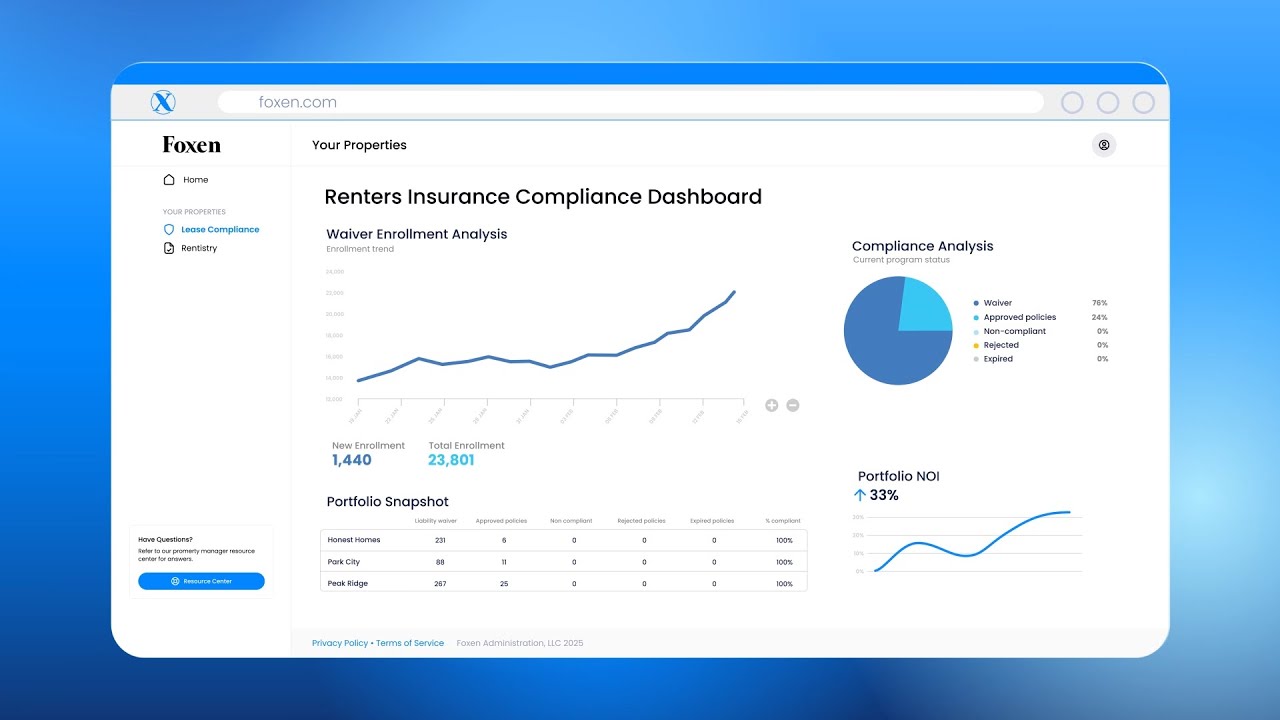
Yeah. That's a great question. So the data that we're tracking on a a regular basis, you know, starts at the portfolio level. So understanding what the participation in these programs are, you know, which ultimately is a direct reflection on the financial benefits that you're receiving from these programs.
So that's really one of the most common ones that that we get asked about and that we're actively providing, information to. Other questions that we get asked about are a lot of claims, which is where Pete and his team really come into play. So how many claims that they had, what are some of the trends that we're seeing from, you know, what's being submitted, how much, you know, we paid out from a claims perspective, etcetera. So a lot of information coming from Pete and his team, you know, as you unpack on the claims side.
And then ultimately, some of the property level performance as well. So, you know, if you look at a portfolio level participation or or claims, most people wanna double click into that and see what are, you know, the trends that you're seeing at properties. Are some of them, you know, seeing a lower resident participation, and and why might that be? Or are they seeing a higher participation? Are they seeing an influx in claims or or not? So, we've got a lot of scalability when it comes to the the data that we're able to provide to those customers, but those are really some of the common ones. Pete, Kelly, anything you'd like to add on that?
Nothing for me. I think that that hits the nail on the head. Thanks, Ty. Pete, anything on your end?
Yeah. No. Agreed, Ty.
Great.
Well, with that, I'll pass things back over to Rich. Rich, thank you so much for having us. This has been a great discussion, and, we've appreciated our time here today.
Well, thank you to Ty and Pete and Kelly, and great job facilitating this discussion, Megan. You all covered a ton of ground, offered some real life and real time practical suggestions that I think every apartment owner and operator can put into practice. So well done by all of you.
Thank you again to Foxen for making this webinar possible. Foxen, it's really...
It's a top notch firm, offer a ton of value and expertise to the multifamily industry, and we appreciate partnering and collaborating with you. Thank you to everyone for tuning in. We hope you will continue to read Multifamily and Affordable Housing Business Magazine, whether in print and or online. And perhaps we'll see you soon at some of our upcoming Interface Multifamily Conference events.
You can see details and a lineup at, www.interfaceconferencegroup.com. So thanks again to our speakers. Thanks to Foxen, and have a great afternoon.
Bye bye.
Your Webinar Thought Leaders

Pete Kidd

Kelli Stiles

Tyler Specht
Related Resources




















Get Industry News and Updates
