What New Data Reveals About The Resident Experience | Foxen on PropTech Pulse

Free yourself from health insurance.
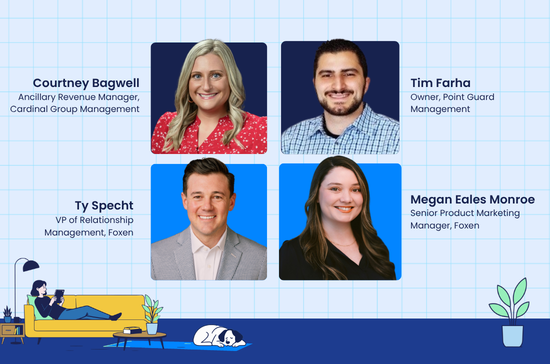
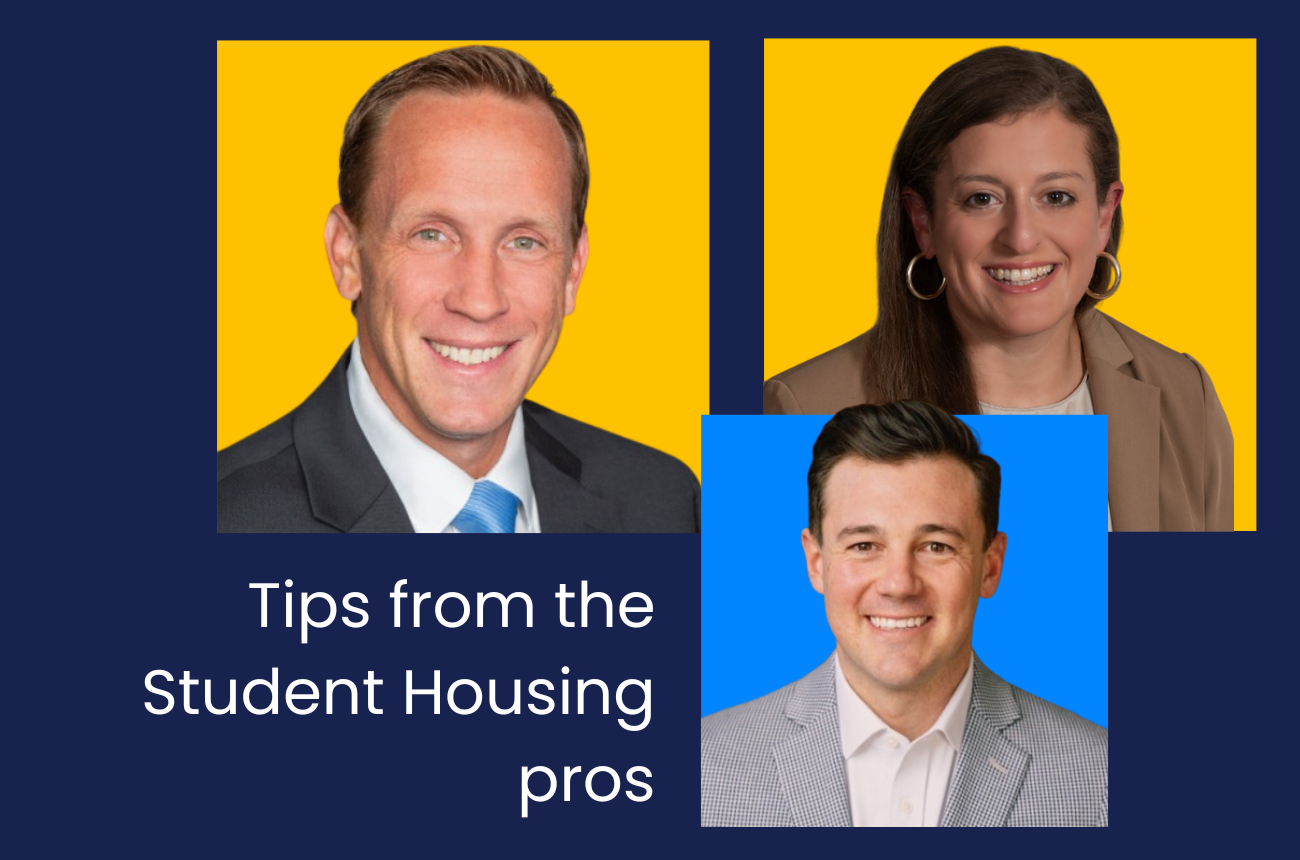
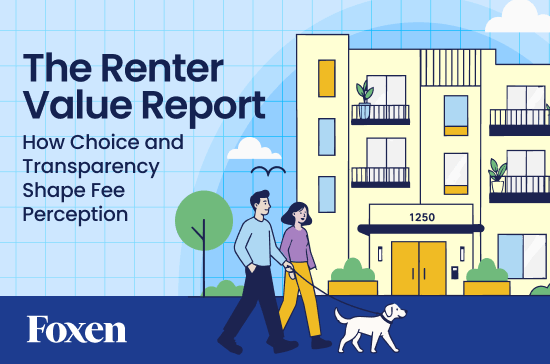
Foxen surveyed nearly 1,000 renters to understand how they view ancillary services and fees, and the results offer a clear roadmap for operators under occupancy pressure. In this PropTech Pulse episode, Foxen’s Ty Specht and Megan Eales Monroe join host Shelley Robinson to unpack the findings: 94% of renters said property damage protection would be valuable to them, 91% said the same about rent reporting, and the single most important factor in whether renters will pay for a service was being able to choose to participate, which outranked price.
The conversation covers:
- How clear communication turns fee discussions into trust
- Why willingness to pay splits sharply along generational lines
- The growing importance of pet accommodations and consistent ESA documentation
- Where automation helps without replacing the human side of the resident experience.
For multifamily owners, operators, and PMCs rethinking how they communicate and deliver ancillary services.
Welcome to PropTech Pulse, the podcast that takes the pulse of prop technology in multifamily. I'm your host, Shelley Robinson, and each week, we'll be diving deep into innovations, challenges, and the future of work in property technology and multifamily.
From AI driven property management to blockchain and real estate, we're here to explore how technology is reshaping the way we live, work, and invest in multifamily communities. Whether you're a property manager, a tech entrepreneur, an executive, or even simply curious about the future of living spaces, PropTech Pulse is your weekly dose of insights and inspiration.
So let's take our rhythms and get on with the show. It's time to take the pulse.
Welcome to PropTech Pulse. Today, I am chatting with Foxen with Ty and Megan. Welcome to the podcast.
Thank you.
Hi, Shelley.
I've been looking forward to this conversation. And, Megan, it was so nice to meet you in person at Blueprint, earlier in September. So, I've been looking forward to hearing more about what Foxen is building. And to kind of kick us off, I'd like to get right into it with our viewers of... You know, take us back to a moment where you knew you had to build this. You know, what was the pain point that you just could not ignore?
Yeah. Our our origin story is honestly one of my favorite stories to tell.
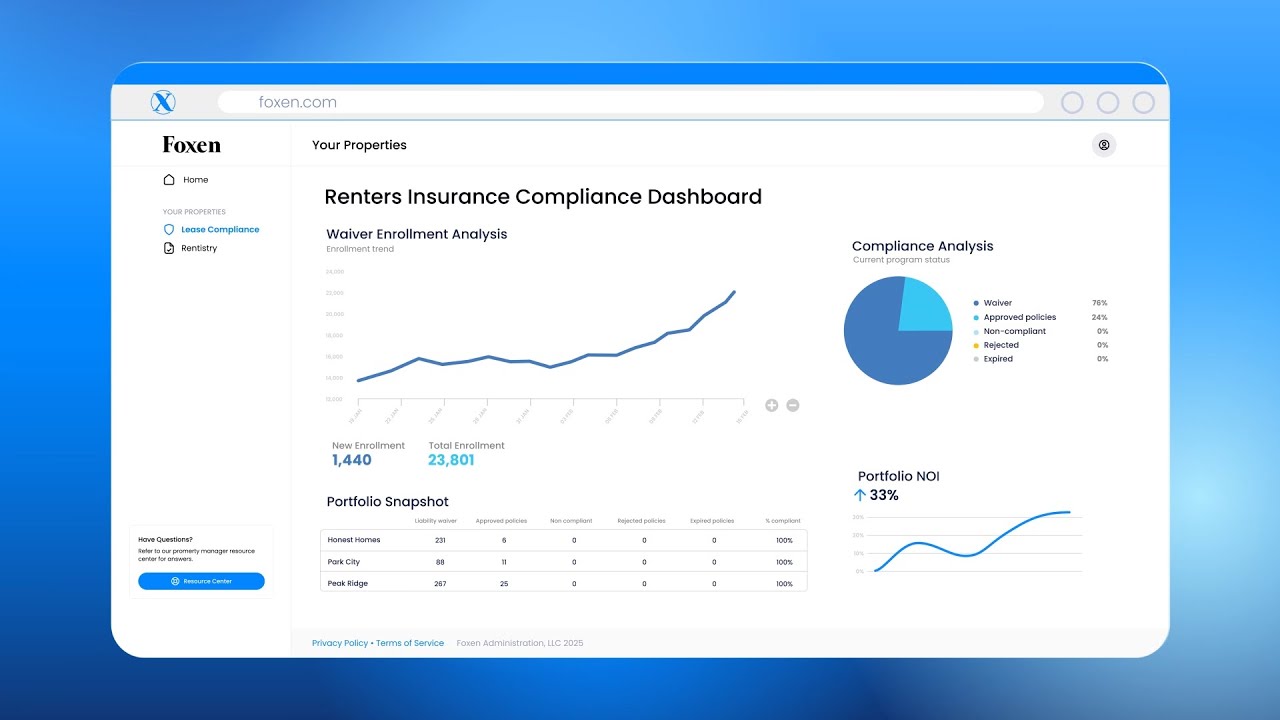
Foxen's been around for almost a decade now, which is wild to to think about. But our founders were working in the multifamily space as owner and operators, working with, you know, Class A, Class B apartment complexes, and at the time, the idea of renter insurance compliance was really just kind of stirring around. Some operators, if you talk to them, weren't necessarily requiring renter's insurance, others, there were a couple solutions already in place that, you know, helped solve some of the gap, but from our perspective, it really lacked an operator's mindset when looking at the solutions in place.
So it could either be very geared towards the in...
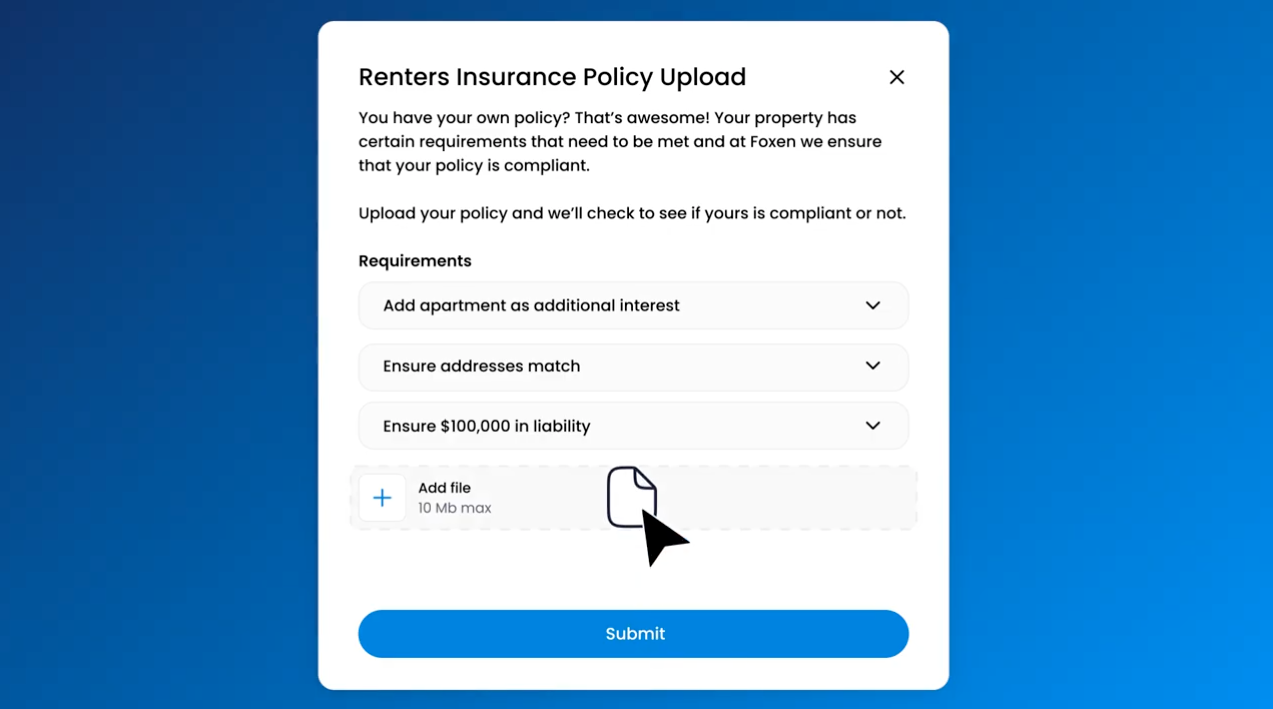
Insurance space and and less operators. So we really sat down and said, this needs to be a product that is built by multifamily professionals with the intent of, you know, having that experience serving all three levels of the business, and and that's really what Foxen set out to do. When I say all three levels of the business, obviously making sure that, you know, the executive teams are getting the information that they're looking for, that they're getting the protection, the you know, additional revenue streams that they're seeking out, the property teams, these solutions were really big for the property teams, when you think back you know, ten, twelve years ago, if a resident was coming to move in and you required renters insurance, they had to provide that physical copy of that policy at the time of move in.
And if they didn't have one, your teams were really stuck in a hard spot. It was either, you know, let that slide, let the resident move in without protection, and really hope that they come back to that office and and turn that in.
Or it was, you know, telling the residents, hey. I can't give you this key until you provide me with proof of insurance. And at that time, they've got family members sitting out front with a U Haul truck ready to move in.
Oh, yeah.
And and not necessarily the best experience that you would imagine from a resident perspective. So when we put this together, it was really kinda trying to cover everything that I just explained, it was to create simplicity for the residents' experience, obviously save the on-site team time and any friction when, you know, going through that move in process, and then also giving the teams a peace of mind knowing that the gaps in compliance would be handled without having to ask your your on-site team to be the ones to to manage that.
And, you know, I think I may have had a couple of those escalation calls from time to time back then as a as a regional operating leader at the time where, you know, like, I've got my movers here. I have the elevator reserved, and I can't move in. So that is a huge pain point to solve. And eliminating friction and creating customer moments that really keep our residents happy and don't turn to reputational harm moments, that's that's a great way of really looking at it for the operator rather than the insurer. So I I love that thinking behind that. Well done. Yeah.
Did... Was there anything while you were building this over the past decade that you had to kind of unlearn from kind of traditional thinking to build something truly different?
I think it would be just the the blend of leveraging the technology while also keeping the human action... Human interaction at its core.
Yeah. You know, you still find residents today with all the AI that's out there. They want to talk to a human. Oh, But at the same time, they're also looking for instant gratification in today's world.
So, you know, whether it's submitting a COI policy that, you know, needs updated by something, they don't wanna wait seven days to find out what they need to change on that policy. They wanna know right now if something is needed to to be changed so they can go back and modify it and have that happen right away. So I think finding that blend of having human service back... Backing the AI and the tech automations is extremely important, and Fox and has continued to make sure that that that is a focus point for us is, you know, keeping all of that in the the right perspective.
I love to hear that. It's it's not often enough, think, especially in the technologies or technology enabled space to really think through what the customer moments look like, much less the operator moments if you're on the insurance side. So I I love to hear hear that.
I went to a conference last week, and it was all about, you know, delightful hospitality. Right? And I think we are in a people business, whether it's the operator side or it's the resident side. People do want good service in an age of AI. So well well thought out there too.
Yeah. And and I had a meeting the other week with with one of Foxen's clients, and they were talking about that exact situation. They're like, you know, the the AI leasing tools, they can't pick up on human tone and emotion at this point. When someone's visibly frustrated or vocally frustrated on the phone, and they're getting just auto prompts from there, you're you're really missing the mark on that level of service.
That's that's good.
To to add on to that, I I feel like this has been discussed quite a bit, but really you can't overstate how important it is. AI can add so much efficiency, but as we've seen time and time again, it is not a replacement for that human interaction.
But the the thing is, when it's used well, when it's really strategically implemented to do the things that we don't want humans spending all of their time doing, that gives us and our human team more time back. And what are we going to do with that time? Would argue using it to provide that great service to residents, to build connections with them, to create a sense of belonging in these communities is is really the best way that that time that's given back can be put to use.
The on-site operations has gotten so complicated, I think, the last fifteen years. Packages is part of that equation. There's all kinds of things that have prop tech complexity. So freeing up time has a lot of value so that people can serve.
So I love to hear that, Megan. That's that's outstanding. Is there anything right now, you know, that's still really hard? Like, is there a problem in in Fox and in the industry that you think is is something you're still working to solve in in a better way?
Anything that keeps you up at night where you're like, this this this could be this could be better or it's still a big problem in the industry or it's still hard?
Well, I think one of the focus points that that we're always looking to improve upon is integrations.
You... Kind of going back to the point, Shelley, that you just talked about.
You talk to on-site teams, and at any point, they've got seven, eight different tabs of different products, different vendors, different softwares that they're utilizing on a day in and day out basis. So being able to leverage strong integrations to try to minimize the various sites that that these teams are having to work with, the various tools that they're having to work with is extremely important and I think in today's world too, the the conversation of consolidation more important now than ever. So as we look to, you know, building out new solutions, enhancing our current solutions, we certainly keep that in mind too that we want, you know, Foxen's platform to be of service to, you know, the the owners and operators and residents that we're working with and give them a one stop shop that that they can access all that information in one place as opposed to going to three or four different sites to find, you know, certain data points that they're they're needing to help streamline their operations.
That is well said. Would you... You know, we were talking a little bit at Blueprint, Megan, too. Didn't you all recently... Let's talk a little bit about the renter side because we did talk operations and integrations on the renter side. I think you mentioned y'all had done a study. We did. What did what did that show on the renter side of the equation and what you're building and what the industry is seeing right now?
Yeah. So we actually did a survey this year of almost a thousand renters, because we really wanted to understand their point of view so that we could better support our customers and, importantly, their residents.
So what we're really trying to do here is to design something that benefits everyone, the owner, operator, and also the renter. So bringing that renter perspective into the equation has helped us to understand how ancillary programs are actually viewed by renters and what makes them put value on those programs or not. And, you know, the backdrop to all of this is that it's been a few tough years with occupancy challenges for a lot of teams. And so many operators are are really looking for those opportunities to improve the resident experience. And at the same time, there's been a lot of good conversations happening in our industry around these ancillary services and fees. And we've seen teams that are being pushed to evolve their practices to communicate more clearly and build more trust with renters from day one. And sometimes this is required by law, but regardless, it's it's just good practice.
So with all that in mind, we put this survey together to to understand how renters think about those fees and the services that are included or not included at their properties. And so the big takeaway was that renters really do see value in them, but there are some caveats. It's especially when the reasons behind those fees and the benefits that they deliver are, clearly communicated. So we focused on, property damage protection, rent reporting to credit bureaus, and pet friendly options.
And so we asked how valuable would it be to have an option that helps protect you financially if accidental property damage occurs. So they could choose, you know, ranging from not at all valuable to me to extremely valuable. And so we were really pleasantly surprised to see 94% of the renters that we surveyed said that it would be valuable to them. So that's anyone who chose at least somewhat slightly valuable.
And of that group, 40% said it was extremely valuable.
So we saw similar results when we asked about rent reporting. That one, overall, 91% said it was valuable, and then 44% said extremely valuable. So what we saw from that is that, you know, these offerings are valuable to renters. Like, they are willing to, you know, pay for those services because they receive something that that matters to them.
Absolutely. And any... Like, was there anything surprising to both of you from the survey that you were like, this is an moment.
We didn't expect to see this.
So, yes. One thing that really jumped out to me was the role of clear communication and choice, which shouldn't be surprising, but choice was the most important factor. So we asked when they're considering an added service fee, what factors make you feel that that service is worth paying for?
So the top answer was, I can choose whether to participate. 43% said that was their top option, and it actually beat out the second answer, which was price. Price feels fair for the value. So the takeaway I get from that is that renters really value feeling a sense of agency. If they feel like they can get all the information that they need about a program, how it works, what it costs, they're just more inclined to say yes or decide to stay enrolled.
You know, this brings up some good questions because not every program can be optional. It depends on the community, depends on where you're operating, and, you know, operators have to be familiar with regulations in their area that might affect this. But even if those can't be optional, there still can be clear communication about the value that that program is delivering.
It goes into that sense of trust or deceptive feeling, right, when we get into, like, fee transparency conversations going on in the industry, which is another hot topic.
And and it's hitting multiple industries right now. So it is on consumers' mind to feel transparent, ethical, of course, choice if that is a is a choice, but to be clear about it. So that... That's a good finding in the study as well.
Yeah. Yeah. And it really flips the conversation from, you know, like, we're required to tell you this to something that's more like, we offer these services at our property. Here's how it benefits you. Here's why you can... You know, why you might wanna take advantage of this. And it turns something that can be a point of friction into a point of differentiation.
Oh, that's really good. Do you find too...
I hate to use the word education, but a lot of times, someone who's renting for the first time may not understand what they need. Like, I I only knew because I got into the industry at a, you know, an early early career age. But, do you find that that's part of the process too is actually uncovering and educating to the renter side of of the the fence as well?
Oh, yeah. I think, Ty, your team has dealt with this quite a Yeah.
I I mean, I think it it goes all around. One, there's there's educational from the on-site teams to start. The ones who are face to face with the residents, making sure that they understand what they're putting in front of their residents is extremely important and certainly something that Fox and continues to prioritize when partnering with with new customers or just ongoing educational opportunities. But then when it translates down to the resident level, you know, even more, they're ultimately the ones paying for these services that we're referring to.
So the last thing that anybody in that relationship wants is for a resident to be paying for a service that they are misunderstood on the benefits of. So how do you streamline that process? You give certain tools to residents, you give certain communications to the on-site teams. Obviously, can take on certain communication levels yourself.
But I think another thing that we found in that survey was the number of residents, I think it was roughly 70% of residents, said that the value of having kind of a self-service portal was extremely important to them. So where they can actually log in and, you know, see their status in a certain program or in terms of rent history, Foxen's rent reporting solution, see that their on time rent payments are actually playing a role in, you know, their their credit impact or or confirming which credit bureaus it's getting reported to. So I think it's extremely important that we're putting these effective tools in front of all all members of the relationship from on-site to the resident level.
That's that's outstanding. Was there anything in the survey that you were like, this is on the road map and it solidified it? Or was there anything in the survey where you're like, we've gotta build this now because we we uncovered x. Anything you can share there that's that's public?
I I guess what I'll say is...
So pet management is a a problem that we've been focused on quite a bit over the past year with our newest solution addressing that. But I think the survey, it kind of underlined just how important pets are for renters. And we did ask about pet friendly options, and and that was something that renters indicated that they are definitely willing to pay for.
So we're considering ways that we can continue to provide a great experience on the front end when renters are applying for units and and will be moving in with a pet. So lots of good things in the works there.
And the pet friendly accommodations just continues to be a very important topic.
We did a study, I think it was about a year ago, Megan, where it was roughly 45% of renters have a animal or pet of some sort, which the the statistic that always, you know, blows my mind is. That means that more renters today have a animal than they do children. So, obviously, making sure that there are accommodations, and it goes beyond just pet friendly living. When you talk to developers, now they're considering what do the pet parks look like on-site, or it's no longer a patch of grass where dogs can go to the bathroom on, there's there's toys, there's turf areas, they're now, you know, bathing sections of the apartment community that Yeah. People can go and access. So you talk about the amenities that that you have to think about. It's it's wild when it just starts with one simple decision, which is, yes, we're gonna accommodate pets.
Yes. And we've heard that pet management is just a major pain point for operators. Yes. I think, just to clarify that stat around renters and their pets, Zillow, they do some great research if you haven't checked it out.
But what we did is we actually interviewed property managers around what were their pain points. Something that popped out as a huge one was just collecting documentation on the front end, especially letters for emotional support animals. And we just saw that there's a lot of inconsistency, hesitation on, you know, what that process should involve.
And that's really an area where consistency and having, like, a clear repeated process matters quite a bit. So we It does. Saw that that was a big gap.
I love that. That... And that is a a need, for consistency and application in the industry as well. Anything else from from the survey that you you wanna share before we move to the next topic?
One one thing that I appreciated was seeing some of the differences in the generations of renters and how they answered some questions.
So the percentage of renters who said, no. I would not pay an additional monthly fee for anything.
It correlated directly with age, and so then the reverse was true. So we saw that younger renters were just consistently more willing to say that they'd pay for more services. So I think it was, yeah, it was over half of gen z and millennial renters so that they'd pay an additional fee for three services or more. And then only 30% of baby boomers and 12% of silent generation would do that.
So that...
It it was a pretty interesting graph. It's basically an x. You know? The younger renters are willing to add on these services.
The older renters are a little bit more skeptical.
There...
There's a...
An on demand economy for sure that the younger renters...
It's it's it's native. Right? The...
Everybody's grown up on a phone now. So very different expectations, I think, of how we even go about getting services. I I work in technology, I'm a Gen Xer. So I think I'm a little bit of a...
More of an anomaly about it because I do everything on demand. But I don't think if I worked in tech, might probably be different. Right? So that makes a lot of sense.
Makes a lot of sense.
Is what... You know, how is what you're really building and where Foxen is going connecting to where you think the bigger bigger picture of multifamily is headed?
Yeah. I mean, I think, obviously, making sure that solutions are built for the the end user and the, you know, on-site teams, it it continues to be a a focus point for us. So do you think back to our origin story? We built it out of a need.
There was a need to to build a renter's insurance compliance product that, you know, had the operators in mind and the residents in mind and making sure that the experience was extremely important.
Then you fast forward with the credit building solution. That was a major gap in the industry. You think about people who own their own home and they get the benefit of having their monthly mortgage payment reported to the credit bureau. This is likely the renter's largest monthly installment that they're making, For sure.
You know, on a consistent basis. So the fact that that wouldn't benefit them was a major gap. And then obviously, the pet friendly communities, which we just spoke on, extremely important too. But I think as we're looking forward, I read an article last week that just talked about the importance of resident retention.
So Megan just went through all the data points of the renter value report and what residents find valuable, what they're willing to pay for, what they aren't willing to pay for. But at the end of the day, it really comes down to making sure that that resident experience is as flawless as can be because just the importance of having residents staying at that property as long as they're renting has become the focus point for for many owners and operators out there. It's no longer about just get them in the door. Yeah.
And, you know, try to drive NOI through ancillary services. It's making sure that these ancillary services provide significant value to the on-site leasing teams and to the residents, and they're gonna actually help with retention, not have the reverse effect of residents feeling like they're paying for a service that they don't ultimately see value in.
I love that. And it is, definitely a time of rent renewals are everything. You don't want the turnover because the acquisition cost is super high at several markets right now or or lengthy in nature. So that's great.
And I also love hearing about rent reporting. I wish I had that around when I was in operations. It is a it is a big value. It is a big monthly commitment that you should get the benefit to your credit on.
So I think that's a a great problem that you're solving there as well.
Question for you. If you could get every operator, every owner, every investor investor in a room, what's one message you'd want them to hear?
I think from from my perspective here, relationships are everything. So we focus on relationships at every single level.
You you look any any owner or operator out there understands the the value of having a positive grading on a Better Business Bureau or a resident saying, love this experience with this vendor, with this property, just continues to be extremely important. So not only, you know, from my perspective are we focused on the relationships with our customers, we wanna make sure that their teams are building relationships with our our staff and making sure that they feel like they can come to us and feel supported where they're needed. And then the residents as well. It's it's extremely important at all levels of of what we're doing today, and it goes back to making sure that the the experience that we're delivering is exceptional and leading to positive experiences for the on-site team, and then obviously positive experiences for the residents, and hopefully helping support our clients and driving those occupancies and and those renewals up.
Yeah. And I'll add on to that. I think that I just really wanna underline that a win for the residents is also a win for the property owner and operator. It's it's really easy to slip into a mindset of those two things being intention, the resident experience or the performance or or revenue strategy for the property, but it can be further from the truth. Both of those things succeed together. When resident experience is is prioritized, it directly leads to better, performance outcomes across the portfolio.
That's that's what I would say.
So true. Here's a question for both of you that I like to ask all my guests right now. I have a daughter who's 20, and she's in college. And she and her friends are all talking about, like, what skills are future proof in in the coming years when... In an age of AI, in an age of automation, what do you think, are the skills that will continue to be most valuable, especially in multifamily over the next five years?
Megan, do you wanna go or me?
I have a thought on this. This has been on my mind since Blueprint. I think the ability to create a sense of belonging. That is a huge, huge topic.
There's some data, around, you know, just this growing sense of isolation that a lot of folks feel. And so within multifamily communities, I think that on-site teams really have an opportunity to do something directly in response to that, and that is creating a sense of community that fosters belonging where people live. So I think that community managers who can connect with residents, who can help them feel plugged into their neighborhood, with their neighbors in in the community directly where they're living, that is going to be huge. And I don't think that that's a skill that AI is something that we want to replace us for. I think that that's going to always be about human connection.
I love that. Love that a lot.
I'm not even gonna try to top that. I think that was a a fantastic response, Meg.
It's that high that high level service, I think. It it... People are craving connection, service. We we live in an isolating time, I think. So I I think that's spot on. Thank you for sharing.
And I think to that point, I mean, that you just made, I feel like some people don't even know that they're craving it.
They're just so comfortable and content being behind a screen or, you know, doing Zoom meetings that the thought of getting out to an in person meeting or going out to a conference, it seems so overwhelming and exhausting, and then you get out and you feel the energy and the passion of those around you, and you would come back with a completely different perspective. So I think, you know, that that you're spot on just with with everything that you said and, you know, just continuing to value the importance of human interaction.
I love it. Do you think there are any, like, overhyped trends right now in multifamily and prop tech and services or anything that's underrated from from your viewpoints?
Well, it certainly seems that AI, has, you know, been on everyone's minds. And I'm not here to say that AI is overhyped, but I do think that there are certain applications of it that we're seeing be done over and over and over with different flavors.
And, you know, given everything that we've talked about today with the importance of human connection, I would say any AI that's trying to replace that. Like, chatbots, you know, sometimes if they help people get an answer to their, question or solve a problem faster, that's great. And people are willing to accept that experience. But, you know, trying to insert an AI agent into every interaction is probably one thing I would say is overhyped.
And I like that. That's that's actually... That's wise.
I think the the concept that more solutions means better experiences is another misconception.
Quality solutions that provide value and positive experiences are are where people are pivoting and and focusing their time and investment in. So I think there was a time and a place where every solution could create better efficiencies or could create, you know, more NOI at the property level.
But again, if you go back to where people are focused right now, it is on the resident experience. So if you're throwing five different solutions in front of somebody and half of them aren't generating a positive resident experience, that's going to backfire. So making sure that you're being diligent about what it is that you're you're putting your teams, you know, in front of and, obviously, you're putting your residents in front of.
I don't think there's ever been a better time to think about how to improve the services that you deliver in operations because there is so much potential.
Not not the chatbot side, but, like, the workflow automation side, the manual task side. That that really, I think, can be in the background and residents don't have to feel that.
But the front end experience of service to me, I think it's really a great great opportunity right now for some companies to really kill it.
So thank you both for for sharing your perspectives on that. Anything you want our viewers to walk away thinking about after this conversation today?
To go back to, compliance for a moment, it's not always the most, you know, fascinating topic. I think it's something people usually wanna consider it done and then move on.
And I think that that is is just something that can be part of the problem. There's a lot of different ways that, you know, those compliance gaps can occur. We've been talking a lot about automation today. And so applying automation in a way that it prevents those gaps from ever even happening, I think, is what folks should be focused on instead. So, you know, if that renter's insurance policy gets nonrenewed or they stop paying and the policy is canceled or, you know, they never purchased the correct options in the first place, those can be really sneaky things to solve. And so I would just say instead of, you know, throwing more time and, you know, people power at this problem, I would say shift your thinking. And here's where AI, here's where automation can actually be useful because it can create that consistency in the background without your people having to be responsible for finding every potential lapse.
Awesome.
Well, thank you both for your time. This is a great conversation.
And, we'll make sure we put your contact information in the... In... When it goes live, this coming Friday as well. And I hope to see you both out soon at another another in person moment to connect in the next coming months.
Looking forward to it.
Awesome. Thank you, both.
Thank you.
And that wraps up another episode of PropTech Pulse. I hope this conversation has given you valuable insights and perhaps even sparked some ideas for your own PropTech journey. Remember, the future of multifamily is being written right now with every technological advance and innovative solution. So stay curious, stay connected, and keep your finger on the pulse of PropTech.
If you enjoyed this episode, please subscribe to PropTech Pulse on your favorite podcast platform and share this along with your colleagues. You can also find us on social media for bite size insights and updates. I'm Shelley Robinson. And until next time, let's keep innovating, disrupting, and keep pushing the boundaries of what's possible in prop tech and multifamily.
Let's build it together.