Reducing Risk and Driving NOI in a Competitive Market with Jay Parsons

Free yourself from health insurance.
Jay Parsons, Rental Housing Economist, dives into strategies on reducing risk and driving NOI in a competitive market, with insights from Foxen's President, Kevin Jacobson, and Coastal Ridge's Managing Dir. of Property Management, Joe McDiffitt. Key topics include:
- Why traditional property management strategies are no longer enough
- The hidden risks of ignoring compliance gaps
- The tools and technologies that are driving next-gen operational performance
Alright. It looks like we've got a decent number of people connected, so let's dive in. So let's go through today's agenda. First, Jay, who I'll, introduce in just a moment is gonna be giving us an exclusive behind the scenes update on apartment revenue expense trends that he's been seeing in his data and research. Then after that, we're gonna go into a deeper conversation around some of, the data that Jay's gonna share as well as other topics like how to generate NOI in a tough market, like the one we're in, some advice for how to thoughtfully and successfully introduce technology to improve your processes, reduce risk, and a lot more. We encourage you to send questions in the chat. You can also use the q and a module in Zoom at any point throughout today's event, but we're gonna collect those questions and save them for our q and a, which will be towards the end of today's call, but you can submit those at any time.
So let's introduce everyone. So my name is Megan Eels Monroe. I'm filling in today. You might've noticed that I am not our original host, Squire.
He's unfortunately not able to join, but I'll be hosting today. I'm newer to Foxen, but I've been in the multifamily industry for about eight years. So personally, I couldn't be more excited to hear from this particular group of expert panelists. And so with that, let's introduce our first panelist.
First up, we've got Kevin Jacobson, the president of Foxen. Can you tell us a little bit more about yourself and also about Foxen?
Sure. Thanks, Megan. So as you said, I'm the president of Foxen.
My background is in scaling high growth technology oriented companies. At Foxen, we've been at this for a little less than ten years, but I've worked with a very large number of residents, over 2,000,000 residents we've served during that time. The company started in all things renters insurance compliance, and then we made our way to developing another solution in rent reporting, which I think we can tell you a little bit more about later. But all of our solutions focus on allowing our customers to focus on signing and renewing new leases while driving ancillary revenue and delivering great value to residents. So company's growing really well. We're proud that what we're doing is resonating with with our customers, and so excited to talk to you all today.
Yeah. Thanks for the overview. We're really excited to hear from you, Kevin, around, you know, how some of Foxen's customers are solving the challenges that we're gonna talk about on today's call. And with that in mind, I'd like to introduce Joe. Joe is the Managing Director at Coastal Ridge. Can you share a little bit more about your business and about you, Joe?
Of course, thanks for having me, Megan. Look forward to getting into the conversation today. I'm Joe McDiffitt. I oversee property operation for Coastal Ridge Real Estate, dad of three amazing little girls. Coastal Ridge has been around for a little over a decade. We're proud to serve nearly 120 communities across The United States in both conventional multifamily and student housing.
I've been in the industry for close to twenty years. My first job was shuffling snow in Toledo, Ohio while going to the University of Toledo. But I've been very lucky and fortunate to be part of an organization that has allowed for growth and empowerment and excited to lead a really strong team of incredible individuals that call Costa Ridge home. Thanks for having me on today.
Yeah, we're so happy to have you. Really excited to hear from you about how you've found success implementing some of the ideas that we'll talk about today. And then last but definitely not least, I'd like to introduce you all to Jay Parsons. I have a feeling that most of you on the call have heard of Jay. He is an industry economist and expert focused on multifamily trends reporting and also real world applications.
So Jay, can you introduce yourself to our audience?
Absolutely. Well, thank you, Megan, and thank you, Kevin, everybody else at Foxen for having me on today. I'm excited.
A little brief about myself. I've been in the rental housing business for the last sixteen years now, and all focused on research and economics.
And I live in the Dallas area, and yeah, I guess probably about enough of me, but thanks again for having me on.
I'm excited for this discussion We are very excited to have you here.
And Jay's intro was the perfect segue into, I think, what we're here for. He's gonna take some time to dig into a variety of 2025 industry economic trends and updates. Again, I really encourage you to take advantage of this opportunity to ask Jay questions, please, you know, keep those questions coming. You can send them to us in the chat or in the q and a during his presentation, and we'll collect them all for the end. And with that, I'll turn it over to Jay to share his presentation.
Great, all right, well, thank you, Megan. So for any of you who've seen my presentations before or listened to our podcast, I like to do a little trivia to kind of loosen things up a little bit.
Megan, by the way, you able to see my screen on your side?
Looks great.
Okay, good. Okay, so I want to just get us going on some useless trivia so you can depress your friends in the next happy hour event or something or a family dinner table.
So again, we have the segment on my podcast that Fox and sponsors, and so I wanted to bring it back just to get us started here today. And so a question I wanted to ask you, and you could just shout the answer out loud to your muted microphone or type it in the chat if you want to.
The question is China represented 27% of imports used in The US residential construction in 2023, which is the most recent period in which we have data available.
That was second...
I'm sorry, that was more than any other country, but what country ranked second for imports for residential materials?
So just give that some thought. Again, you can type it in if you want or just say it in your head or shout it out loud. I'll give you a few seconds to think about it.
But the answer is, drumroll, Mexico. So 11%. And as we talk about expenses today, we're talking about operating expenses, but obviously capital expenses are a big deal as well, especially with all the conversations right now that are going on tariffs. So there's been a lot of work to diversify supply chains, the construction industry, and that really began even prior to the most recent trade war started back in 2018. And I think one reason that you'll see, if you talk to housing developers, whether it's single family or multifamily, the expectations of the impact on construction costs is probably a lot less than you might have thought.
Generally, estimates in the low single digits in terms of construction costs, and it's primarily because the supply chain has gotten more diversified and it was only a relatively small portion of construction costs tied to imported materials.
All right, so let's dive into this. So as Megan explained to you, I'm going to spend the next bit of time here talking to you about where market is right now and specifically getting into the pressures that the industry is feeling on NOI and some of the responses to that. And the short version is that anybody who's in the business, you know this, is that in these last couple of years, revenue growth has been compressed and rents are falling in some cases, and occupancy rates are below normal in many cases as well. At the same time, that expense pressures have gone up. And that's really created a challenge, especially for people who are groups that bought apartments at the peak. Now we're seeing challenges achieving the pro form a expectations, in other words, achieving the revenue expense targets that you had set when you acquired those properties.
I personally believe that's going to create some permanent shifts, even as the market recovers, in how we think about expense control.
And in the past few cycles, a lot more focused on just the revenue side. And I think now we're seeing much more focus on the expense as well as risk mitigation as well. And so a lot of this really started with supply. So a quick kind of history here, recent history.
And COVID obviously changed a lot of things for the market. But then we saw this big boom in demand for both foresail housing and rental housing in the second half of twenty twenty and 2021. Then, of course, we have the inflationary price spike that affected pretty much all expenses, including rents. That, in turn, led to this massive supply wave, which is always important, regardless what the Fed did on rates, we were going to see rent growth here back because of this spike in supply.
So last year, we built the most apartments that we've built in 40, 585,000, that number's going to come back down. But the short term has put real pressure on apartment rents. And so this is the last couple of years. You can see apartment rent growth, it's basically flattened off from us over the last two years.
We got right up around 1% in March for year over year new lease rent growth.
But it's actually backtracked a little bit in these last couple of months, which has, I think, been a discouragement for property managers hoping to maybe we're past that peak. But the challenge has been that when we're past the peak on actual deliveries of new supply, we're right in the mix of it for lease up activity. So all those apartments that were completed in the winter, they didn't just get their certificate of occupancy and get filled up. They have to get leased up as well, and that's going to take some time to work through all that.
So it's still a very challenging market where revenues are not yet bouncing up. And one tactic that we're seeing is through concessions. And so in the higher supply of Sunbelt and Mountain Regions, we're seeing higher concession values even among stabilized apartments. And so these aren't typically, we see higher concessions in lease up properties.
But what's really interesting is that even in this we're in the peak leasing season, and we've seen a material jump up in concession values from about 8% of rent in Q4 to now north of 10%. So that's more than a month free in renter terms. If you see a sign saying one month free, when you're at 10%, that's closer to six weeks free or something like that on a 12 lease. And so that just shows you the competitive nature of the market right now as we're competing for leases.
And as we look at the impact it's having, in these higher supplied markets, we're cutting rents. And again, that's putting pressure on the bottom line. So, this chart shows you the relationship between rent growth on the y axis, supply growth on the x axis going across. And so, it's all about supply.
We're building a lot of supply in places like Austin, Texas. Rents are down more than 6%. In the places that are not building much supply, rents are still increasing 2%, 46% in some cases. Now, challenge is a lot of the industry is really focused on growth in the markets with all this supply.
And so that's kind of disproportionately impacted some of the institutional groups that are heavily invested in multifamily because they're in these higher growth markets.
Now, the good news is that demand's been really strong. And so that's been the kind of silver lining is that there's still a natural demand for housing. Q1 was the first or second best Q1 for apartment demand on record, depending on which data source you use, but a lot of demand. And so, of course, we're seeing that there's some good demographic drivers, good economic drivers, and that are really that are pushing demand into apartments. And while a lot of people focus on, they'll say, Hey, that's just because people aren't buying houses. It's really not quite that simple.
Here's a great chart that John Burns Research and Consulting put together from some census data. And what it shows you is that over the last three years, even through the inflationary period and after COVID, we saw 800,000 adults move out of mom and dad's place and form new households. And most of them ended up renting, specifically renting apartments because they're in that kind of prime apartment renter age from 25 to 34. And this is really important because if you're like me and I'm a geriatric millennial, the oldest son of millennials, and for all my young adulthood, we heard all about young adults and the mom and dad.
And these last few years, there's been much less conversation about this, but that trend's been reversing. Again, even through the period in which rents and home prices and consumer goods were all seeing inflationary bumps. That's been a real positive story. It speaks to the resiliency of the market And also the fact that this young adult cohort, especially those with college degrees, fared really well over these last few years.
And we're seeing outsized wage growth among young adults who are more likely to live in apartments. So that part's been a real positive. So that's where a lot of this demand is coming from. That's good news.
Another piece of good news has been that wage growth has been outpacing rent growth for the last thirty months, two and a half years. Now, ultimately, it's a good thing for renters and for the industry because we're widening the demand funnel for who can afford an apartment. And so, well, if you're an apartment owner and you're not seeing the rent growth you need and wanted and it's expected, that's been a challenge. In the long term, there is a benefit here of widening the demand funnel. So that is, in the long term, going to be a win.
Now, all this, if you're in the industry right now, you may say, oh, one of the feedback you get a lot is like, Jay, I'm just not seeing the demand numbers that you're talking about. And instead you may see something like this, this is leasing traffic, which year over year change. You can see it actually been pretty flat over the last year. And in some cases, some markets have been down.
And so why is that? Well, a lot of this demand has been gobbled up by all this new supply. And so, most of the demand has not been going down market to more affordable units, going up market into these new units. And that speaks to some of the depth of demand that these higher price points talked about earlier with the wages that are growing faster than rents.
And so that's been a real positive story. But again, that demand's being spread across a great number of properties due to the supply. And so it's going to be a while until we see once these lease ups have to kind of get filled up, and then we can see concessions burn off, and you'll start to see those numbers improve. The economy is still in good shape.
Now, one positive, and we'll get into this a little more later, is that retention's been really strong. Renters are renewing their leases at unusually high levels, despite the fact that there's a lot of apartments available. And that's been a real positive trend. And so again, some people say, Well, this is because no one's willing to buy a house.
And there's some truth to that. But at the same time, a lot of people outside the industry don't realize this, most move outs from an apartment are not to go buy a house, it's to another apartment. Even if you're trying to buy a house but you can't, if you're not happy in your apartment, you're not going to stay there. You're going rent another apartment.
There's plenty available in most markets right now. But people are still choosing to renew, and I think that reflects the fact that property managers across the country have been laser focused on keeping heads on beds, protecting occupancy, and much more focused on things like resident satisfaction rates are measured through things like Aura, the online education assessment, or NPS scores. All of these things really matter. And when you focus on something, you should see an improvement.
And so I think we're seeing that happening across the industry right now. And that's a good thing.
All right, so bringing this all together, I mentioned this at the top, is that what's interesting is so I'm going to show you expense growth versus rent growth I'm sorry, revenue growth, lease revenue growth specifically, over the last, what was it, seven years. You can see prior to COVID, had rents and expenses and lease revenue, they're growing roughly in line with each other. And then in the early part of the COVID period recovery after that, we saw expenses initially that were growing as we had a lot of costs around...
There are lot of additional costs associated with learning to manage our properties without people able to physically be on-site as much or not being able to get into the units, having to offer new services because of the lockdowns and whatnot. So that created more expense challenges, and then wages started going up faster than at the time revenues were still compressed. And then it flipped in 2021, we started to see revenues outpacing expenses as rents started to shoot up and occupancy rates shot up. And so we had...
You can see in that period where the orange line tops the blue line. And then more recently, these past two years, expenses have moderated, number one, because overall inflation has moderated, but number two, because there's been a lot of focus on this as rent growth started to really pull down. You can see the orange line, the revenue growth started to come down. The industry has been laser focused on controlling expenses.
And when your biggest expenses are property taxes, utilities, insurance, there's only so much you can control there. Now, thankfully, the property tax and insurance numbers have started to moderate. That's been a positive in terms of the growth rate. Some cases have been going down for insurance.
That's helped. But we're also seeing upward pressure on things like marketing costs, because you're spending more on marketing, because you have more vacancy you need to fill. And we're also seeing still upward pressure on payroll. It's still a tight market to find good people to manage.
In some cases, we're seeing more rules being moved to centralized sites. We're seeing nesting where you're multiple people, I'm sorry, a person who's managing multiple sites, but still not really helping control the payroll expense because of the fact that we're having to pay people more to stay. And so again, I think that even if you start to see revenue numbers improve over the next couple of years as supply comes down, I don't have the view this will be a permanent shift where I think you're going to see much more focus on expense control, especially as technology gets better and there's more centralized management as well, I think that's going to be a partnership, as well as risk mitigation.
Risk comes in many forms, expense leakage as well as regulatory risk factors. And I think that's going to be a big factor to better manage through this next cycle as well.
And then last thing I want touch on is related to tariffs. Think about expenses, tariffs are part of it. There was a headline in the Wall Street Journal a couple of months ago that said apartment developers overbuild luck out with tariffs. The The multifamily industry can now pause most construction ahead of potential building tariffs on building materials. And I think that was a really poorly framed headline.
I was at an event when the startup came out speaking to a bunch of multifamily owners, and I kind of jokingly asked, hey, how many of you are feeling lucky right now because of tariffs? And of course, every snicker, no one feels lucky. And so just really quickly, I want to point out that there is a short term increase in rents because of supply coming down, it's got nothing to do with tariffs. Construction was falling, as you saw from the first chart, long before tariffs became part of the equation, and it's going to take two plus years for the impact of tariffs to play out. That's how long it takes to get properties planned, approved, and built. So that's going to take some time. In the short term, if there is an increase in rents that industry is expecting, it's going to be because of higher rates that's been the real factor that's crushed starts.
The bigger concern right now is uncertainty, potential recession risk around tariffs. We've seen since tariffs have become part of the news headlines repeatedly, consumer confidence has been down, and investors are more nervous, investors don't like uncertainty. So uncertainty is the big risk.
When people are uncertain, human nature, whether you're an investor or a renter, is to do nothing, kind of wait it out. And that's what could kind of create more of a slowdown. So regardless of where you are politically and what you want to happen here, the biggest, what really need to happen is just some certainty, some finality to kind of know where this is going, and so then we kind of adjust to that new reality. But as long as uncertainty is lingering, that can have a real negative impact on the economy, as well as to the housing market and to the apartment market as well.
So with that, Megan, I'll transition back to you for our panel discussion.
That was so interesting. Thank you so much, Jay, for sharing some of your data with us.
Before we jump into a deeper conversation around all those trends you just mentioned, I thought it'd be great to get our audience involved here for a second. So we are curious, based on what Jay just shared, what operational cost is giving you the most concern? Don't overthink it, just take a few seconds and complete the pop up poll. And while we take a moment for everyone to respond, I'll just ask Jay, you want a short call? What do you think the leader's going to be?
Oh man, I'm probably gonna be wrong here, but I think insurance is probably less of a risk now than it was if we asked this question a year or two ago.
I think it's probably, and utilities tend to be, that could be a choice, but I think maintenance is an issue, especially because it's hard, it's still finding good maintenance technicians has been a real challenge.
And then of course there's more expenses on marketing right now, given the needs there. So I'm gonna pick either A or D is the top one. I'm gonna hedge my bets a little bit.
Okay. Joe, Kevin, either of you wanna get in on this?
Is there an E, all of the above option? Perhaps that would be my vote. But I think Jay has a pretty close pulse on this and I would have to agree with what he said there. I do want to say though, as a fellow millennial, we were all told we would live in cities forever, right? We all just ended up with the suburbs just like our parents did. So I joined you there, Jay.
You 100%, Joe.
Yeah, I got to say this really fast. When I first started the industry, at a big conference and there was a panelist who was actually a fellow researcher and he was on stage. He said, Millennials would rather drink battery acid than live in the suburbs. And I was thinking, was like 26.
And I was like, I don't think that's true.
And sure enough, it wasn't. And here we are. Yep, here we are.
Well, our answers are a little surprising. So it sounds like insurance was the winner at fifty two percent of all responses, but then maintenance came in right after that with thirty three percent. But it was pretty spread. You know, we've got a lot of votes in each category. Super interesting.
So we already kind of touched on this, Joe, thanks to your answer, but I'd love to dive in here. What would your answer have been as an operator? Which cost is giving you the most stress right now?
Absolutely. I can definitely appreciate and respect the insurance answer. I think we're coming off of a really difficult period in that category. But as Jay mentioned, it seems we've really stabilized and even seen some nice expense savings there in a lot of categories. So first and foremost, while these are certainly headwinds, it makes it difficult to acquire assets to meet the returns you thought you would be if you had acquired these assets with higher expectations on rent growth.
We do view it as opportunity as well. So these are headwinds that our competitors will face. So it gives us the ability to outperform because it is challenging and difficult. So I think it's really, really important that you just be aware of these trends.
I think you are really thoughtful in how you present this information to make it really approachable and it's super helpful, but you identified trends that we're very much seeing ourselves in this space. I am happy to report, we've had a really nice Q2 in terms of revenue growth. So we are seeing occupancies climb a little bit. We are seeing really positive lease trade out.
To your point, concessions do still tend to be a little stickier than we would like to see, but those are going start coming down too. So our outlook on the revenue side is fairly positive for the time being. But really well said in terms of expense controls and investments that we've made in those categories don't need to just be temporary due to the headwinds we were facing. These are going to provide long term value on our investments when we see the market shift more favorably.
Yeah. And that was kind of the perfect segue into my next question, which was what's the flip side of that? Joe, I'd love to discuss if you've been having any success stories or any anecdotes that you can share with us around how you're transforming some of these operational costs into positives. And Jay too, if you wanna jump back in on this answer.
Yeah, absolutely.
Knowing the challenges that we face and the promises that we made to investors, whether rent growth is there or not, we still want to make sure we're providing the cash flow that we anticipated. So we have to get to work and sharpen your pencil. That's what we owe to the people that trusted us when we either acquired these assets or took on the management assignment to oversee the property. So I'm proud of the investments we've made to take on some of these challenges. I think a few key areas, leveraging technology.
We have built out some proprietary software related to contract management. So we have great data in terms of not only what's good in our asset, what's good at a portfolio in a national level, being able to take that information, proactively negotiate, educate our property managers with what best in class pricing looks like. So that's not necessarily a significant shift in terms of how we operate, but just making sure we're incredibly efficient with the limited number of line items that we do have control over. I think a few other key areas I'll call out.
With our scale, procurement does still remain a significant opportunity to drive down cost for us as well. So that can happen at a national level and that can happen at a more local level as well. So Jay had mentioned things like neighborhood on payroll. We believe that you can do the same thing on things like contracts, landscaping, you name it, even turn costs.
So there is a limited number of controllable line items outside of the insurance and the taxes and things of that nature. So you start getting out your pen, you see where you're an outlier and you get to work on everything you can in this category. But it does take thoughtful investment. You have to put human capital and technology capital behind it to actually achieve some results here.
So I'm really proud to say this. I was looking at our T12 same store for June and comparing it to a similar time last year. We've only seen an increase in our conventional portfolio of 1.8% on the expense side.
We feel like it's really competitive number and reflective of some of the investments that we've made in these positions.
Wow, that's fantastic. Yeah, thanks for sharing Joe. Jay, does that echo what you've been hearing from other operators?
Yeah, no, I mean, Joe's on the front line, so I'm not going to doubt what he's saying. And just to add to that a little bit, I think across the industry, Joe mentioned neighborhooding, I kind of mentioned nesting, see different terms for this. But I think there's been just so much focus across the industry right now on operating more efficiently.
Historically, we treated each individual apartment property in a silo. You have a really good manager at one property and maybe not as good, but I want a different property. And you'd see impacts on things like your retention rates and also your expenses just based who's running it. And so I think now we're seeing the technology, but also just the, I think the creativity to find ways to kind of scale your best people across multiple sites, being able to say, Hey, look, these people are really good at retention and helping guide people through the renewal process. We're to allow them to do that across the portfolio or across these set of assets, and they're taking their best practices in doing that.
And I think that's been effective. And you can sort of mix things on whether or not that's actually been expense savings, because maybe again, you're paying those people more to do that. But what they're seeing is more of a benefit in terms of better impact on renewals where that could be playing out. And then also things like, Joe mentioned procurement, we're doing just and this is happening, I think, prior to COVID, really accelerated just centralizing the procurement process, not allowing the team just to go to Home Depot and buy a bunch of hammers and screws, but instead having some kind of centralized purchasing around that at discounted prices, things like that. So I think that the market today has kind of accelerated those things. And we can go through a bunch of other examples, but I think I just wanted to share a few like that to piggyback on what Joe shared.
Yeah, that's great. And glad that you both brought up centralization. That's been a huge, huge trend in the multifamily industry over the past couple of years and it sounds like you've had some success with this, Joe.
Yeah, absolutely.
Use of AI and utilizing that for centralization as well. Of course, those are big talking points in the industry for a reason.
Many of us are actively deploying those strategies and softwares. And there can be benefits there for sure. As Jay mentioned, in some circumstances, it does lead to a direct payroll savings, but often it's in the ancillary benefit of just performing really well.
A renewal is a reduction in your turnover costs. So those are real hard costs and real savings. If we're better at nurturing a lead, we can reduce marketing dollars because we took an approach where we have the best people and best technology, working with our prospective residents. So, there's definitely a time and a place for both technology and having really good human capital, and really working to find the balance between those things. And it applies to our maintenance teams as well. We have a really thoughtful and proactive preventative maintenance program and technology stack in place that might not be a direct savings, but if you're reducing your long term R and M or capital expenditures, of course, that's great for your bottom line.
Yeah. Well, thanks for sharing. I'd love to go back for a moment, some of the data that Jay shared. And I think, if I can venture a guess, it seems like a lot of operators are unsure how to interpret what we're seeing. There's some of these positive indicators that you shared Jay, but then there's also some very concerning ones.
So, you know, even though operators are still really facing some fierce competition on the leasing front, Jay, are you feeling optimistic overall about what 2025 holds for the industry?
Oh, that's such a good question. So was at, like many of you, I was at the National Apartment Association's apartmentalized conference a couple of weeks ago in Vegas and had an opportunity to meet with their executive forum with a bunch of the property management executives.
And I'll tell think that the roller coaster is still very much real.
I think going into the year, there was a lot of expectations and a lot of optimism like, hey, the pig supply is behind us, the economy is in better shape, and I think headlines have suggested.
And so I think people are starting to think, all right, we're going to be able to push a little bit, get a little...
We're going to see some improvement. But then it's been this two step forward, one step back thing, where I think what they...
My takeaway from it was I think the expectations for the first half of this year were just too bullish, given the volume of lease ups still in the market, as well as the uncertainty around the economy and the headlines right now. It's, I think, just created what I would describe as short term, I don't call pessimism, but short term, really, just come back to uncertainty, short term uncertainty, but still long term bullishness, given all the things we've talked about for the sector, especially as supply drops off. So it's really just getting through that. And so I would describe it as like, am I optimistic? Yes, but I think it's more just, I think it's about having the right expectations. Just, hey, this is still going be a tough year for a lot of reasons. But I think the more we get further along into the year and into the next year, if the economy is in decent shape, and I tend to think it will, then I think we're gonna see next year be a much better year for apartment operators.
Yeah, and you shared some really reassuring data around the stable vacancy that we're seeing, stable renewal rates. I'd actually love to revisit that for a moment. You touched on this, but what do you think are those factors that are driving the higher renewal demand if you had to wager a guess?
Yeah, I think there's a few things. So obviously, again, at the macro level, people are moving out to buy a house. We've seen every type of trade at rates talk about this. They're seeing record low move outs to home purchase. I don't want to downplay that, but I also don't think it should get all the credit.
I've shared this previously, but on one of the UDR, one the big public trade REITs, I had their earnings call, and one of the Wall Street analysts asked the UDR take up team to say, Hey, beyond the fact that you're awesome operators, yada yada yada, is retention so high?
And then so they kind of had a funny back and forth.
But one of the things that they pointed out is they look like we're really focused on improving this experience and of course patting ourselves in the back. But I think that's been true across the industry where these property...
And this is one of those things where I think it's hard to...
The media headlines, it's too much of a soft thing to really run with because you can't really show, hey, pick this data point. But it's true. Anybody who's been in apartment industry events over the last, really since COVID, will tell you, retention has been a massive priority. It's been this topic of so many panels.
And I really think when you look at just the intentional effort to focus on this, the technology helps improve it, I think all of those things are important. I think also the renewal's been more streamlined in terms of you're getting on a schedule of, Hey, we're going send out this renewal offer. It's going to be followed up at this point. I think those things are helpful.
You're not sending somebody a lease packet on a pay thing to their door or putting in their unit anymore. It's all electronic. And then the last thing I'd point out too is I think a lot of people are getting their renewal offers. They've been through a couple of years of pretty large increases.
And now, over the last twelve months, those renewal increases are more normal. They're 3%, 4%, 5%, maybe even less. And I think as people are getting those, it's like they may get a better deal to go shop around somewhere else, but thinking, hey, you know what? I like it here.
3%, 4%, that's fine. I could do that. They maybe even signed the renewal without even shopping around much. And then maybe they could have found a better deal, but it's not really motivated. So I think it's a combination of factors, but I think it comes down to moderating renewals as well as a really intense focus on customer satisfaction.
Yeah. And it's like those concessions might be high on the property down the street, but so is the cost of moving in this economy. So I love what you said about how the pressure that the industry has been under over the past year or so has led to an improvement in the standards around resident experience. And I feel like that's really been the story for a lot of the big headwinds that the industry has faced, even with the pandemic that led to advancements in virtual technology and resident interaction.
It seems like this could be an opportunity for operators who are willing to think a little bit differently. And on that note, my next question is for both, Jay, but also I wanna get Kevin involved here. Know, with in here. Yes. With the challenges that operators are facing, slower rent growth, rising costs, all of that is putting pressure on property NOI. So can ancillary resident paid services potentially be a solution to this conundrum? And if so, what are some examples that you can think of, Kevin?
Yeah. So I think this, from what we've seen and all the customers we talk to, definitely echo a lot of what Jay and Joe were talking about. We see them going down the list of their costs. And so from a property insurance perspective, the market's been getting better, maybe asking themselves, Hey, am I working with the right broker?
Are they getting me the right rates? And what can I do there? From a procurement perspective, certainly payroll. And then you get into the concept of different fees that residents are being charged.
And there's lots of interesting discussions about fees in general going on right now. What we charge for? How much? Is it embedded in base rent?
Jay just did a podcast with the CEO of BH Management on that. And so there's lots of interesting questions getting asked. But I think at the end of the day, a lot of resident paid services are really just in fact recouping hard costs that the property management team has to deploy to get these things done. So in our case, we're doing renter's insurance compliance and rent reporting for a lot of our customers.
So those customers get to benefit in the form of ancillary revenue, but we're also being very cognizant of delivering really strong price to value to residents for what they're getting. And that's where I think you just really have to make sure that there's value for all sides of the equation. So from the owner's perspective, from the operator's perspective, and from the resident perspective. And this is all sorts of different services, whether it's internet or deposits or alternatives, renters insurance.
We offer rent reporting as well.
We've been seeing a lot of very thoughtful consideration about what are we charging for? How much are we charging? Is it giving us an opportunity to recoup some hard costs that we have that help offset maybe some payroll expenses? And then just really making sure there's value on all sides of the equation.
And that's where I think you can find yourself with some attractive outcomes.
And just that's the sweet spot we've been seeing.
Yeah. Yeah. And I'll add to that by saying, Kevin referenced the podcast we had with Joanna Zaremski from BH.
The context around that was they've been piloting, rolling all mandatory fees into the base rent. And obviously, we've seen this happening with event ticketing. We've seen it happening with short term rentals like Airbnb that have been pushed that direction. And there's some talk towards rental housing next. And so I think there's certain things like we've seen some companies that are charging things like a generic amenity fee.
And that's a hard one to really sell to your renter.
Why is this separate? But to Kevin's point, let's take rent reporting as an example. Rent reporting is one that there's a real tangible benefit back to the renter, that it's something that you could frame as optional add on where it could be a win win.
I think that's any kind of fees like that, that there's a tangible benefit to the renter that they're party to selecting, I think that can be a real win win. Or even something that's more old school, like assigned covered parking space, they're choosing to have that benefit, they're willing to pay for it. So we can think of other examples too. But I think that I would encourage as property managers to really think about, okay, ancillary revenue, what are things we can do that we can easily sell to the renter as a value add benefits them? That's what those things should be.
And you brought this up in the podcast, but another example is when we're replacing a cost that would have gone on anyway. So, you know, in the case of renter's insurance, you're required to have it in the lease. The question is, who are you getting it from? You have lots of different choices.
So that's what we try to make sure residents have choices. They can work with Fox in for our waiver program or they can bring their State Farm USA policy. And then to your point on the renters or the rent reporting piece, I mean, much would you pay for a 30 to 50 increase in your credit score when renting and that would otherwise go unreported? So we want serious value for fair costs and that sort of thing.
We want win wins. Yes.
Yeah.
So this value that's being provided to renters, I'm curious whether this can be an opportunity in the hyper competitive leasing environment that we're seeing. Can operators use these services like rent reporting as a great example? Services that promote financial health for renters or that offer some other value to actually differentiate their properties on the market and create a reason to rent from your property rather than the one down the street. This is a great question I think for Joe, but we'd love to have you chime in Kevin.
Yeah, absolutely. I'm sure Kevin wants complete market share, but for the time being, no, listen, we're very proud to be able to help people build their credit through paying rent. It is a massive expense, typically one of people's highest expense categories.
Coming out of college and paying for that myself, I wish I had this benefit, was able to build some credit early on. So yes, we do believe it is a differentiator. If you're touring two like apartment complexes and you want a decision making factor and one can help you build your rent for your build your credit for your future, we think that's really wonderful. So listen, we talked about some expense control.
Those are important, but revenue still remains king. That will always be factually true of the valuations of the businesses that we oversee. So being thoughtful and creative in these categories, measuring rent only is important because it's an indicator of the health of our industry and our markets. However, it's bottom line revenue that actually drives these investments.
So if you can get it from ancillary categories versus rent, that certainly all helps the cause. You guys mentioned some great examples of this, but we view it the same way. How can we drive ancillary income while still providing additional value to our residents? The examples you provided were great.
I think an additional area where we found some upside is if we're able to go and procure Internet on behalf of our residents for a significant discount and what they could shop the market for and participate in getting that access to them. Just another example of a way to drive revenue, make happy investors, residents and yeah, a win win.
The only thing I'll add is I think also these things can be signals to residents for a new prospective resident on what the resident experience will be like, how thoughtful are we being with the offers. And then certainly, if you're improving on these services over while someone's living on one of your properties, and then you're trying to earn a renewal at some point, just... It's all things resident experience we're talking about, retention and decreasing turnover costs and those types of things. So, think whether it's rent reporting or other things, how much do you care? It's a signal to the residents and it ultimately affects their experience and hopefully higher retention rates and so forth.
So, that's the only thing I think can be helpful as well.
Yeah, great answers. I feel like we could keep going on this topic for hours, but I think we're getting a little bit close to our time limit. We have time for one more question. I think this is a good one to end with and would love to hear, quickly from all three of you.
So seizing these opportunities to boost property NOI, especially by adding some of these new services for residents, isn't always straightforward. Change management can definitely be a challenge. So, what parting words of advice do you have for operators who wanna introduce this to their portfolio? How can they initiate that conversation and really take action on this?
I can get us kicked off. Just to keep it short, I would say the most important thing you can do is create buy in, whether that be customer and the resident or your customer and the teams that you oversee.
If you can help everyone understand the value and the reason to deploy a software, that change management becomes a whole lot easier. We understand the mission, the purpose, and what we're trying to accomplish.
Yeah. That's great.
Agreed. The only thing I'll add is something we try to keep in mind with all the time when we're communicating with residents and customers is just be clear about what you're... Be very tight on your communication, gets after you get to Joe's point. You got to know the why. If you're crisp on the why and the what and the how, then you can communicate that to someone clearly. In our case, we're communicating with hundreds of thousands of residents via emails and flyers and all sorts of stuff. So we're constantly asking ourselves, how can we communicate better, more effectively so everyone understands? So spending those cycles on tight communication often can pay you off.
Yeah, nothing to add. Both of you, Will said, and yeah, buy in's key.
Yeah.
All right. Well, let's go back to our presentation.
But in the meantime, we wanna hear from you all. We have another poll that'll pop up on your screen here around your approach to onboarding new technology. So think about it and let us know. I'm not sure what we're gonna see here.
I know we've got a lot of folks who joined this call because they're leading the charge. They're, you know, implementing new technology to stay ahead of the pack, but then we'll see others who really want a validated approach, right? And in multifamily, you can't always experiment if there's concerns around how it would affect the bottom line or the resident or staff experience. So I'm not sure what we're gonna see from this one.
Any other predictions?
I got an iPhone in 2007, and that was probably the one and only time I can point to I was an early adopter. I'm usually an early majority type of person. We want a little bit of validation so that we know for certainly in the context of Fox and that we're going to deploy something to our customers, it needs to work, right? So that's where we'd come out.
Well, the results are in and it looks like our respondents are right in the middle here. Answer B was the top choice. 42% said we don't want to be left behind.
But 39% chose A, innovators and early adopters. So we got the folks who want to figure out how to lead the pack on today's call, I think.
Okay. So next up, I'm gonna hand things over to Kevin for just a few minutes. He's gonna go a bit deeper into some real life examples of some of how the tactics and trends we discussed are being used.
Yeah. So, this is something that we've talked a lot about these on the call, right? So I'll just kind of recap them. We're seeing and hearing from our customers regularly, growing unexpected out of pocket costs. So thinking about these ancillary services and as a revenue generating opportunities that can help you recoup some of your operating costs, That's key. Certainly, Fox and Solutions can help. There are many others that can help as well.
On the challenge of slow rent growth, can solutions be value generating for residents, all things resident experience, increasing retention, decreasing turnover? And then on that point, increasing on-site staff turnover, Joe mentioned this earlier, taking a look at how can we deliver higher service levels to residents while taking it off the team's plate.
AI is certainly a buzzword, but I know I'm starting to see and I think I'm hearing people are starting to see real tangible use cases that are really working.
And I think that's going to go nowhere other than up. So, to spend... If you're not spending any time on that, spending a little bit of time on that. And if you're spending a little bit on time on that, make sure you're pointing your energy in areas that give you a real tangible use case. I think you'll start to see some results.
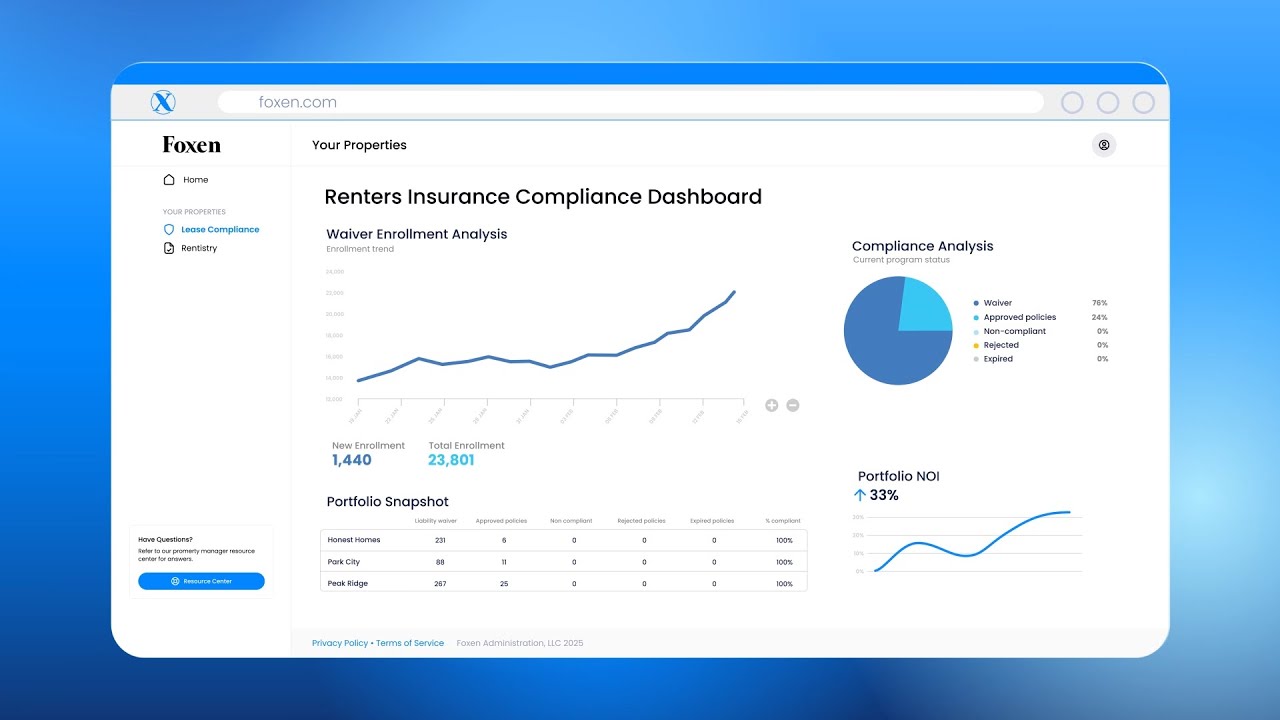
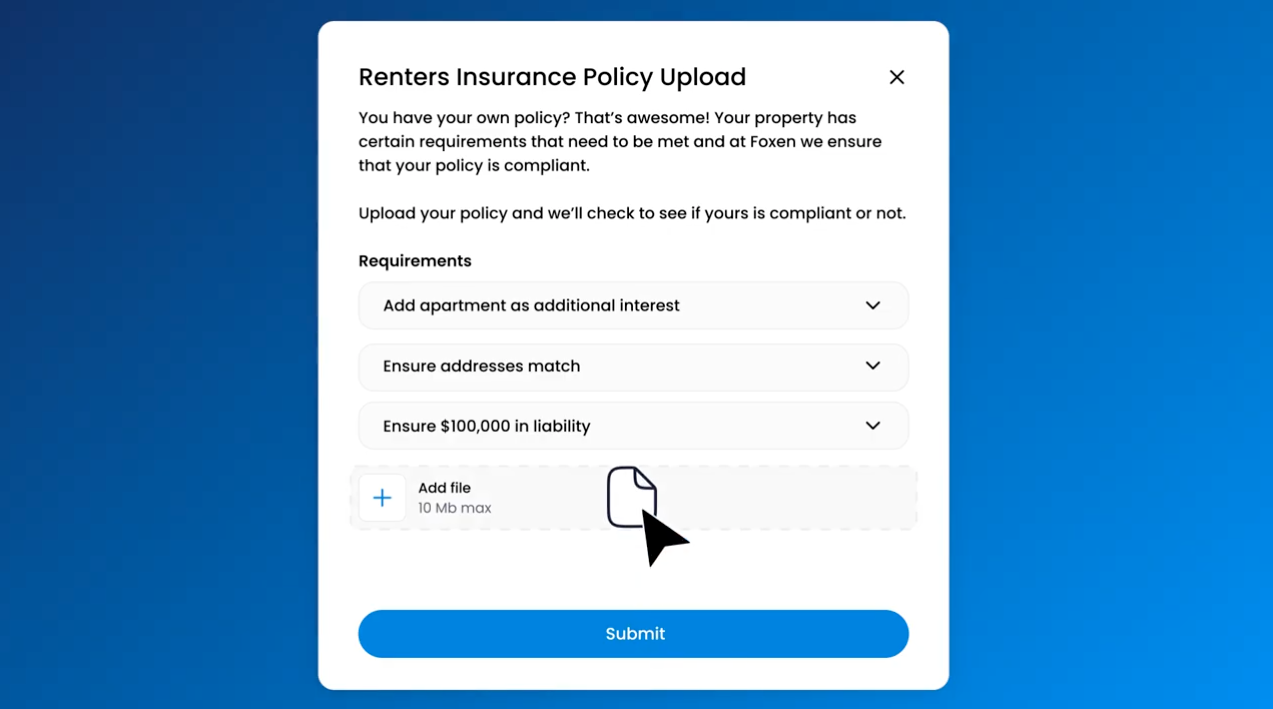
And then lastly, we've referenced some of these things throughout the call. For all things renters insurance compliance, Foxen offers our waiver program. We've got a few different options for that. Many customers utilize... Are considering a self insurance vehicle, so they utilize a captive, and that's one of the mechanisms that people have talked about as property insurance rates have gone up over time and different insurance rates have gone up over time. How can I be a little more effective with my insurance costs? So if you've heard the word captive, we have solutions for that. But really what we're trying to do, with the waiver program is make sure that when you go to bed at night, you know all of your residents have renter's insurance and you don't have to worry about waking up one day with an issue that is uncovered and starting to deal with that, which can be very painful.
And then we've referenced it before, our rent reporting product is called Registry and we're seeing great enrollment in this product. Residents can build thirty, forty, 50 increases that gets them access to better financial products and can be a differentiator for your properties in terms of attracting new residents and retaining residents. So those are a little bit more about what we do at Foxham.
Thanks so much. If anyone has more questions about this, we would be more than happy to connect with you after today's call. Just drop us a note in the chat, or we'll have some information once we wrap up about how you can get in contact with us. But before we get to the audience Q and A, we've got one final poll. We wanna hear about what is the biggest barrier to adopting new technology at your properties? We talked a little bit about change management. So we wanna hear from you all, what are some of the things that have come up when you're considering introducing new technology?
All right, what is our data telling us? Do we have a first preliminary answer? Oh, unclear ROI popped out at the top choice with 42%. That can be difficult getting that data to make a business case at a pilot program can really be important there, but that's definitely a challenge. And then integrations came up in second place. Any surprises there from our panel?
No, I think those are spot on, especially with some of these really changed technologies with what we're seeing in the AI space.
Yeah.
And the one thing I'll say is I feel like B can help address A in the sense that a very clear ROI and business case often can remove or eliminate a budget constraint.
Sometimes it's just doing a little bit of that work and then budget constraints can fall away or change.
Yeah. Well, thanks everyone for sharing. I wanna get to our audience q and a so that we have plenty of time to answer questions from you all. We've had a lot coming in. You can keep submitting those questions in the chat in the q and a, but let's jump right in. So our first question, this one's for Jay. While retention is higher, do you have any data or anything that you can share with us about how renewal rent growth has trended in comparison to new lease rent growth?
Yeah, no, good question. So renewal rent growth has normalized nationally.
I don't have the exact number in front of me, but at least in the high threes right now.
And so it's been kind of stabilizing around that price point, whereas new leases have been fairly flat or up very slightly. Now, and that's been persisting for a while, renewals are growing faster than new leases. Now, one thing I'll point out though, is that just because your renewals are growing faster than new leases doesn't mean you have an inverted rent roll where you're renewing people at higher rates than what somebody is coming in at.
And what happened through the last few years is that new leases grew faster than renewals and that widened the loss to lease gap.
And now we're kind of seeing some catch up. And so you can't forever see renewals grow faster than new leases, but there's still typically, in most markets, a discount that your rent is still being renewed typically at a rent value that's below what a new resident would pay.
But again, you can't sustain that for very long without new leases starting to come up again.
Yeah, great question.
A follow-up here. Jay, do you expect the trend of strong retention to continue going into next year? Why or why not?
I do. I think that when we see improvements efficiencies and operations, the industry is getting too smart, just kind of forget those things. I think we're just structurally getting smarter about resident experience and just prioritization of retention overall.
And so I think that's a muscle that we've built up that is going to be sustained. Now, it's still going to have some fluctuations, but I would tell you my strong feeling at this point is that I think the new normal of retention is going to be higher than the old normal pre COVID.
And regardless of macroeconomic factors, I think it's just going to be just structurally more focused on retention will lead to a higher structural retention rate.
Yeah, super interesting. I think we've got time for one or two more. Last call, if anybody has any burning questions, please add them into the chat or Q and A for us.
So I wanna ask a little bit around the top of the market. Some interesting data recently showed that we're seeing higher demand like with Class A apartments. Can you comment at all on that? Is there any connection between some of what you mentioned around higher home prices or mortgage rates and that sustained demand that we're seeing at the top of the market?
Yeah, that's a good question. I mean, I think what's interesting is, I mean, it's a kind of a complicated issue. But first of all, is that when you look over the last ten, twenty years, most new renter household formation has been upper income, middle to upper income households, north of 75,000 in income.
Harvard Joint Center for Housing Studies put out some good research on this.
So I think a couple of things happening there is one is that even prior to home prices and mortgage rates going up, we've seen a rise in younger, more affluent adults choosing to rent for a longer period of time.
The people waiting longer to get married, waiting longer to have kids. These things have historically been drivers to home purchase. And historically, I think that's been also correlated with the fact that historically apartments, if you go back 120 ago, there weren't a lot of very desirable apartments that were highly amenitized in great locations. And typically, you want to live in a multi family building, let's say, an urban setting, you had to buy a condo or rent a condo.
And so I think the proliferation of Class A plus well located apartments has come alongside the trend of people wanting to have that flexible stage of life for longer. And so I think that's been a real driver to that. And then you overlay that with now the people are unable to buy a house as quickly as they would have been in the past. And maybe that adds a little more time to it as well.
But again, this is not a trend that started when mortgage rates shut up. This has been going on steadily for the last couple of decades.
Yeah, that's super interesting. I'm curious, Joe, to hear, like a boots on the ground perspective, is this square with what your team is hearing from renters?
Yeah, I believe so. So, of course, at time of, well, we do get plenty of, I'm buying a home, but that's certainly not the only more driving answer that we got. Jay highlighted this point earlier though too, as we've seen wage growth outpaced rent growth, I think that does yield to more people being able to afford even the Class A luxury product that's higher amenitized. We've seen a lot of investment in value add opportunities. So we're taking these older assets, repositioning them and making them competitive rents to Class A as well, which I think has a factor.
I think probably only one more point to add. We share the same sentiment when it comes to renewal conversion ratios. We're probably going to increase our standard from 55% to 60% given the trends that are going on. One of the additional driving factors I would highlight there is because we're coming off this period of extreme supply, new rents are healthier. We're not seeing the inverted rent roll. So it's actually more beneficial to stay where you're at from a rent perspective, from a competitive and shopping landscape as well.
That's great. I think we have time for one last question. We've got an attendee who's curious about the Phoenix market.
So Jay, I know nobody has a crystal ball, but you've got kind of the closest thing. When do you think Class B rent growth in Phoenix might recover given the long lease up period of new supply still to be delivered?
Well, if I have a crystal ball, it's a very, very fuzzy one, but so I want be very humble about that.
But on Phoenix, so I'll make this really quick. The challenge in a place like Phoenix is, even in Class B and Class C, is there's been so much top of the market new supply built that you're losing your higher income Class B renters to Class A, or as you mine as those renters move up market. And we're overseeing across the country markets like this is that where there's a lot of supply, this filtering effect is taking place and that's putting pressure on even the more affordable parts of the market. Because again, you're losing your higher income renters and you're pulling people up, but they're spending a higher share of income on rent and maybe more affordability challenges and limits rent growth potential in certain spots and whatnot. So that's tough.
So I would answer that really quickly by saying, first of all, depends on where you are in Phoenix. If you're West Phoenix, that's going to take quite a while. I think it'll be one of the real laggards. There's so much supply in that market. If you're East Side Of Phoenix, like the Scottsdale Gilbert area, think that'll be a little faster maybe later this year, early next year.
Long term, think Phoenix will be fine, but it's always been a little bit of a of a boom and bust market, again, especially on the kind of more growing parts of the market further out. So I couldn't give you an exact date, but unfortunately, don't think it'll be tomorrow.
Yeah. Well, thanks for that answer, Jay. Before we close things out, I wanted to share something with you all.
So let's go back to my slides here. I wanted to highlight our exciting new playbook. So it focused on a lot of what we discussed today, and it included some insights from some folks on the call, Joe, Jay. So keep an eye out everyone. This is headed your way right after the webinar. We're gonna be sending copy to everyone.
So I just wanted to say thank you all for joining us. It was really great to have you here. We appreciate your lively questions and comments in the chat.
Jay, Joe, Kevin, as always, it was awesome sitting down to talk with all of you. Really great insights and ideas, and we appreciate it so much.
Thanks, Megan. Great job.
Yeah. It was fun. Thanks, guys.
Thanks, everyone. And before you sign off, if you haven't already, don't forget to follow Foxen on LinkedIn so you don't miss out on any of our upcoming webinars. Events, we'll be doing a lot more stuff coming up, so stay tuned. Thank you, everyone.
Your Webinar Thought Leaders

Megan Eales Monroe

Kevin Jacobson

Joe McDiffitt

Squire Aschinger
Related Resources
















Get Industry News and Updates
