Beyond Move-In: How Smart Operators Eliminate Compliance Gaps and Protect NOI

Free yourself from health insurance.
Only 55% of renters carry renters insurance despite most leases requiring it — and most properties have no reliable system to catch the gap when a policy lapses mid-lease. In this episode of the Multifamily Collective podcast, Foxen CEO Kevin Jacobson joins host Mike Brewer to cover:
- Why renters insurance compliance gaps persist beyond move-in and what they cost operators when a policy lapses or is canceled
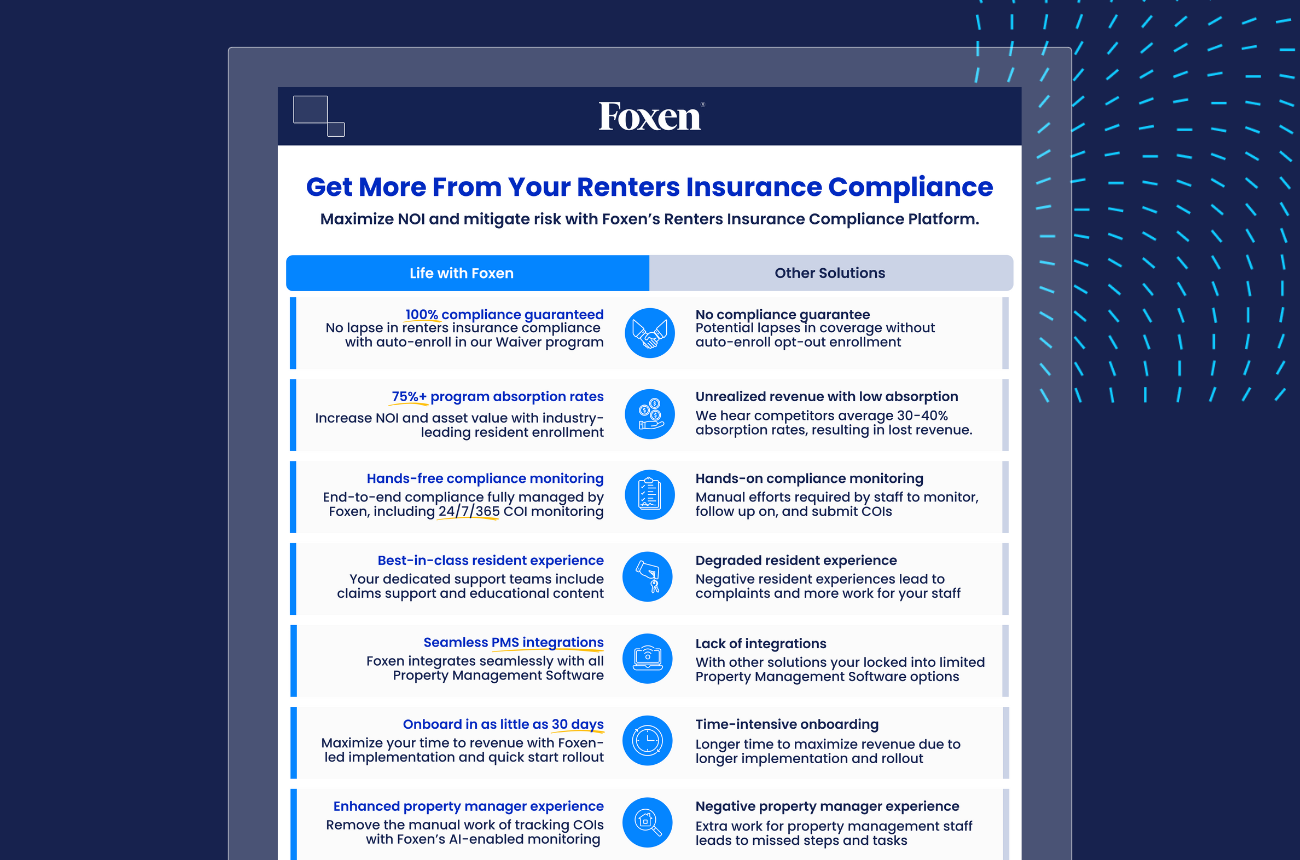
- How AI-enabled COI monitoring and automatic Property Damage Liability Waiver enrollment deliver genuine 100% compliance
- How renters insurance compliance, Rentistry rent reporting, and PetClear pet management each generate ancillary NOI while giving residents opt-out flexibility
- The growing challenge of pet and ESA compliance as 60% of residents now have pets
- A practical framework for evaluating proptech vendors without overpaying for underdeveloped implementations
For multifamily property owners, asset managers, and PMCs evaluating renters insurance compliance solutions and ancillary income strategies.
Kevin, welcome to the show. Great to be here. Thanks, Mike. Yeah. No. I'm, really excited about having this conversation today.
I I think this is a topic that is really germane to multifamily, very applicable to multifamily. And I, having been an operator for thirty years, I'm deeply interested in it. So let's, let's maybe frame up, our conversation today, maybe call it a problem, in the industry.
Data shows that 55% of renters actually carry renters insurance, even though most properties, if not all, require it. So why is that gap so persistent?
Yeah, there's a couple reasons for that. And, you know, we've been around as a company for almost ten years trying to figure that out and how we can help. But a couple reasons are, you know, people traditionally, the story is like, Hey, you, get through a leasing process, or an application process, get your, get your lease signing. They say, Hey, I'll hand you the keys if you hand me the renter's insurance policy or something thereof.
And, know, maybe it's done via email or whatever. And that's the traditional experience. And then the key question is what happens one minute or one hour or one day or one week after that? Yeah.
I think the generous version of it is, people forget to, you know, you, you get, you sometimes forget to pay, you do six months renters insurance policy. You sometimes forget to pay the bill. The policy lapses. There's a more, there's a version of it that's I, I don't like to think about where people intentionally cancel stuff, but, you know, it does happen.
You don't wanna pay the bill or that sort of thing. And so at the end of the day, this just accumulates to a big risk for everyone. The management company is responsible for making sure that these units are occupied in accordance with the lease. The lease says almost always, as you said, there's a renter's insurance requirement or a liability coverage requirement of some kind.
The renter's liable for that requirement, whether they have it or not. And then obviously the owner of the asset has a vested interest in, not having uninsured incidents that they have to be responsible for. So it's no good for anyone if this doesn't happen, but that's how, that's how that usually goes is we check it at the time of the application or the lease. And then what happens after that?
Usually no one's paying attention. And that's, that's one of the things that we do here at Foxland.
I want to key out something you just said there there's, and let's just frame it as risk. There's a real risk when a policy lapses. Can you sort of unpack that for us? Cause sometimes operators potentially maybe at the property level, they don't understand, no indictment there, but they don't understand what they're risking.
Absolutely. Well, yeah. And there's a good reason for that. I mean, there's, we're trying to do quite a bit in a compact timeline here.
And so, you know, and everyone can't be an expert on everything, one of the provisions of the lease is usually appropriately so is, is usually, Hey, as you're going to live inside this unit that you don't own, and you're going to have responsibility, you're going to have some responsibility for the damage, potential damage that could occur. So typically we see that's in a, in a lease, it'll say, Hey, you're required to maintain, either liability coverage of, or renter's insurance of, let's say up to a $100,000. And so they pick a number. Some cases it could be 200 or 300 in certain high, high, cost states or locales, but, that's just intended to protect everyone against an incident.
What kind of incident are we referring to? It could be small. You could trip and, you know, you, your elbow hits the wall and you're, you just crushed in some drywall. Or it could be, I left a pizza in the oven and I fell asleep and there was started a fire and there was a substantial, there's substantial fire damage, or it could be, left the water running and there was water that overflowed and that sort of thing.
So in that case, generally what you want to have is this is why insurance exists for those types of issues. And so typically there's a property or a general liability policy or a property insurance of some kind for the asset.
But those typically carry high premiums and high deductibles necessarily. So these are expensive, you know, buildings and assets. So the deductible might be, you know, a $100,000. And so if you're gonna have an incident like that, your first goal is not necessarily to run and tap your property insurance. It's gonna, you have to pay a $100,000 deductible. It might not even be that much.
Right? Right.
So then you're, you're, you're typically asking yourself first, okay, what's, what's, what coverage does the renter have in accordance with the lease? And that's when the answer to that question is nothing, that's a problem. So what you wanna do is avoid that situation from happening so that, you know, in that case where one of those incidents that just occurred, that I just mentioned occurred, we don't have the management company that's, you know, having a tough conversation with the resident who's... And then who's having a tough conversation with the owner and then everyone's got a problem that we now need to solve. This is why it exists. So let's make sure that that issue doesn't happen is what we're trying to do.
Definitely. So it's...
So for me, sort of stick with the theme of risk, you you have an ownership group.
It has this sort of illusion of compliance. So you let in by saying, hey, all people are required to have this, a certain percentage of them may or may not have it. And so you have a lot of operators look at like 90 to 95%. And I remember this myself. I would look at reports and I go, oh, we're pretty good. You know? Yeah.
But why is that false sense of security? Why is it that it's there?
Well, I think sometimes it's, there's a couple of reasons, but sometimes maybe one of them would be, it's a little bit of a misnomer. So sometimes, you know, there might be an arrangement. I either what happens is you do the key exchange. Like I mentioned, like, I think it's helpful to think about it physically.
You hand me the security insurance. I hand you the key. Okay, great. I feel good about that.
Now I check that box in my compliance report, wherever that lives.
And I think this person's got twelve month lease. I'm like, we're good to go. So you're, that's not necessarily correct. Hopefully it is, it's not Then necessarily the other version of it is you might conflate two different things.
So, you know, oftentimes there's a, within maybe a property management system you use, you can, offer residents as part of their onboarding process, say, Hey, we can propose that they can offer them an opportunity to quote, to bind and quote, quote, bind a renter's insurance policy. A lot of, property management systems either partner have built their own solutions around that. Well, that's great. If the, if the resident opts into that and then you might have some percentage of residents who opt into that and you say, okay, well, they're good too.
Sometimes that service, depending upon which it is can come with the tracking to say, to tell you on a daily and minute by minute basis, Hey, these policies are in effect, sometimes not. And so, but you might think to yourself, Hey, I turned that on in our property management system, so I'm all good there. And so it sometimes could be in that case, it's just the question that was unasked. And in the former case, it was the, it was a situation where you had a sense of comfort about what happened, but then you extrapolated that that was gonna continue for the twelve months of the lease, which isn't necessarily true.
And, you know, again, as you said, these are not, you know, there's a lot of things going on at any given time when you're working in management. So it's like, only have so much attention span for all of this. Then, and in reality, the worst case I think is when you see management companies who are devoting a lot of time and attention and people resources to some sort of kind of compliance program where they're checking, maybe they're checking stuff every month and asking residents to prove it once a month, maybe they're, you know, they got someone, you know, a local agent, a local insurance agency they partnered with who they call them and check it or something.
We see all sorts of interesting scenarios where people are devoting a lot of time and attention, human resources to this. It's a shame because that's, I don't think that's the highest and best use of the time relative to all the other opportunities we could have had.
Yeah. You know, you you... As you're speaking through that, again, I spent a lot of time on the operations side of our industry, probably the better part of ten years on-site. Yeah. So everything you're saying, I'm like, oh yeah, I remember that.
And it's, that's, yeah, it's just one of those things where, until someone kind of shows you, Hey, there's, there might be a better way here. You, you, you know, a lot of times you just go, you just go with it and you're like, I'll just, you know, we gotta get it done. And that's what, know, I mean, I mean, can pick another example, like the lease audits, right? It used to be people would get in a room with a stack of papers for a week and we'd be doing lease audits, right?
And so, and now there's all sorts of interesting technology you can apply to that. All the leases are, many leases are digital. There's just workflows. So it's not quite that anymore.
And so we're in that, you know, and some people will call property management or even real estate technology. Like some people call it a laggard technology industry in some respects. And so, you know, I don't know. That's probably true to some degree, not quite true in others.
And so this is just yet another area where I think there's there's ideally a better way, you know?
Yeah, definitely. And I I think that is true. We've been a laddered as an industry, but I do think that as of late, let's call as of late the last forty eight to sixty months plus minus, we've accelerated the pace of technology adoption and potentially put ourselves in a position to leapfrog things. Right?
I agree. Yeah. I'm really encouraged by the tone that I see from different companies, different industry.
I'll call them industry commentators. I mean, not dissimilar to yourself where you're an aggregator of like a pulse, the pulse of the industry in a lot of respects and what's going on and you can kind of represent that. There's others like that, that I, so when I talk to our clients or prospective clients, or I hear from others in the industry, I'm definitely, I I'm hearing a more tech forward let's lean in, but also the flip side of it is, Hey, like from a, you know, from a prop tech vendor standpoint is like, don't oversell, don't promise the world, like sell what you got and crush the implementation and do a great job and don't add a problem to the list.
Right? So like, that's the, that's the vendor obligation. But on, and on the other side, I'm seeing a healthy, to your point, a healthy client interest in, Hey, let's adopt the latest and greatest technologies. Let's make this easier for ourselves.
You know, there's no shortage of pressure on management fees and other, other issues that the industry has to respond to. There's a lot of, you know, some of the larger players are getting larger, you know, and everyone's trying to find their spots. So, you know, I think technology can play a positive role, but the vendor side has to do its part and not, we can't be overselling. We can't be not delivering on implementations.
Generally speaking, clients are, I hear people, it's great that you do this one thing. I'm really like looking for vendors that can solve more than one problem and not just have, I don't want to have a sack of 20 vendors that do one thing. It's just too much to manage. Yeah.
So those are some of the themes that I'm hearing.
Yeah, definitely. I would agree. Just one last remark before we move on to the next question.
I, there is this sort of in light of all of that positive movement, there is this tech fatigue sort of undertone.
Yeah. That is real. I I mean, I think I talked to somebody a couple of weeks ago that had 30 plus or minus different platforms or technologies that they logged into on a daily basis or weekly basis. That's that's a lot.
It's too many is what I think is the word, you know? And, and, so we've tried to take the approach of not asking for another system to log into. We try to work, where our clients already are and just other stuff like that.
One of the messages I always, we're a growth company, we're growing. But one the messages I always try to say to our team, and I say to prospective clients too, is let's just be honest about this. Our current clients don't really care if we get a new client. Know, care.
I mean, they care. They love it. If it's us growing, then we can generate more resources to invest in making a better product or offering new products or other stuff like that. That's great.
That's a nice flywheel. But if you growing means your eyes off the ball and my service no longer is good, which meant there's many a growth company on the side of the road that have with the best of intentions have been found there. And that's where you get the tech fatigue and the over promises and that sort of stuff.
We just cannot do that and we won't do it and we can't do it. And there's been enough. We've all seen it enough to know that it's a thing and you gotta, it's kind of a thing because human nature just sometimes leads you that direction. So you gotta fight against it every day. You gotta fight against it every day. We can't do it.
Yeah. No. It's it's that's music to my ears. And I think you're a 100% right.
We, well, we can do more.
Oh, we could do that.
We can do Yeah.
Exactly.
So let's talk about where where the the gaps hide.
Yeah. Noose operators only enforce rears insurance and pet policy compliance at move in or... And you've said this at move in or lease renewal basically once a year. What happens in the other three hundred and sixty four days in between?
Yeah. So usually, on the, you know, if it's, so we've talked a lot about the renter's insurance. I'll go there and I'll move to the pet. So the other three sixty four days in between, that's where you're just what you're trying to do if you're in trying to ensure that there's compliance with the renter's insurance requirement in the lease for three sixty five days, what you gotta do is have a process that catches any drop balls. And so the drop balls are someone goes upstairs, cancels the policy.
Okay. Who's getting notified of that? In the case of, if you work with Foxing, we'll get notified of that and we'll make sure that that gets addressed. That's a cancel of the policy.
Then there could be the policy lapses. That usually there's a term that it could be sick. It could be a six month term. Okay.
One hundred and eighty days later, we didn't pay the bill that lapses. We're gonna, we're gonna get notified of that. And what we do when we get notified of these things is we that this is just kind of an honest mistake. And so we just communicate with everybody.
We say, Hey, this is now you've now lapsed.
Foxen's tenant liability waiver program is gonna take over.
Or you can submit new compliant policy. And so we do this on behalf of our management company and owner clients with their residents. We communicate really transparently and often and open and transparent. And so that everyone knows where they stand and then we get those issues resolved.
Another ver those are probably the two main versions is the cancellation or the policy lapses. That's what happens at three sixty to four days in between. On the pet policy and pet compliance. So one of our solutions, is, you know, nowadays 60% of residents have pets.
It's crazy. It is crazy. Slightly below, but you know, so this concept of like, what's a pet friendly now you hear all of our clients, what's a pet friendly apartment? What's a pet, what kind of, you know, they're thinking about what breeds can I, am I unable to live here?
There's liability questions around insurance. And, you know, if you have, you start to worry about, pets that can interact with other residents that are not their owner and then, you know, or other pets. And just, there's a whole host of things that challenges that come with it.
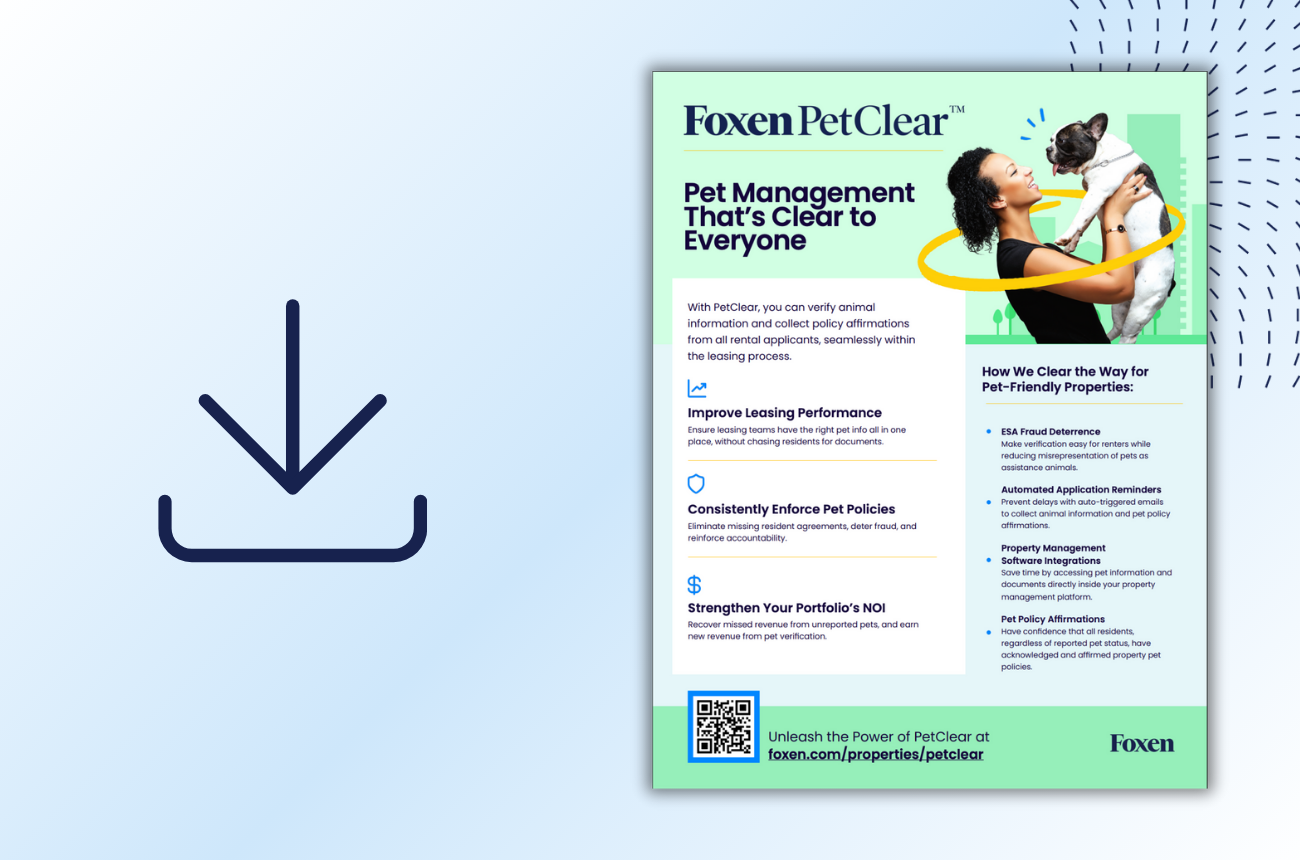
One of them is just getting the pets in the door. And so, you know, there's robust screening processes obviously for the humans, which includes income verification and all sorts of, and then just other, are you a good renter and do I want you living in here or not? And there's very limited screening of the pets. Although in many cases, in some ways they're equally important or more important in terms of, you know, what that, what they could do to the, to damage from a damage perspective or a risk perspective, that sort of thing. So our PetClear solution, is a solution that's intended to help, clients deal with this. So we are part of the application pro we run parallel to the application process.
You just declare if you have a pet, you go through a screening process.
And so this is super important on the way in, for people to, if they're living in pet friendly communities, if they identify what their pet is, provide the right documentation and go through that whole whole process just as the humans do. You mentioned what happens on the three sixty four days in between. Well, is where, you know, life happens. At some point, someone who didn't have a pet, they get one.
That's probably...
They probably don't do that on the exact same day they signed the lease. Right. Maybe they do. But, and so then, you know, that's, most of our clients would have a process where they'd have to notify the, the management company of they're bringing out a pet and follow the process just as you would as if at the beginning of the lease of getting that pet applied applied to live in the apartment verified and that make sure it complies with all the policies of the management team.
Yeah. It's interesting.
It's amazing to me how many pets there are in the, in the, in apartments these days. Yeah.
Having been in the industry a long time, it wasn't always like that, but, well, I think we saw a big spike during COVID when people just or, you know, everyone was struggling in different ways and, you know, I think it's, I'm guessing, I haven't seen like some, I haven't seen the Harvard study on this, but, it's, it's like, I gotta get outside.
I, you know, I have, I've had limited contact with my family. Like I need a friend, you know, basically I've always thought about getting a pet and maybe, maybe now's the time for me, you know? And I, so, and then more, you know, more work from home flexibility. So I don't have to keep a pet crated all day or other stuff like that where, so we definitely saw a spike.
My guess is it's some version of what I just said. Maybe there's some other, other variations as well. But, and then, you know, I think it's one of those things like it's kinda doesn't, I don't know that it goes backwards, you know, maybe, maybe on the long, long term it does, but short term, I think this is the new reality. When we launched our PetClear product, it was in response to our clients telling us this is a place we could really use some help.
So, you know, we do renters insurance compliance. We do rent reporting and we do, pet compliance and pet management. And that was in response to our cl and we're not, our goal is not to develop a random hodgepodge of solutions. We want to solve, be one of those vendors that's solving real problems, allowing our management companies and on-site teams to focus on the highest value use of their time, not some of these other things that we deal with.
And so that's why we launched it. And then the response since we've had launched it is very validating in terms of the demand and people saying, yes, I'd love to learn more because they're just struggling with it. It's an, it's a kind of an emerging, emerging challenge to your point. It wasn't always like this.
Yeah, most definitely. And I, I mean, look, we all love our pets, but I think to one of your implied points there, they can do a lot of damage. Yeah.
There's real, I mean, there's real damage and real liability that exists.
So I think, you know, there's a lot of scrutiny of, of what are appropriate fees and things to charge a pet rent and deposits and all these things. And everyone, what we've seen is a lot of our clients and prospects, everyone's, first of all, they all operate in different states and there's different requirements and, But they also have their own strategies about how they wanna do their, how they wanna manage fees.
And I think that's gonna continue to change as life changes here. People are gonna keep reacting and taking different approaches. But nonetheless, in the case of the pets, I mean, it's very straightforward. There is real risk.
There's real damage. There's real...
But, you know, people also don't wanna limit themselves to 40% of the rental market, the renter market. That's right. More and more, they're looking for how can I make these? If I, if my units aren't pet friendly or for my, you know, if I'm a third party management company and the owners don't want to do pet friendly, how do we, how do we have a collaborative conversation about that?
Cause we're missing out a big chunk of the market, but how do we offset the risk? Right. So this is where that comes in.
That's right. That's right. Let let's talk about what what it takes to get a 100% compliant. I know just a second ago, you, I think you called it tenant waiver liability. I have to imagine that's part of the answer here. But what does it take to actually get a 100%?
So I think the way that we operate is if you work with work with Fox and you you hire us to to become your renter's insurance compliance provider, We're gonna introduce an, we're gonna work with you to add an addendum to your lease packet that really in one page, we're not doing 20 page addendums that are confusing. In one page, here's your, here's, there's a renter's insurance requirement in your lease. Here's your options. You can, go get any policy that you want.
We get to State Farm, USAA, all sorts of different people. We have hundreds of carriers that we see. People have their bundles and their preferences and it's all good. So you can do that and you can submit a compliant policy.
Or alternatively, can just stay enrolled enrolled in a liability waiver program that Foxen is running on behalf of your landlord and management company. And so the key there is transparent communication in the lease and then in email communication before move in and as a part of renewal.
So transparent communication, clear communication, and then options. We gotta give people options. They want options and everyone has different preferences. And so if you do what I just said, there's really not a path for, there's not going be a path for someone to have, an uninsured unit or an uninsured resident because they're either gonna be enrolled in a liability, the Foxen's liability waiver program, or they're gonna have provided a policy written by a third party carrier.
Like I said, we see a lot of USAA, State Farm and all the, all the usual suspects. And so that's how you do it. There now, sounds very simple. There's a whole host of challenges that when you think, when we think about on the scale of us, and we have to work with management companies that are in different states.
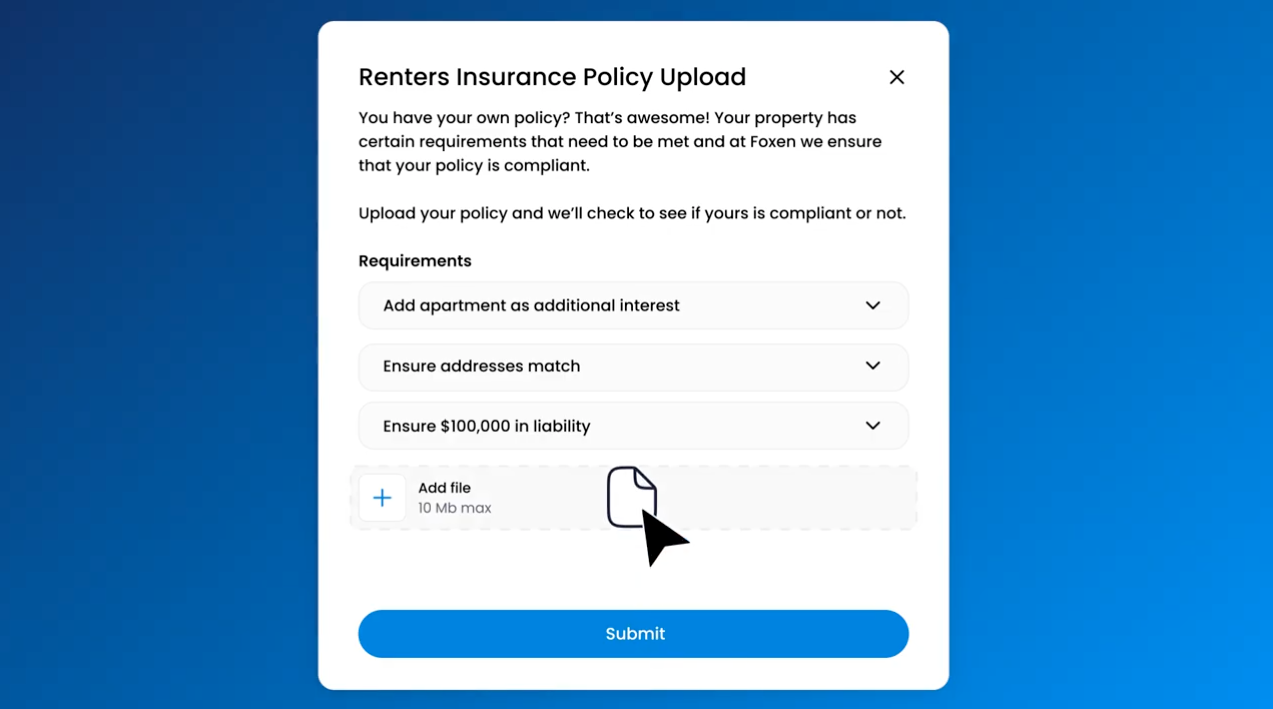
They maybe use different property management systems. We've gotta communicate really well with all the residents at key points in time, right? Like, so in advance of, in advance of move in, but after a lease has been signed, we've got to offer residents the ability to upload any, certificate of insurance that they would like to, for, and there's hundreds and thousands of different formats that even State Farm has 10 different formats of COIs that they use. And so we've built some proprietary AI technology that analyzes those certificates of insurance to ensure that no matter what the format is, we know that we can say, yep, this looks good.
You're all set. And we can tell our, you know, back to the compliance report that you were thinking about back in the day, we can say, Hey, it's a 100%.
We know that because we checks. Right? So we built some technology to help us, to help assist us with that. By the way, is the little stuff.
Everyone wants to deal with insurance as little as possible, I think is the How general little of my year can I deal with insurance? That's like the KPI. And so when they go to our website, and they upload a COI, as an example, we built some technology that gives them real time feedback says, Hey, I don't think you quite have this liability limit correct. Why don't you go fix that right now while you're thinking about it so that I don't email you in two business days and tell you that.
And then you're like, wait a second, I gotta log back in and I don't even know. And it's just like, so little stuff like that. It's like really how you get this right. Again, different states, different property management systems, getting all of this flow correctly, being able to, you know, when a resident calls, answer the phone and deal with these questions.
We're trying to do this on, again, to allow our clients, management companies and site teams to focus on other things. So we have to take on the whole problem. So that's a little bit of what it looks like to get to a 100% compliance.
I, I, I can't help but to laugh because it's, well, two things you said, the 20 page addendum that adds to the 70 page lease and all these other things. Yeah. And the, the, COIs, I I can remember just literally banging my head against the wall that, you know, some... It it seemed like the insurance company would mess up the COI more often than the people on-site.
That's right.
Even if we gave them a printed version of what it should read, it still got messed up.
And yeah, just some of the things you would assume, you'd assume like State Farm and State Farm. Yeah. You wouldn't assume that there'd be 30 variations of that. And you're like, wait, where is this information that I'm trying to find is, it's on page two in the corner, you know?
And it's just, it's just, it's kind of funny. And, and you know, and like, in our case, we're dealing with, another version of it, just it's, it's not the sexiest version. We get, we still get snail mail. Oh yeah.
We get trays of snail mail because it's not some, some are digital, some people upload, but we get trays of snail mail every day that we have to, we slice them open, we scan them. And then we're, again, running our...
Through our proprietary AI tech to deduce who is this? Is this a compliant policy?
Where do they live? And answering all those questions. And there's no... I mean, I wish there was like a magic API where we could get this information, but apparently it doesn't exist yet. So, so some... Maybe someday.
Yeah. Maybe someday. I... Yeah. I hope so. For everyone's sake.
Exactly. Yeah.
Let's talk about NOI opportunities. I know, let's say over the last thirty six to forty months, industry has really been squeezed by rising interest rates, rising costs, all kinds of things. It seems like the perfect storm has happened in the industry that's impacted the p and l. But you have an NOI opportunity. So talk to us about how that plays out.
Yeah. So, you know, I think the the key these days with respect, well, first of all, as you said, rent, you know, rent many, many of our clients are facing flat to down in some cases, maybe slightly up rent. So a lot of, a lot of focus has been on, on ancillary fees. There is also a version of that. That's been a focus. There's a, there's kind of a macro tailwind too, on how can we get residents more value? How can we make fees more transparent?
How do we make, how do we make, ensure clear value for what the fees are for?
And then, you know, like I mentioned earlier, everyone's thinking about that differently. They might have state requirements they need to follow, or they might just be thinking of like, Hey, I like to do all in pricing. I saw there was a large management company that's like, we're doing all in pricing.
That's right.
And and everyone's gonna figure out their own on on stack here, but in our case, all of our services, so we offer renters insurance compliance. We offer rent reporting and our, our pet compliance.
All of these services have clear value for residents. So like in the case of rent reporting, where, you know, you have the option to have us report your on time rent payments to credit agencies so you can establish a trade line and, or, or potentially, just have the, have that payment history go on your, your credit history, which otherwise, you know, it is a 100% of mortgages that happens in rent in rental housing. We think there's no published number on this. We think it's close to 10%.
Whereas 80% renters would say they'd love to have it. So, so all of these are, are, are resident, paid, services and they, and, you know, in the case of the rent reporting and renters insurance compliance, they can opt out again. You can go USA. You can just say, no, I'm good.
I don't need to, and I don't want my rent reported. I'm good. So it's not, it's not a mandatory fee in that sense. And then they all have, you know, there's an opportunity for all of, the management companies to earn, additional, additional revenue as a for distributing these products to their residents.
So, so that can add to the ancillary fee, the ancillary revenue bundle. But again, under the right premises where it's like, these are value add services for residents.
There's, you know, in many cases, our management company clients are incurring costs, trying to get us up and running and get us acclimated with their residents. And then residents have transparency and they're able to opt out or opt into the things that they want. So that's how I would bring together all of the forces that seem to be happening right now that we, we try to stay like right at the, right at the middle of all those forces.
And is it fair to say, and please correct me if I'm misplaced in this remark here, When you have a program in place like this, in addition to your your umbrella policy or the bigger policy for the community, and that kind of insurer will look at this kind of program and say, Hey, your rate here is going to be potentially reduced because you have this other protection in place.
We've, we've seen pockets of that, but it's a very logical conclusion.
I've seen, I haven't seen as much as I would have thought. I haven't seen it take place. And I think, you know, perhaps there's just not the, quite the right incentives. Like I think on the, in the property insurance market, cause that's what you're referring to, right?
The commercial policies and the property insurance. This is, those are very kind of market driven pricing. And so you, there was a moment in 2024, for example, where, you know, it was, it would have been referred to as a hard market, within the insurance industry, because this prices were going up. The loss profile of the losses that the industry was experiencing was placing pressure on premiums.
And then people were trying to do toy with their deductibles and maybe raise the deductible and other stuff to get offset their premiums. And that was, again, there was that moment where it was, it was like flat to down rents or maybe slightly up increase in, operating costs via wages, increase in variable interest rates.
That's right.
If you were on a variable and then increase in property insurance. So that's like, those are, that's a perfect storm of problems.
So what I've seen, the market's softened a bit. So the rates have come down. In some cases we're hearing like 40% decreases year over year and some good stuff, some good relief for clients. But, so anyway, I think a lot of that, I think the pricing there has just yielded more and more of a focus on the market pricing overall.
And they hadn't yet really priced typically, although I've heard some anecdotes priced in that, Hey, you're working with Foxen or other, other providers, another provider. There is some protection offered via these programs. So, Hey, we're gonna give you a little bit of a discount on your premiums. I've seen it in pockets.
I would've thought like you, I would've thought we'd seen it more, but it doesn't seem to be so.
Yeah. Well, I appreciate you unpacking that. I I've to your point about it being logical.
It seems to be logical since we have this extra layer of protection, but, yeah, so I think there's already enough, like if you're working with a great broker, they're going to bring competitive offers to the table and it's like people sharpen their pencils as best they can.
And, you know, maybe they consider that slightly in the underwriting, but it doesn't seem to be a core tenant just yet. I think, I think over the passage of time, it might be because it is it's real. It help. It definitely has helped helps from an overall risk management standpoint.
Definitely makes sense to me. Let's talk about, team members on-site efficiency, resonating experience. You've sort of touched on this, but if I'm, if you put yourself in the seat of a property manager sitting in a chair, what does compliance look like to them without these proper tools?
Typically what we hear is I have a compliance report.
That would be if they're even paying, if they're paying attention at all. A lot of times it's just got, it's number six on the list and it's not really getting attention at all. And they're like, I'm, we have our process. We check it on the way in like the key exchange.
Right. But that's that. Then the better version would be, we have a compliance report. So we are, it's what you mentioned, you're like, oh, '92, 93.
It's pretty good. Question is whether that's report is accurate now that's, but nonetheless, they're paying attention. That's good.
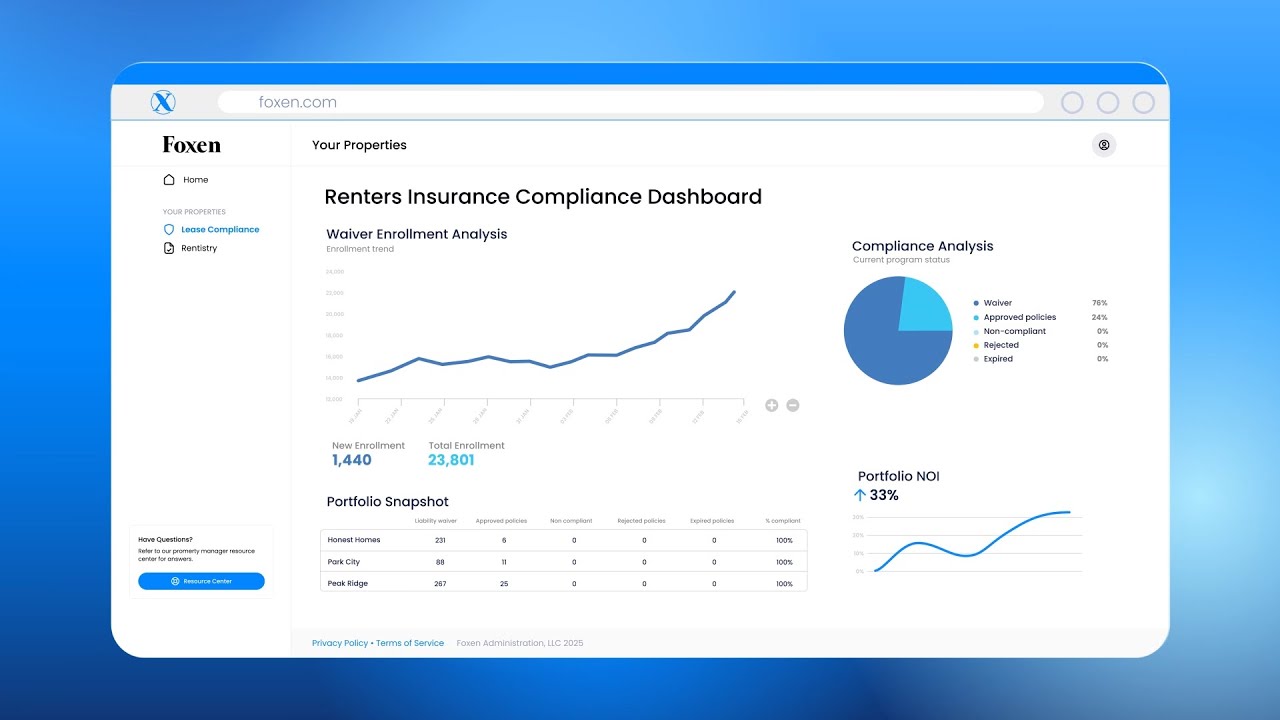
And so, which is funny when we work with clients, there is no compliance report because it's done. It's taken care of at all times. And so they're often like, Can you send me the updated compliance report? And we're like, Sure.
I don't think it's gonna be super interesting for you. It's just like download your rent roll and say, A 100. And just, it's all good. Like, so, there's some sessions, you know, sometimes we roll, roll out programs upon lease renewal and other stuff.
So we might be, we might have a, extended kind of extended implementation as, as units turn. But generally speaking, like that's the premise. There is no more compliance reports. There is no dedicated effort.
We take care of it all. And that's, I think that's what you have to do, I believe, if you really wanna give leverage to, to the, to site teams and our management company clients is, is they're looking for ways they can do more with less and keep the humans, especially in an AI world these days, keep the humans focused on the highest value human stuff. And, and I don't think renters insurance compliance or pet compliance or reporting like those are not it. They're not it.
No. As exciting as that is, as it relates to mitigating risk on your property, it's not exciting in terms of the administrative duty that it presents.
Yeah. So the, so our goal is to be something that, decreases risk, takes work off the staff's plate. So generally speaking, decrease operating costs or redirect operating costs towards the highest value things. And then, like you said, ancillary revenue opportunity as well. And that's a nice, you know, that's a that's a nice value prop, we think, if you put it all together.
Definitely. Well well, Kevin, as we bring this to a closing, one more question for you. In terms of somebody sitting in an operator seat, whatever level of the organization they're in, decision maker, evaluating options out there in the marketplace, what should they be asking? The, let's say the top, whatever one to three questions that are the most important thing, thing or themes to ask.
Yeah, I think, we touched on it a little bit. I think, you know, if you're evaluating solutions in the prop tech space generally, because you know, while we've been talking a lot about the renters insurance compliance and some of these other, like we're, we, we had our core prop tech company. We are, our clients are, are in the, in the multifamily property management space in one way or another, or, or property ownership space. And so we think about, we think about client first.
We don't think about ourselves as like an insure tech company or things like that. So I think I gets at what we were talking about earlier. If you're working with a prop tech company, who's seeking to solve a problem for you, really sizing up that will they deliver? Are they overselling me?
When it comes to showing up to the implementation and comes to answering, you know, a property manager's call or a resident's call, like, am I dealing with a high trust entity here? And, know, you can piece that together in lot of different ways. Like how long have they been in business? What, who are they working with?
Do I know anyone who would recommend them? You know, especially in multifamily, a highly networked industry. You should be able to know.
So I would start there.
Then you can get into the nitty gritty on any of the solutions. So, you know, if in renter's insurance compliance, like, is it really a 100% compliance? Walk me through how we get there. Is there a compliance report?
What does my team have to do? You know, what is show me, some case studies of like representing clients and the results that have been driven. Can I talk to any of them? You know, that sort of stuff.
On the rent reporting solution, which are we call Rentistry, are you reporting to all three credit agencies? You know, because that's an often skipped detail because, but it really matters. Right? So someone's applying for, you know, an auto loan at a car dealership.
If it just so happens that that the reporting service that that car dealership or that financing agency uses is just one of the three, and you only report to another one of the three, that doesn't help them. So you want, you know, if there's, if we're gonna invest this energy in, in, in, focused on, on reporting rents to allow people to establish trade lines and, and, you know, build their financial health, At the moment of truth, needs to help. Right? So like you gotta get into the nitty gritty on some of that.
You know, I think, you know, and I'll pick a different example on the pet compliance thing, but it's, you know, we see a lot of needs for people think about things differently. So, you know, configurations, how can they plug into my, you know, I have an, I have a specific approach to how I manage when we post charges to the ledger, when we, how we manage payments, that sort of stuff. Can they plug into that? So I think, you know, you start, it starts at the high level, like, is this a trustworthy organization or have they been in business for a long time or is this like yet another tech company that's overplaying prop tech companies overplaying their hand a bit?
So let's get there. And then you get into some of the specifics of the solutions, and just the, the referenceability of the, of the client. So, it's, it's kind of a general answer, but I think, you know, in these types of batters, I think it's like the, the simple answer is the answer. Right?
It's like, we often just That's right.
The issue is we often skip the details because we're like, we just wanna believe it's gonna be true, you know, but I think you don't skip, you know, don't skip.
I, I really liked the way you put that. It's, it's many times. Yeah. You are, dare I say you're desperate in that you need a solution. So you, right.
It's like you're hiring someone and you're like, boy, I needed this filled yesterday. I needed this job filled yesterday. And you're skipping a step. You're like, they really don't meet one of my important criterias, but maybe I could train them up to meet it.
And I could just, I guess could just do that. Then I could be done with this and I could hire them and they, and they'd be on the team and they'd be helping and we really need the help. And, and it's like, it's just so tough. You gotta maintain that discipline because you know, maybe that'll work, but maybe six months from now, you're back where you started and that's super frustrating.
Right? So it's like, I just think maintaining that discipline and that, focus on these things and just really getting it right. And then last thing I would say is like, you know, what I've, what I've heard as well is this Can, can this company solve more than one problem for me? That now that's not always a must have, but I think it's at least a nice to have.
You know, there's only so much time and attention on vendor contracts and you know, the old saying, want one, one throat to choke if something goes wrong and, you know, and that sort of stuff. I think, I think it does help on the, you know, if you call an operating company that makes five decisions like that versus a different one. I think this one's gotten simpler and faster, and this one's gotten a little bit more complicated and that can accumulate to something useful.
Definitely. Well, before we bring it to a close, I want to give you an opportunity to tell people where they can learn more about you, learn more about Foxen. Is there anything that we didn't touch on today that you think we need to sort of end cap with here before we give you that chance?
No. I think we we covered a lot of ground.
I think, this is the last thing I would say is, some of these topics, I like to joke, like when you talk about renters insurance compliance or whatever is, is, boy, do I crush at cocktail parties?
So some of these topics are, you know, they're not super exciting to most people, but for whatever reason, we've built a company that's really focused on it. We've got an energized team around it and we, it's easy to get behind it when you're solving real problems for people. So I think that's, you know, we didn't discuss it, but there's a little bit of a tone and an energy that every company has. And I think I just wanted to share like that's, you know, we're really excited about these solutions that we deliver to our clients and just want to continue to do that. So that's, that's one of the things that makes it fun to work here every day.
And we have a lot of a group of like minded people like that. And so in terms of learning more about us, we're, we're www.foxen.com. So we were able to get the .com as, years ago and, and, and thanks that we did.
There's a lot of, there's a run-in short in short supply these days. Sure. And, you know, in terms of me, I'm on I'm on LinkedIn. So it's Kevin Jacobson.
I'm I'm on LinkedIn. I'd like to...
There's so much, you know, there's so many people posting on LinkedIn about multifamily in particular and different technologies and that's...
I know I learn a lot. I like to post a little bit too. I'll keep you updated about what we're...
What we've got going on, so we'd love to connect with anyone.
Excellent. Well, we will put all those links in the show notes so that people can click on them, and they can definitely get out there to learn more about you.
Kevin, it's been a pleasure. Thank you so much, for taking the time out and investing it with me this afternoon. And, for everybody who is watching, we'll see you again next time.
Likewise. Thanks for doing what you do, Mike.
Thank you.