From Chaos to Control: Proven Tactics for Streamlining Student Turn

Free yourself from health insurance.
Student housing turn is operationally intense by nature, but the gap between a chaotic turn and a controlled one comes down to how early operators plan, how well on-site teams are equipped, and whether compliance and administrative work is handled by technology partners or by property staff. This webinar, hosted by Student Housing Business and sponsored by Foxen, features leaders from Harrison Street and The Dinerstein Companies covering:
- How student turn has evolved since COVID
- How to evaluate technology partners without creating new problems for on-site teams
- Why planning 6 to 9 months in advance determines turn outcomes
- How Foxen handles 30,000+ resident emails, 5,000+ phone calls, and 140,000 certificate of insurance uploads during the student turn window alone.
For student housing operators, property management companies, and asset managers preparing for student turn.
Right. Hello again, everybody. This is Rich Kelly from Student Housing Business and the Interface Student Housing Conference. Welcome to our webinar, From Chaos to Proven Tactics for Streamlining TERN in 2025. We're excited to have you with us for what is a very important topic. After all, who doesn't want to streamline TURN and make it run more smoothly? Thank you to our webinar sponsor, Foxen, who provide innovative insurance compliance solutions and financial products to property owners, operators and residents for bringing us this content today.
Before we get started, I want to quickly mention that Interface Student Housing is now just a month away, April ninth through the eleventh in Austin. If you have not signed up yet for the industry's largest and most important event of the year, you still have time. Just go to interfaceconferencegroup.com. All right, now let's turn our attention to TURN, and I'd like to bring on Tyler Specht, Senior Director of Relationship Management for Foxen to kick things off. Ty, I will turn it over to you.
Thank you, Rich.
As Rich mentioned, my name is Ty Specht. I am the senior director of relationship management here at Foxen. I'm thrilled to be joined by two individuals who I've worked closely with for several years now.
The first being Josh Nicholson, who is the director at Harrison St. Alongside Josh is Aaron Bailey, executive vice president for student operations at B. Dinnerstein Companies.
Before we get into today's webinar, the goal of this webinar is to hear from some of the industries best on ways that they've been able to optimize turn over the years. And on the topic of leveraging technology, we thought we would start off with asking AI how they would describe student turn. And here are a couple of ways that AI decided to represent student turn in just a few words. Quite hectic, requires efficient management, under pressure and cost can increase quickly, the summer turn can be intense.
I think everybody on this call who has gone through a student turn would agree with some of those statements here.
As we get into today's webinar, we've got a couple of key areas of focus that we'd like to cover.
Starting point being technology and partnerships. This will stem from how operators and ownership groups make selections on which technology vendors and product solutions that they decide to work with, how they go through that implementation.
What is the return on that investment through that partnership?
You implement solution such as these ones that we're going to go through, being able to communicate efficiently and scale across a portfolio with multiple property management companies or obviously multiple properties, communication is key. And what does that communication look like from the top down once those decisions are being made through the implementation?
Ultimately, the goal of all of these conversations today are increasing resident retention and satisfaction. So how can these various items and solutions lead towards a happier resident experience and increase resident satisfaction?
So with that, we are going to get started with the webinar. Josh, Erin, thanks for joining us today.
Thank you all for having us.
Thank you. Excited to be here.
All right. So just to jump right into it, we'll start with Josh and then Aaron, have you go next. Kind of share some background on just yourself, company that you represent, and how many years in the industry you guys have have been going through student turn and really what did that road look like for you guys to get here today?
Sure thing. Well, thank you again, everybody, and to those that are joining, hopefully you're able to glean some ideas from today from those of us who have been through it before. Again, Josh Nicholson with Harrison Street, and I joined the firm in 2019. I have a very unique and niche role within the firm in the sense that my background prior to Harrison Street and the reason why I'm at the firm is because I've got experience with tenant based insurance solutions that translated from the self storage industry, conventional multifamily and our tenant legal liability program. I oversee the day to day operations across all of the Harrison Street student ecosystem. And so when I joined the firm, it was 2019. It was actually August 2019.
And as I had mentioned, my background was more so in the self storage space as well as conventional multi. So, Ty and Aaron, from my perspective, my learning curve was rather steep for the first thirty, sixty, ninety days as I was, you know, certainly learning that, number one, we have all these students that move in from August 1 to, you know, mid to latter part of September, but also that the preleasing activity begins in September and October. So for me, it was very much a get in, you know, kind of roll my sleeves up, understand the process, the practices in place. And we certainly over the last now six, almost seven years have improved on that from from my side of the house as it relates to our tenant liability program.
But for for the most part, these last six years have been a lot of understanding what went well, assessing where ideas and concepts or just action items need to improve, certainly putting the thumb starting on my side and then figuring out with key partners like, you know, Aaron and the team, what do we need to do to better support the turn for the following academic year and understanding that, you know, the request to have a resident re, you know, reenroll or, you know, renew their lease in September, October is going to also be predicated on how was that experience June, July, August as they got ready to come on on campus.
With that, I'll kind of turn the wheel over to Erin for a quick intro as well.
So like Tyler said, my name is Erin Bailey. I'm the executive vice president for student housing at the Dinnerstein Companies. At Dinnerstein, we are owner developer operator, so we kind of have the luxury of getting to do it all. We build properties all over the country.
We operate a multifamily side and then a student housing division as well. So fun for us to kind of get to dip our toes in both sides of the industry. Myself personally, I've been in student housing right out of college. I started in 2009 in Tallahassee, Florida.
I graduated of Florida State, so lots of student housing development there in Tallahassee.
And I've gotten to really be a part of every kind of side the property management side, the way through executive leadership side in the corporate office. And so, like I said, my background has really always been in student housing. So the chaos of turn and everything that goes along with it is really just become second nature at this point, which I'm sure it is for a lot of folks on the call that only are working in the student side.
One of the things for me that I really enjoy most, especially now in my leadership role with Dinnerstein is that I get to really have a big impact on the processes and the technology that we're using here at TDC.
Working with partners like Josh and Tyler has really been huge, but getting to implement these different partnerships that are ultimately going to help our properties and make sure that our returns are as successful and as easy as possible, That's really a big part of my day to day at this point.
Yeah. And Erin, I think we'll dive right into it.
From 2009 to 2025, there's been a couple of changes, I would imagine, as it relates to student turns. So maybe take us through what are some of the biggest changes that you've noticed within that fifteen year window and maybe more specifically in the last, call it, five to ten years?
I mean, it's been a wild ride.
Tons and tons of changes and good and bad and things that we probably wouldn't ever want to do again.
I think really the biggest thing and really, I would hope that most would agree, but really the biggest kind of catalyst of change that we saw was what did things look like pre COVID and what do things look like post COVID?
And it's funny even five years later to still be talking about that, but it really, it made such a huge impact, I think, on the day to day aspect of what turn looked like at our properties.
I remember before COVID, as our on-site teams, we were so focused on huge move in experiences and what are kind of the big things that we can do and really engaging with residents and parents and trying to just kind of blow it out of the water for a move in day experience. Whereas once we got thrown into COVID, everything changed and that entire mindset of what does the move in and turn experience look like, went out the window. We had to do things very differently. We were trying to operate as efficiently as possible, but also as safely as possible.
And really post that, it was taking the lessons learned and really the efficiencies that COVID kind of forced us to do and using that as our baseline going forward. So for us, and I know a lot of groups have really kind of embraced this, it's how can we make turn and move in day as efficient as possible? So maybe not necessarily focusing on the huge pool parties and huge resident events that come with move in day, but instead just making it so easy and so efficient that you come, you get your keys, you move in, and it's just you can focus on the act of moving in. And that to me has really been the biggest, biggest piece and the best takeaway that we all got from COVID was kind of giving, for lack of a better term, the Chick fil A experience of a move in.
Just come, get your keys, get your stuff moved in, have our movers help you get into your apartment, but then using different technologies and different resources to have our on-site teams, that piece really helped by those technology partners for our on-site team. So for me, I think that's been such a big change, mainly in the last five years as we've kind of navigated this post COVID world experience.
Yeah, that's great. And Josh, obviously, you came in right in 2019 during the thick of this.
Shed some light on how diving into this and having to kind of quickly adjust from an ownership perspective to the changes that Aaron had mentioned that they were having to focus on.
What were you guys able to do to kind of further support these partnerships, but ultimately kind of help get visibility into other ways to add to the efficiency of the student turn process?
Sure. Well, and I would say really at the at the onset for for Harrison Street and our student housing portfolio, we have great partners and great partnerships, obviously, with Erin and her team and other property management partners across The US.
And one of the things that we have really driven between all of these organizations is the concept of developing these relationships that are high, wide and deep. And that sounds might sound somewhat cliche, but it's really important that these relationships are not symbiotic, where there's one person at one organization that has the connection or the connectivity and then, you know, go thereafter. Instead, so many of our team at Harrison Street and with partners like Aaron and Dinnerstein and others have connectivity across our infrastructure in the sense of who is responsible for the student turn with various properties or property managers.
But at the same time, what are some other best practices that we can certainly glean from others and try to say, this worked really well in this market? How can we apply this concept elsewhere? And we really do from a from a relationship standpoint. So much of what we want to accomplish is really done in that partnership with, you know, Aaron and team and others to identify what worked last year.
Can we press that again? Can we press it even further? Does it mean that we have communication that should go out, you know, earlier and earlier, whether that be, you know, March, April, May? But how and how and where does that communication go to the resident?
To Aaron's point, kind of this post COVID to make sure that the the communication is streamlined, but it's very clear. And then where where we step in and Harrison Street and more specifically, you know, my role as it relates to our captive program and our tenant program is really identifying what are the steps that need to happen for the residents to make sure that their lease is compliant as it relates to the coverage requirements? So leveraging technology, obviously, through, you know, our partners, Ty, you and the Foxen team to identify the communication cadence when that needs to go out, but also identify here are the steps, you know, John or Jane Doe, that you need to do beforehand.
To Aaron's point, getting in, here's the key, everything being done prior to. And we've really seen that start to take shape, to Aaron's point, really over the last four to five years. And it really starts with a lot of planning, pre planning and then assessing when it's done, what went well, what can we improve upon, how do we make it better for next year? And that's really what's helped us and our partners across the landscape really identify those best practices and start to implement thereafter.
Great. And Aaron, obviously, the goal of trying to find solutions that help drive efficiency, reduce complications and confusion is the goal. But in order to do that, sometimes you have to invest into new technology, new solutions, new processes.
So what's your guys strategy for making those investments to really help ensure that the partnership improves the experience versus potentially further complicates it?
Well, I think number one, very often, especially nowadays, it's technology, technology, technology. And I think a lot of times groups are pursuing technology for the sake of saying that you're using additional technology instead of actually figuring out what the need is and then solving specifically for that need. And better said, any conversation that we have about adding to our tech stack, we're focusing on what is the problem that we're actually trying to solve for. And then at that point, once we've identified that, then we are looking for a partner who could help us really work together to streamline what that problem is.
I think the worst thing that could happen is, number one, you solve for a problem that didn't exist in the first place, but that you find a partner and then that partner winds up just complicating it in the long term. And then it makes it harder for our on-site team. How many times do we in the corporate office have conversations and we think that we're solving for a problem and then we roll it out or we have the conversation with our on-site team members and they look at us and say, wait a second, that's going to make even more problems for us. And they give us five reasons why.
And so really to me, it's identifying what is the actual problem and then let's find a partner who can help us and really work together with us to put into place something that's going to solve the needs that we're actually having on-site and ultimately making the jobs of our on-site team members easier so that they can focus on the things that are most important, which ultimately are leasing and serving our residents and making sure that our properties are managed. Let's help take off as much of that admin burden as we can to really let our teams focus on the things that are most important and ultimately the things that drive value for our properties.
Great. And, you know, Josh, for you guys.
Having kind of visibility across roughly 50,000 beds with several different operators across the country, I'm sure that problems that you're solving for certain areas of your portfolio are not as applicable to other areas of the portfolio. But when you guys are evaluating various partnerships or solutions to help implement within those properties and those operators. How do you guys go about evaluating the solutions that you're interested in bringing forward?
Yeah, I'll start with kind of taking two steps back to the statement earlier, because a lot of it does start with, you know, the relationships between our partners, right? High, wide and deep understanding what's occurring at the at the property level, resident feedback, parent feedback, the on-site staff team's feedback, and then comparing that to where else could we be hearing or seeing something similar. And so much of what we look to deploy, not just from a an investment into technology, but more so how is this going to really help us out across the entire Harrison Street ecosystem?
And a lot of that is how do we communicate effectively with the residents on an upfront and ongoing basis and really allowing and for lack of a better term, getting out of the way to some degree to ensure that, you know, Aaron and team have the tools and what we can do to support those tools. Tools. Right. Here's an investment in ABC that's going to improve the move in process or it's going to streamline potentially incident reports or give greater visibility into the online traffic and so forth.
Those are the things that we can then intake and identify. Here's what worked well to to your question on what in this market and then apply that to another conversation that we would have again with these operating partners and property partners that are high, wide and deep. So we can just have candid discussions about what's what's working and then deploy in the various markets. I'll share a bit of a story because although I started in August '19, one of my first objectives was really to take our our captive in our tenant waiver program, which was started at roughly 22 some odd thousand beds and deploy that to the rest of our Harrison Street ecosystem, which at the time we had roughly 60, almost 65,000 beds.
And that was spread amongst 12, maybe thirteen, fourteen different operating partners and property management partners. So for me, it was very much a step by step process understanding, okay, here's the feedback we've heard previously. We know we've got we have to solve for improving the time it takes for a resident to comply with their lease. So how do we drive value and how do we then ensure that every lease for an upcoming academic year has the right has the right language and the right instructions to identify what can I get done early in preparation?
So for us, it was very much a lift to kind of move the rest of the portfolio onto this platform. And even in then, having the right fintech solution to sit behind, because one of the feedback pieces we received was that we want to make sure that our on-site staff and I think Aaron would probably agree, we don't want our on-site staff tracking renters insurance policies. We don't want them asking for an updated policy or realizing that this one lapsed and is canceled. What's our next step?
So for us, it was very much let's let's work with, you know, the tie and your team, Fox, and to identify here are the roadblocks, here are the challenges. And then to your to your point, now it's time to broadcast this, you know, portfolio wide. So it's very much an itemized process of reverse engineering. Here's what we want to get done.
Now, here are all the subsequent steps leading from September or October that will then take effect in July, August, September, the next academic year.
Yeah, and Aaron will will kind of stay on the topic with the on-site team focus when implementing a new tech solution.
How do you guys plan and implement these solutions down to the site staff really from from, you know, starting at the Harrison Street level over to the corporate level at Dinnerstein and then down to the on-site staff? How do you guys streamline that implementation process that way? To Josh's point, it's not putting added burden or added work onto the on-site staff, but it's getting them excited and bought into the solutions that you're bringing forward.
Sure. I think Josh nailed it, but it's really number one, it's having the conversations and solving the really figuring out the problem that you're solving for as early as possible so that we can have those conversations internally, make sure that we have a good plan, but then we have the time and the opportunity to engage the on-site team members and make sure that they agree with the strategy that we have. Again, we could have conversations and think that we've got the best ideas and then realize very quickly why once rolled out, wasn't the way to go. And then you wind up adding more of an on-site or a burden to the on-site team members.
And so first and foremost, it's having the conversations with your partners early on and then taking that feedback and having the conversation with our on-site team members and really getting them bought into how is this going to work for your property and what do we need to do to make sure that this works for your property specifically? Because if we don't have that, if we don't have them bought in with what we're doing and the solution that we're trying to solve for, it could fall flat. And obviously, that's not what any of us want to happen. We're trying to implement these strategies and implement these technologies to make the on-site team members day to day easier.
That's fundamentally what we want to do, right? Take that burden off so that, again, I said this, our on-site team can focus on the things that are most important, and that's driving revenue and leasing and taking care of residents and really just ultimately getting to pay attention and work as much on-site as possible. And so taking that early on when it comes to turn, we all know it's you're not thinking about turn thirty days in advance, you're thinking about turn six months in advance or nine months in advance and really figuring out what needs to be done early on so that as you lead up to turn, you've backed into it, you've planned for it, accounted for as much as possible.
Of course, we all know things are going to come up and someone's going to throw a wrench in our system, but really planning for that as early on as possible, I think is key And making sure your partners and our vendors that we're using, that they understand what our goals are and what's most important to us so that they can help us service our team members so that ultimately we can serve our residents.
And I'll add, can I just add quickly to that? Yeah. So one of the things and Aaron was instrumental in this was probably back in 2021 or 2022.
Again, kind of this this post COVID new world, if you will, as it relates to student turn, is we started. And again, this is very niche, but it's very meaningful because as it relates to the the insurance requirements in our tenant program and our captive, one of the things that we recognized is that we needed to get on the planning and the preparation just even thirty to forty five minutes in March and in April to ensure that we had everything as to Aaron's point as best we can align to make sure that residents were very clearly aware. What's the requirement? How do I fulfill it?
What are the next steps? And again, working backwards to say the first level of communication will go out, in May, and it's going to have this information. Here's how we get that done. But it all started with these turn prep calls that we instituted in March and April.
And that really helped the feedback that we received was that it really helped both the kind of the regional property managers, but also really helped the on-site staff to understand this is something that is all going be done in the background. Yes, there's going to be communication out. No doubt you'll probably get some questions throughout that process. But here's here's the FAQ and here's how we can solve this.
And here are the next steps tied to fulfilling a requirement or as it relates to, you know, the move in prep list. This is going to be on there. Just all of the things that start in March, April. And no different than thinking about it in terms of like today's call, right?
I mean, this call is going to be maybe an hour. But I would say between the group today, probably six, seven hours of preparation between emails and confirmations on on how we wanted to ask the questions, what were going to be the topics. There's a lot of planning and preparation. That's just for a one hour webinar where we could talk about student turn and student housing for hours on end.
But we really wanted to make sure that we could drive meaningful content. And so the whole concept of planning early and planning often and then identifying throughout May, June, July, what we've heard is like, here's how we can pivot and here's the solution to pivot to make one aspect easier for the residents or for their parents and by default and ideally, you know, simpler for the on-site teams.
Yeah, and if we can kind of pull on that thread just a little bit more, we actually received a question from one of the audience members that's really tied to to what you guys are getting at here, which was, can you share an example of successful tech driven turn process that was significantly improved with efficiency? And then the next question to that was, how can student housing teams foster better collaboration between the corporate and on-site staff to ensure seamless turn processes? So I mean, Josh, you got into the preparation side of this and making sure that that's where this all starts. So, Erin, when it comes to execution on that, can you share a little bit more?
Yeah. So, I mean, shameless plug, we obviously with Harrison Street, we rolled out Foxen across our portfolio and the years kind of all blend at this point, but it was quite some time ago. I think, Josh, said it 2021 or 2022.
And without naming other groups, we did try this with someone previously.
And Josh and I worked for probably eighteen months on that rollout and really, really tried and put a lot of time and a lot of effort into it. And unfortunately, with that group, it just we weren't getting what we needed. We wound up causing more work and more headache for our on-site team members than really should have been, especially when it comes to something like this that obviously for Foxen is very important and for our properties, is very important. And for Harrison Street, this is a very important initiative, but it's not the sexiest initiative that you can have when it comes to a liability waiver.
And again, just taking something that isn't the most exciting thing that you can be doing, like a leasing or marketing or resident events, things like that, but really taking that again off the on-site team.
And so through that, I think Josh and I, we had so many takeaways of what we would want to do differently and what we can do better. And we took all of that just like I think we try to do with everything, but we really took that feedback and we took the lessons learned.
And when rolling out Foxen for our liability waiver across our portfolio, we had all of this information and we had the lessons learned, the things that work, the things that didn't. And once we rolled out Foxen, it was a completely different experience. And to date, our entire student portfolio uses Foxen for our liability waiver and actually quite a bit of our conventional portfolio does as well.
And we've taken a task that oftentimes was creating more work for our on-site team members and hopefully made it so easy that it's not even something that they have to think about anymore. And we've put processes in place and we've put systems in place where it's kind of on autopilot at this point, which I think for something like this is ultimately what you want.
But it really all stemmed from the fact of we took our lessons learned and we listened to our team members took their feedback and really put that into how do we make this better. And hopefully, I think that's what we did.
Yeah.
So I think when we if we want to kind of think back to 2021 or 2022 when this got rolled out and obviously, you know, Aaron or Josh, for you guys on on other initiatives, when you step back and look at the timing of student turn, there's so much preparation that goes into, you know, the success of the leasing process itself, making sure that the communication pre move ins there.
But you're also quickly ramping up for the next academic year's leasing right away after residents move in. So when you're evaluating different solutions, different concepts to solve the problems that you're facing, How do you guys go about prioritizing the timing of when to implement these items that, again, creates a streamlined process for for the teams all the way down to the residents?
I think it's really the earlier, the better.
I would say even right now, you know, it's March, so you've still got that sliver of a window that if you're looking to implement something that you have the time to get it effectively rolled out by August or September for your movement dates, but it's all about giving yourselves enough time, but then giving your on-site team members that time too.
Myself and some of the things that we do at Dinnerstein is where we start the conversation and I'm sure most of you do too, but we're starting the conversations about TURN in January.
What are we doing? Who are we using? What vendors did we like last year? Which ones did we not like last year that we want to make sure that we steer clear of this year?
How can we get the best pricing? When are we putting our paint orders in and our furniture orders? All of these things are coming up earlier and earlier, and candidly, this year, with everything going on in the world, probably even earlier than in years past. So it's having those conversations upfront, really thinking about what went right and what didn't go right the year before, where we can be better and making sure that we have accounted for that and given ourselves time.
Again, and I'll keep saying this, but it's easy to have an idea, It's much, much harder to actually roll that out and get that to the masses, especially when you're not in the same office as those that are rolling out these initiatives and customer facing day in and day out. And so giving everybody the time that they need, number one, to absorb, but also to learn and to train and to teach, that to me is the most important and the only way that we can be effective. So really just doing these things as early as possible, and then realizing and accepting that, you know what, if it's too late, maybe we've missed the boat, that's okay for this year, but we can still prep and get ready for the following year.
And I think there's so many initiatives that have come across my desk over the years where I've thought about it and just realized that the timing isn't right, right now, but that could be something for us long term. Let's figure out how do we get that going for the next academic cycle or the one following that. And I think being okay with that is key because ultimately we all are looking for the same thing, and that's to make sure that what we're rolling out is successful so that it ultimately helps our on-site team members and eliminates or alleviates their burden.
And to to add just one thing there, I also think when you have that planning done early and often to Erin's point, when there is an issue that surfaces July, August, September, there's also a bit of muscle memory tied to that, which is now here's how we can pivot. The whole idea of a debrief after student turn is so incredibly valuable to say. We realized in the conversations from October through January to Aaron's point that we'd love this idea. We love this concept.
Well, maybe it worked in three quarters of the way that we thought it was going to work. And now we can we've identified the gap and now we know how to fill that leading into the next academic year. And that was something that we had done probably two, three years ago now, particularly with, you know, the credit builder solutions that are obviously in the market now. We we rolled out our credit builder solution or I should say Rent A Street with Fox, but we did so in 2022 to make it effective for '23.
And then it was again planning, preparing. But it also identified in September, October, hey, here are some ways that we might want to adjust the way in which either it's discussed or how residents enroll or unenroll, etcetera. How can we identify those opportunities to make that better? So that way, the the 10 to 20% of the challenges get resolved next year and we can slowly see that really transpire.
And that's just one example. But again, I think once you have identified what this other solution vendor, whatever that might be, you can pretty quickly see within fifteen to thirty to forty five days, hey, this is working great. It's hitting on these areas or there's a there's a slight deviation here. Now, how do we pivot?
And I think that planning really helps identify what that pivot can look like in preparation for the next academic leasing cycle.
Yeah, and I think somebody once told me that it's really difficult to improve something that you cannot measure. And I think that that's really applicable here. So when you're talking about data or metrics that can help you guys evaluate the success or areas of opportunity, you know, through student turn or different solutions, what are some of the key metrics and data points that you guys look to to support those conversations?
I think the key ones are what are the adoption rates? How is it being used? And is it making the problem that we have better or is it making the problem worse?
And if it's making it better, that's great. What else can we do to make it take it to the next level? And just really continuing on with that mindset.
I'm a big believer in you can always improve, you can always make something better. And so again, once you found that partner and you feel that you've got your flow and things are going well, that's great. What else can we do? What else can we improve upon?
Yeah, and one thing as well, I think that when when we look at portfolio wide, just just thinking a bit more niche as it relates to a tenant waiver program. To Aaron's point, like nothing nothing super sexy about that. The on-site staff, they're like out of sight, out of mind. Just make sure it gets done.
Some of the things that we also, though, want to understand is the why behind the solution. Right. So if we see that we have, you know, significant resident participation, as Aaron pointed out, and then we see that, you know, adjust up or in some cases down, a lot of it is, Okay, well, why? What do and then being able to understand from the residents perspective or the parents standpoint, understanding kind of what the on-site teams are hearing throughout that turn process and move in and then distilling that down to something that can be an action item not only for the next academic year, but even throughout the the existing academic year on how can we really improve communication to the residents and what does that look like?
What do they need? What are we hearing? And then being able to really identify those action steps thereafter. So to Aaron's point as well, so much is, again, relationships that are high, wide and deep.
What's happening not just between our firms and respective partners across the landscape, but what's happening down at the property level? And I'm really understanding that feedback to then identify, here's the here's the course correction on a go forward basis.
Yeah, and with the goal going back to the comments made at the very beginning of this webinar with ultimately driving towards resident satisfaction and resident retention, you know, Aaron, how how do you guys go about collecting some of that feedback directly from the residents themselves who are, you know, ultimately the ones who are receiving these benefits half the time?
Yeah, I mean, I think it's as easy as what is your renewal retention rate look like? How happy are your residents at your property? Are we asking necessarily, how do you feel about our liability waiver program or our rent collection program? No, not per se, but we are asking about their experience. We're asking about their feedback. We're listening to their parents and their frustrations when it comes to what were the pain points of their leasing process and how can we make those things better. And we're taking that feedback and we're trying to do something with it to ultimately give the best resident experience possible.
Because truly, as we all know, our residents are what drives our business and our strategy. And so just continuing to listen and make sure that we're taking the feedback that we're getting is so important. But I think it all really boils down to what was the experience that your residents or your renewals had during their leasing process and continuing to make that better and continuing to listening to the feedback that you're getting.
And this is our last planned question for the Q and A portion. So obviously, Aaron, Josh, thank you so much.
When all of these things come together, obviously it's driving towards creating the most successful student turn possible year over year. So, Josh, I'll start with you.
What does a successful student turn look like from your eyes and from the eyes of Harrison Street?
Well, I.
There's always going to be some measure of something happens at some point in time that we did not expect. Right. And we have to be planned. We have to be prepared for that.
There's always there's always the phrase that we hear like the great twentieth century philosopher Mike Tyson said, everyone's got a plan to get punched in the face. And sometimes that happens. But I'd say for us, a lot of the things that we look at are, you know, again, the resident satisfaction. What was that experience like?
How do we ensure we can replicate that? How do we identify other strategies to improve that resident experience? And then I think a lot of that then leads into as we start to track and monitor, you know, the upcoming renewal rates. That's also an indication of how did the last two months go?
And we want to be able to identify with that and and really recognize here are the successes. But at the same time, you know, here are the ways for for really improvement from from top down. So we look at certainly the move in rates, you know, who moved in, you know, that was scheduled to what's outstanding.
If we hear from our side of the house and more so from from my role, really overseeing our our captive and our tenant program, you know, what are the challenges that the residents are facing and or the parents to try and fulfill their lease obligation if they are having a difficult time submitting an insurance policy? We want to make sure we get that solved. But at the same time, we also want to take that lift off of the on-site team's plate so that way they can focus on resident care, resident service, etcetera. So I would say from our side, a lot of it is really relying too on the concept earlier.
I'm going to say this probably another two or three times relationships that are high, wide and deep. Right. Understanding what is occurring, not just across one of our operating partners, but really all of them and being able to identify, here's what we're what we're seeing, here's what we're hearing, here are the metrics that are coming in as it relates to the number of residents that are having issues with fill in the blank. How do we synthesize that and then identify what that solution might be?
So those would be the key things that certainly touch more so in my in my wheelhouse. I'm sure Aaron's probably got several other examples as well.
Honestly, I mean, I think they're very similar. I'll say this, the first thing that I look at is what was the wear and tear on our on-site team? How are they feeling post turn? Is everybody just completely done? Can you stand to go another day?
It's obviously a crazy time, but really it's what was that wear and tear look like for the on-site team members? Because we know that come move in day, the fun is really only just beginning. It's most markets at this point in a few weeks.
If you even have that long, you're rolling out your renewal campaigns and you're gearing up for the next academic year. Obviously, your turn is a huge point to that and how that went. That's what gives you the opportunity to even be able to do something like that early on. And so making sure and really staying honed in with our on-site team to make sure that they're able to do that and that they feel good about it and that they feel confident in their turn and their move in experience that a renewal isn't going to laugh in their face when they're asking for that renewal two weeks later. So really just making sure that the on-site team feels good, that they haven't been completely worn down through the turnover process. Obviously, we're looking at our corporate support team and how much they maybe needed to step in and handle.
That's always a metric for us. But again, I think if we continue to work with partners similar to Foxen and others alike that are continuing to take the burden of some of these tasks off of our team members that they can truly focus on the hands on day to day operations. That's really going to be key. And for me, it's truly just being unapologetic in the quest to find the right technology and partners and having high expectations and really being clear with our partners on what's going to work for us and what we're looking for. So that ultimately, at the end of the day, our on-site team members get the time back in their day to do the things that are most important for them.
Great.
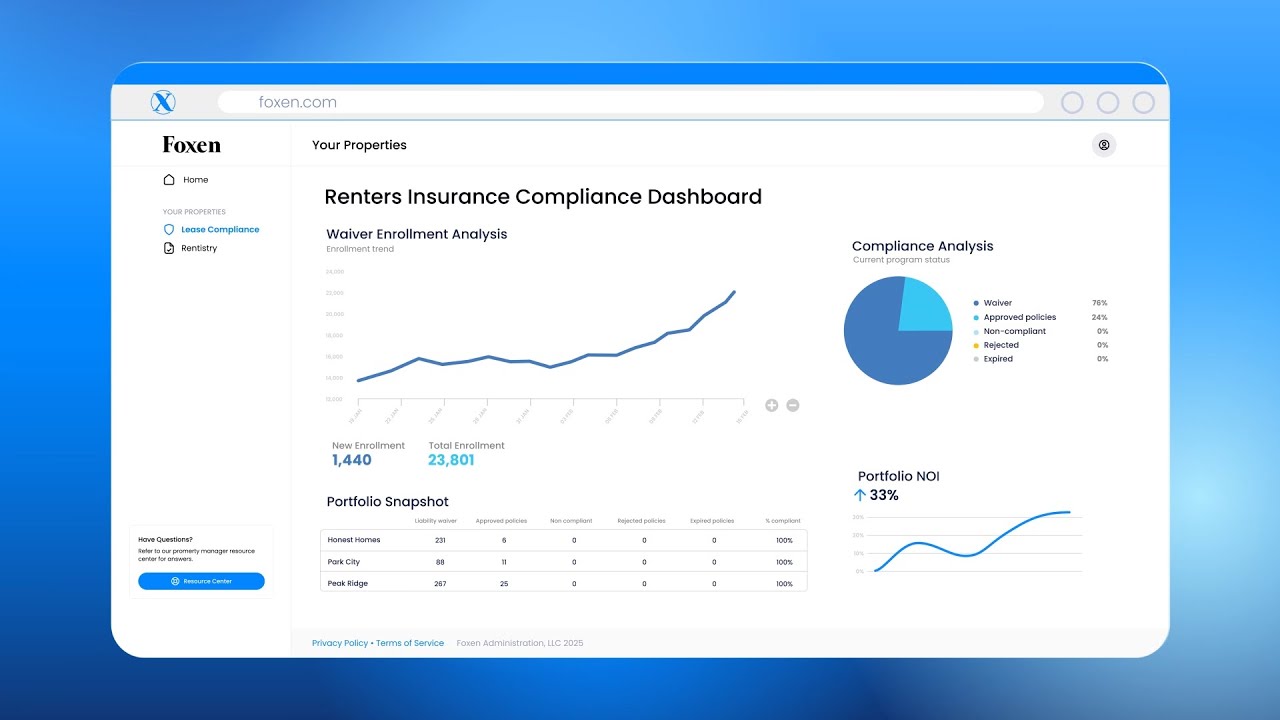
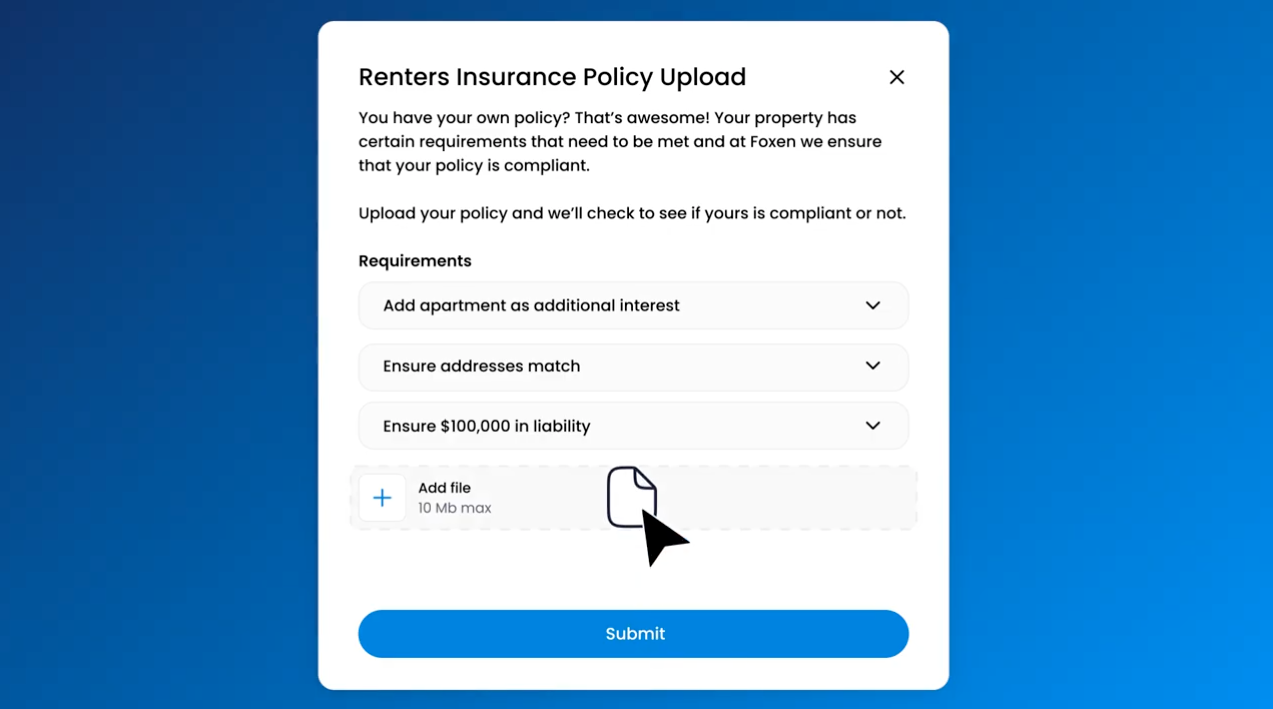
Well, before we get into the Q and A, and it looks like we've got about just over ten minutes left on this webinar session, we'll go ahead and pull the screen back up and just quickly share a quick overview on how Foxen has been able to support our partners through successful student turns. So Foxen has two course solutions that we offer, the first being the waiver program, as Josh and Beth Aaron have spoke to our flagship property damage liability program offering 20 fourseven compliance monitoring, making sure that residents are being protected as well as our partners.
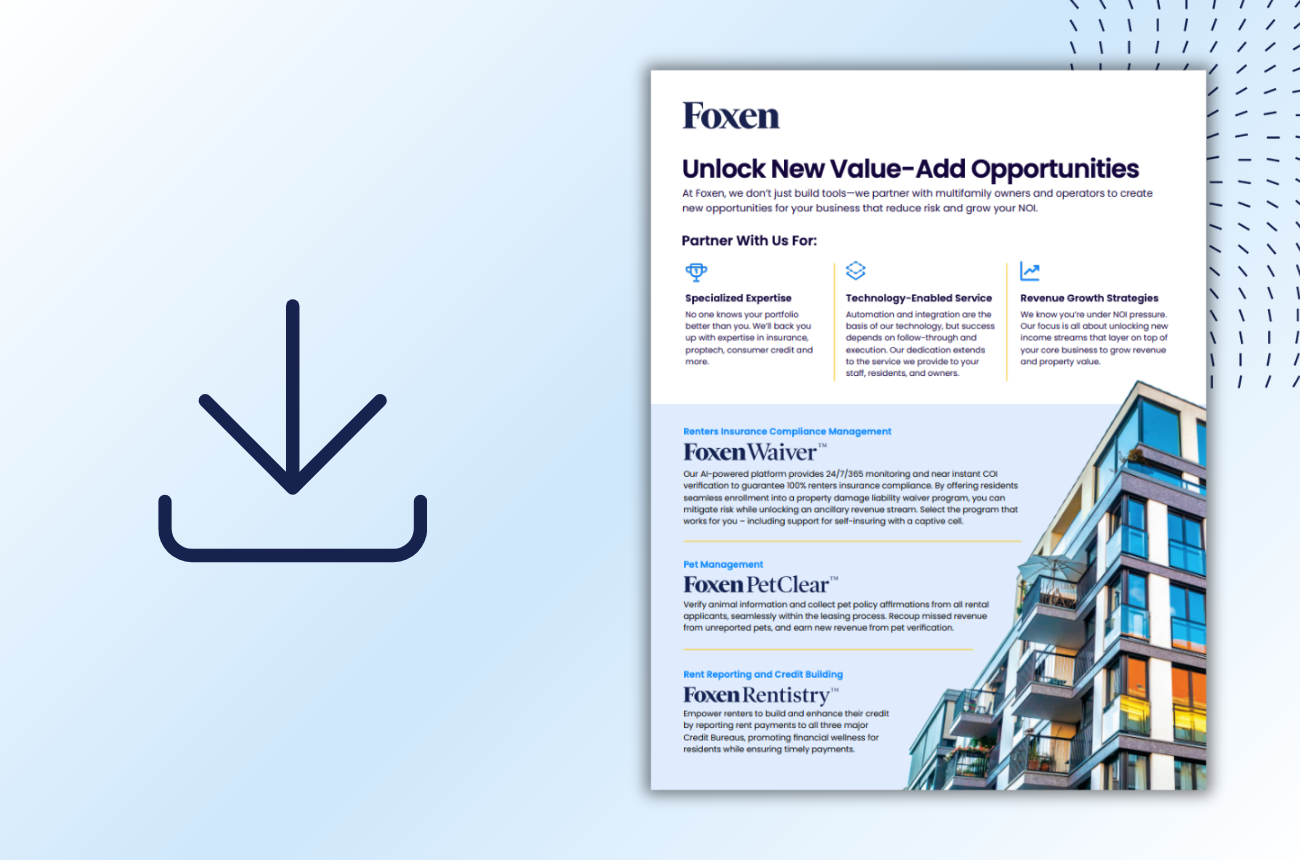
Waiver Flex and Waiver Flex captives are groups of a certain size who decide to take on that risk themselves and need somebody to run the day to day programs for them. The second solution that Josh had spoke to earlier is Rentistry Foxen's credit reporting and credit building solution designed to help residents establish tradeline services and help build their credit through their rental payments.
So just a couple of quick ways that Foxen has been able to support partners such as Harrison Street and Dennerstein throughout the student turn process. You talked about the communication being key, the efficiencies being key.
2024 student turn alone, Foxen received over 30,000 emails from residents of our partners, facilitated over 5,000 phone calls, received 50,000 physical copies of insurance policies, and ultimately uploaded 140,000 certificates of insurance into our system just in that small window of student turn. So when we're constantly looking for ways to identify ways to create efficiency for both the property teams and their residents. Taking this work off of our partnerships plate is certainly one of the ways in which we were able to do so. So excited to be able to support our partners through that process.
There were a couple of questions, guys, that that came through on the Q and A portion, and one that I saw on a on a handful of occasions that popped up were ultimately for you to identifying any inefficiencies within the student turn process and within the academic year and then ultimately kind of tying that into in your dream world scenario.
What are changes or solutions that you guys would be able or suggest to help streamline those processes through a successful student turn transition?
I think that's obviously a big question.
And while I don't know that I have necessarily specifics on what my dream world looks like, I will say that something that I'm working towards and my team at DinnerSeen is working towards is, again, trying to take as many of these back office tasks off of our on-site team members as possible so that they can focus on the things that need to be done on-site that can only be done on-site. And this isn't a centralization, obviously, webinar, but I think it's a very kind of similar mindset in that regard of if it doesn't have to be done on-site for turn specifically, then let's figure out a different way for it to be done so that the on-site team can handle the things that can only be done by the on-site team.
I can't necessarily clean an apartment from Houston, Texas for a property located in Columbia, South Carolina, but there are things that myself and my team can do that can take the burden off of our on-site team in that market. And so continuing to find solutions to those kinds of tasks to just ultimately give that time back to the team, I think are really the things that we're working towards. And again, with our Foxen partnership, this has been a big one. No longer does our team or do our teams have to spend time on a day to day basis tracking down renters insurance and understanding necessarily the difference between this HO-four and that HO-four.
And there's so many things and so much burden that Foxen has been able to take off and just continuing to find partners and technologies and strategies that just help do that for any other task that exists, which we all know there's so many, too many to name, but just really continuing down that path.
And from my from my experience, I would say in 2019 and 2020, when when you all think about the slide that I just had up a minute ago about the number of emails or phone calls or even certificate uploads or certificate review, you are looking at the individual that would do a lot of that in 2019 and 2020 as far as resident questions on a policy, etcetera, or this policy, does it meet the requirements and like sending that intake? And one of the things that we recognized early is that if those are coming to me, how many of those are actually staying at the property? We can't have that period.
End of discussion cannot have that. And so again, I'm very niche in the sense of what I spend 100% of my time on. And I think it is indicative also to to Aaron's point of if this is something that can be taken off of the on-site team's place in either centralized or in some cases delegated, identify that, identify the partner and move forward. And I think that's what helps really improve not just the resident experience, but also, you know, retaining and attracting top talent.
So that way they want to see student housing as as a career path. And I think that is just it's one way in which you can accomplish that.
Awesome. And I think we have time for one more question, and there were a couple tied to this, which is how to leverage, you know, predictive data or, you know, when looking at things from, you know, 20,000 feet, how do you guys leverage that kind of information to help predict and, you know, anticipate potential challenges that you would expect to face, you know, come July and August at move in time and help streamline getting in front of that?
I think I mean, that's a it's another good question.
Obviously, you know, we use data as much as possible to make decisions, but at the same time, we also try to keep a human element alongside and make sure that we're not necessarily always sticking to the data or we're always sticking to our feelings, but we're kind of using both hand in hand and relying on both hand in hand.
I think that's really important. And again, we're not necessarily trying to always just, or I guess I said this early on, when it comes to technology, we're looking for the specific problem when we're trying to find a solution, not just using technology to use technology. And so kind of the same thought. We're not just using data to use data, but understanding what it is that we need that data for and then taking a human approach to it.
Yeah. And from from my perspective, so much of this, and I promise this will be my last time I say it, but the high, wide and deep connectivity of relationships in this industry, we all for those of you that are somewhat new to student housing or those who have been around for several years, although the sector has grown exponentially for the last fifteen, twenty years, it's still a very, very small network. Right. So many folks are so open to sharing ideas and concepts that when when we look at what are those opportunities for that collaboration and that support the data that we're starting to see coming into to the Harrison Street side, then a lot of it is.
All right. Let's talk through this through this. Is the data we're seeing reflective of the feedback that's being generated at the property level or from the residents or the parents or the on-site teams to to Aaron's point to kind of match those two together? So so much, yes, technology and the human, the relationship aspect of high, wide and deep, just being able to really effectuate positive change for the residents, for the on-site teams and for the partnerships.
Great. Well, Josh, Aaron, thank you guys so much for taking time today and answer some of these additional questions.
I know I speak on behalf of Fox and that we appreciate the partnership and again, taking that time with us. Rich, back over to you.
All right, thanks very much, Ty. Thank you, Aaron and Josh, for a really enjoyable, insightful and information filled discussion. If you are an owner and an operator, there's a lot to glean from that of what you just heard. Thank you again to Foxen for making all this possible, and of course, thank you to everyone for tuning in.
We really appreciate it. So on behalf of Foxen and Student Housing Business, we appreciate you listening. Enjoy the rest of your day, and hopefully we'll see you again soon. Thank you.
Thank
Your Webinar Thought Leaders

Tyler Specht

Josh Nicholson

Aryne Baily
Related Resources

















Get Industry News and Updates
